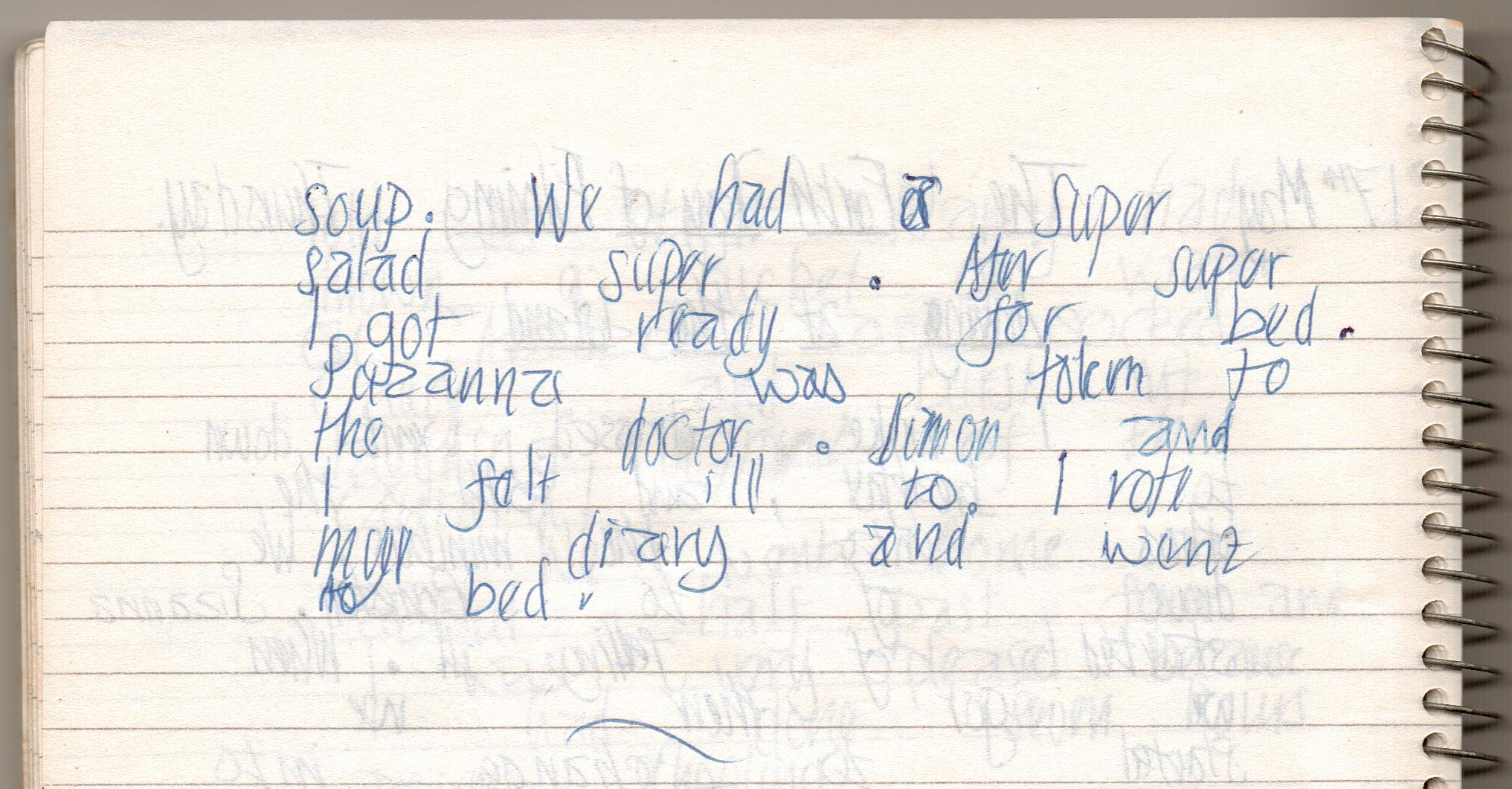
The diary I kept whilst filming ‘Swallows and Amazons’ on the 3rd June 1973, when I spent a day off exploring Cumbria with my family

It was Sunday and a much needed, formal day off for the crew of Swallows and Amazons. It was also a day of rest for the ‘Artistes’ as Claude Whatham, the Director called us.  The crew called us ‘Saucepans’. Saucepan lids : kids.  It is Cockney rhyming slang. There was a lot of that about in Ambleside that year.
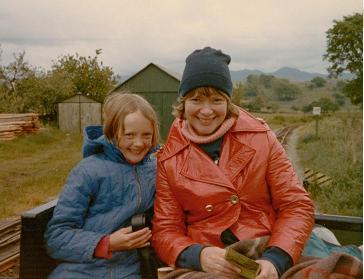
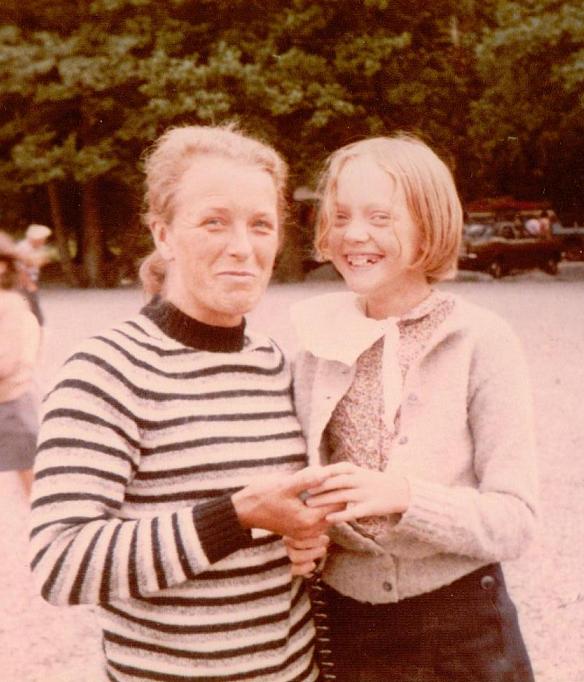
Sophie Neville with her mother on a scenic railway in Cumbria during a break in the filming of Swallows and Amazons in 1973 ~ photo: Martin Neville

My parents were still in bed, exhausted on that Sunday morning.  To keep me busy, Mum had me writing letters to my Headmistress, Sister Ann-Julian and to my Housemistress, Sister Allyne. Amazingly I wrote them.
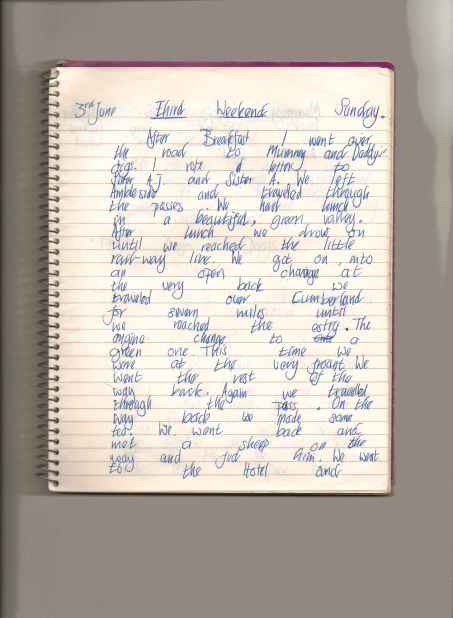
My father’s idea of a day out in Westmorland was to drive up the Hard Knott Pass taking car rugs, a picnic and his volcano. This is a brilliant item of equipment with which you can boil enough water to make a cup of tea using an old newspaper. I’ve read that Arthur Ransome had one…  I think my mother just pulled on her Charlotte Mason College of Education sweatshirt and came too.

The highlight of the day was a trip on the Ravenglass and Eskdale Railway, through the National Park to the coast and back. You can still do this today. The historic line was opened in 1875 to ferry iron ore from the mine near Boot to the coast at Ravensglass by steam locomotive. They say that nowadays:

“Four steam locomotives are currently in regular service, ranging from River Irt, the oldest working 15″ gauge locomotive in the world, to Northern Rock, one of the most powerful. The locomotives names, with one obvious exception, are those of the local rivers, the Esk, Mite and Irt, the last mentioned flowing from Wastwater just a few miles away from the railway.”

My father has always loved steam.  He’s also rather enjoyed using the self-timer on his new camera.
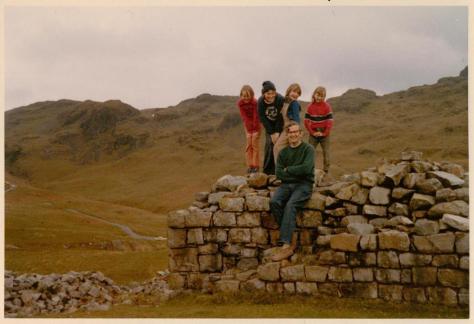
The Nevilles in the Lake District in 1973

We were standing on part of the Hard Knott Roman Fort near Boot with the fells behind. Built between AD120 and AD138 at the Eskdale end of the Hard Knott Pass it must have been one of the furthermost outposts of the Roman Empire. It had been studied and excavated by Arthur Ransome’s mentor WG Collingwood, whose novel Thorstein of the Mere is set on Peel Island where we had just spent the week. The fort was known to the Romans as Mediobogdum, which has to be one of the all-time great names. If only the film crew had known.

As children we had grown up watching Frankie Howerd on television when he was dressed in a Roman tunic, assuring us that ‘A Funny Thing Happened on the Way to the Forum’.  We didn’t know at the time, but the producer of ‘Swallows and Amazons’, Richard Pilbrow, had brought the theatre production from New York to the West End, where it ran for two years.

The hotel I mention was the Kirkstone Foot Hotel, at the top of Windermere, in Ambleside where Richard Pilbrow and the senior members of the film crew were staying. Mum must have left her camera there.

The Kirkstone Foot Hotel Ambleside in 1973
The Kirkstone Foot Hotel, Ambleside in 1973

Pandora Doyle, whose father Brian Doyle was handling the publicity for Swallows and Amazons, kept a record of her half-term holiday, marking her room at the Kirkstone Foot (telephone: Ambleside 2232). She wrote about it quite beautifully:

Pandora on the unit hotel

I’m pretty sure the film company used the coach-house block for their production office. The green parrot was once released in the bathroom where it spent a day waiting to be used in a scene, presumably on the houseboat. Pandora pointed out the hole-protector she had added when filing her scrapbook. I’d totally forgotten about such things and yet I must have stuck on hundreds. ‘Ring-binders’ were the thing but I never had red ones.

We didn’t know it, but Arthur Ransome had died on this day, 3rd June in 1967, six years previously. I feel he would have enjoyed our day out.

Tamzin Neville and Daphne Neville in 1973

You can read the full account of making the film here:
Discovering that John Noakes had been offered the role of Captain Flint in the 1974 movie of ‘Swallows and Amazons’

Diary kept whilst making the 1974 film of Swallows and Amazons

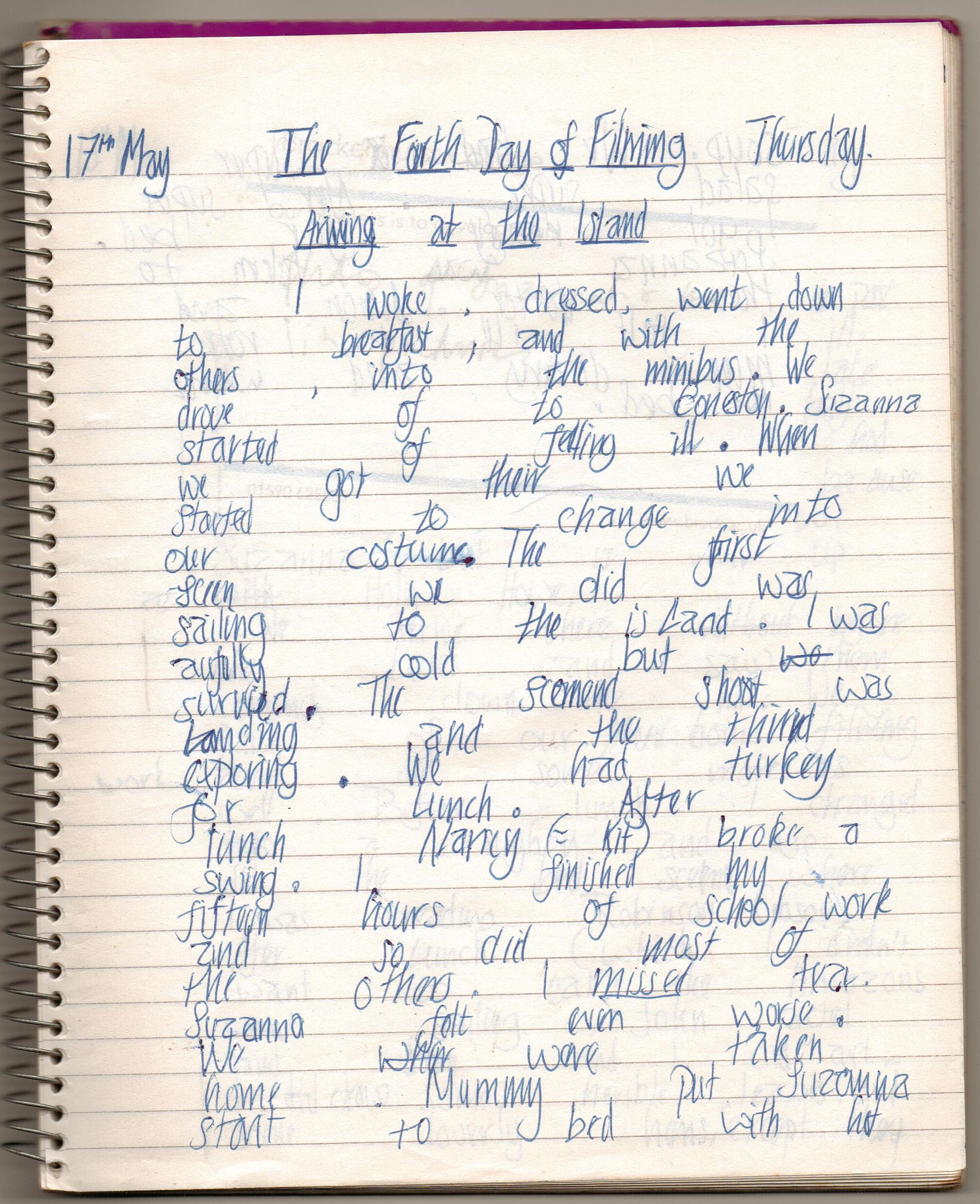
My diary kept on 17th May 1973 continues…

Making the 1974 movie Swallows and Amazons

What would you wear to go sailing on Coniston Water in May? Arriving at Wild Cat Island was exciting but I got terribly cold. Not with-standing this, a photograph of the scene was used on the cover of a 1973 edition of ‘Swallows and Amazons’.

The Passion Killer scenes ~

The crew took delight in referring to my navy blue gym knickers as ‘Passion Killers’. Claude Whatham, the director, had me tuck my dress up into them. I don’t know if he knew it but, as Arthur Ransome said, the real Altounyan girls had done this, since they usually wore dresses in the 1930s rather than shorts. It made me think that I was wearing even less and haunts me still. Soon there was a photograph in The Telegraph of me with my dress tucked up into my knickers. I was never allowed to un-tuck it between takes for fear of spoiling continuity.

Sophie Neville in her thin cotton dress and passion killers in 1973 ~ photo:Daphne Neville

Sailing in thin cotton dresses ~

Emma Porteus, the Costume Designer on Swallows and Amazons was the one listed member of the film crew who we didn’t see much on location. I’d met her at a fitting in London, when I tried on the silk dress and the shoes I wore in the train. She then had my cotton frocks made up, seemly without a thought to the Cumbrian climate. The fact that they were rather short was in keeping with 1970’s fashion, rather than 1929. It was Claude who insisted that we all – boys and girls – wore original 1929 knickers. Mum who found us vests to wear once everyone realised how cold it was out on the water. I had to beg TSuzanna Hamilton in 1984erry, the Wardrobe Master, to let me wear a grey cardigan in subsequent sailing scenes.

Emma Porteus must have either been expensive or busy or both. She became the designer on many of the Bond movies ~ Octopussy, A View to a Kill and the Living Daylights. She worked on Aliens with Sigourney Weaver, Judge Dredd with Sylvester Stallone and 1984, which starred Suzanna Hamilton with none other than John Hurt and Richard Burton. This was partly made near my home in Gloucestershire ~ Mum visited the set at Hullaverton ~ at the time I was working on the Arthur Ransome book adaptations of  Coot Club and The Big Six on the Norfolk Broads. Of all the costumes worn in movies through the decades Suzanna wore a classic in that film: a workman’s boiler-suit. Not designated by Emma Porteus, of course, but by George Orwell. Nice and comfy for wearing on location.

The terrible royal blue nylon track suits with go-faster stripes that we wore on location in Cumbria were purchased to keep us warm during rehearsals. This was a huge mistake, firstly because they were ineffective in terms of thermal insulation, and secondly because they found their way into the publicity shots. They even featured on the cover of the VHS.  I can remember thinking at the time that these track suits were a misguided purchase (and please note I was aged twelve at the time) but I was so grateful for the meagre warmth I willingly wriggled into the narrow trousers.

Brian Doyle, the Publicity Manager on ‘Swallows and Amazons’ in typical cold weather gear on Derwent Water in the Lake District

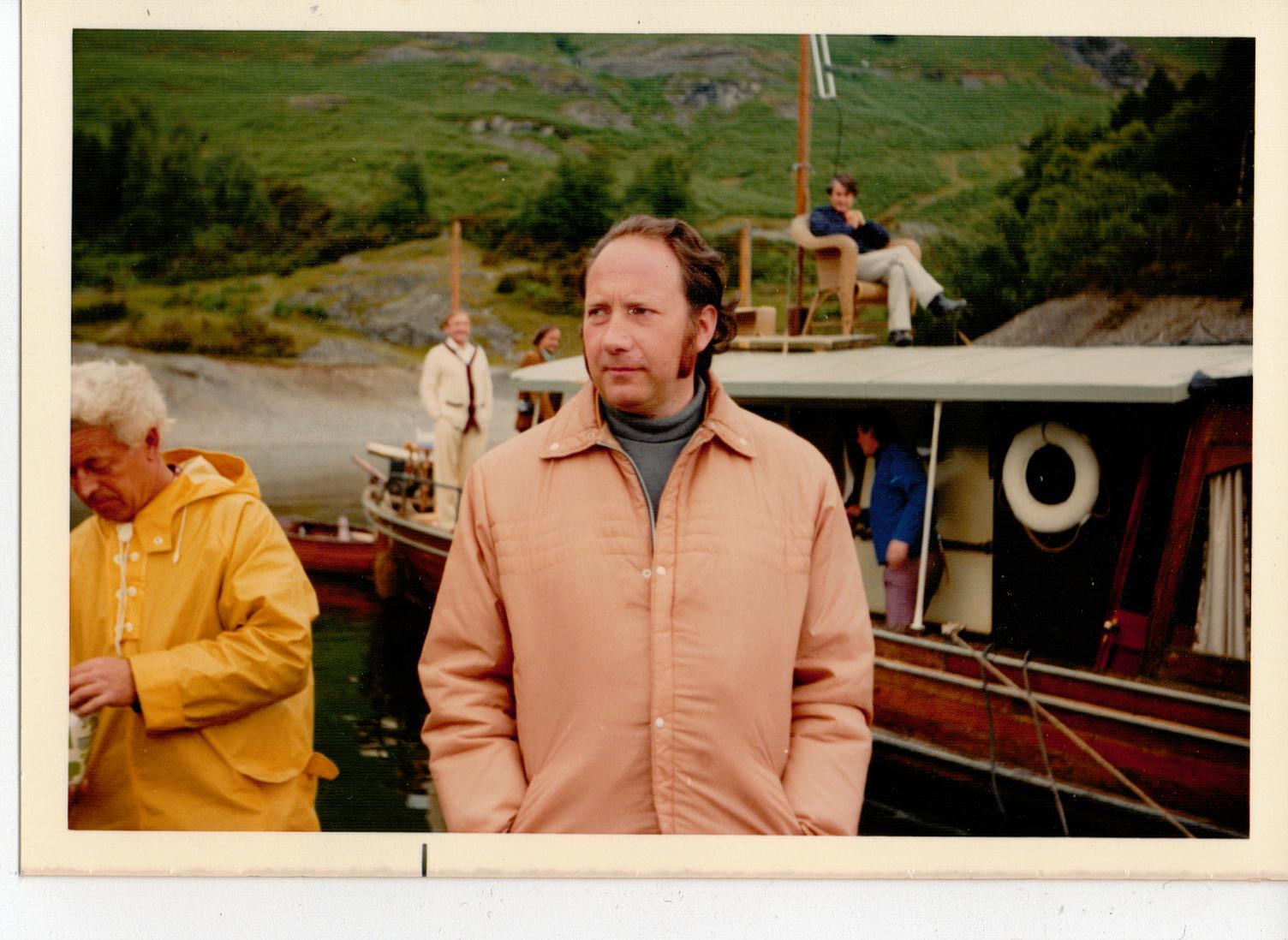
Dennis the DPO ~ Everyone on the crew was wrapped up warm and well equipped with wet weather gear.  They needed to be.  There was so much hanging around.  While it took a little time to line up a dinghy for a shot, Dennis Lewiston the Director of Photography was very strict about waiting for clouds to pass so that it looked sunshiny, even if it wasn’t that sunny in reality. This could take ages. ‘Takes’ were often snatched between clouds. Looking back, this proved crucial. My memory is of Dennis, in a navy blue raincoat, peering at the sky with a shaded eye glass that he wore habitually around his neck. 

Dennie Lewiston went on to make The Scarlet Pimpernel with Anthony Andrews, Jane Seymour, Ian McKellen and Julian Fellows,  The Rocky Horror Picture Show with Tim Curry, Susan Sarandon and Meat Loaf, The Country Girls, starring Sam Neill, Marilyn and Me, Heidi with Patricia Neal, Montana and numerous other TV movies.

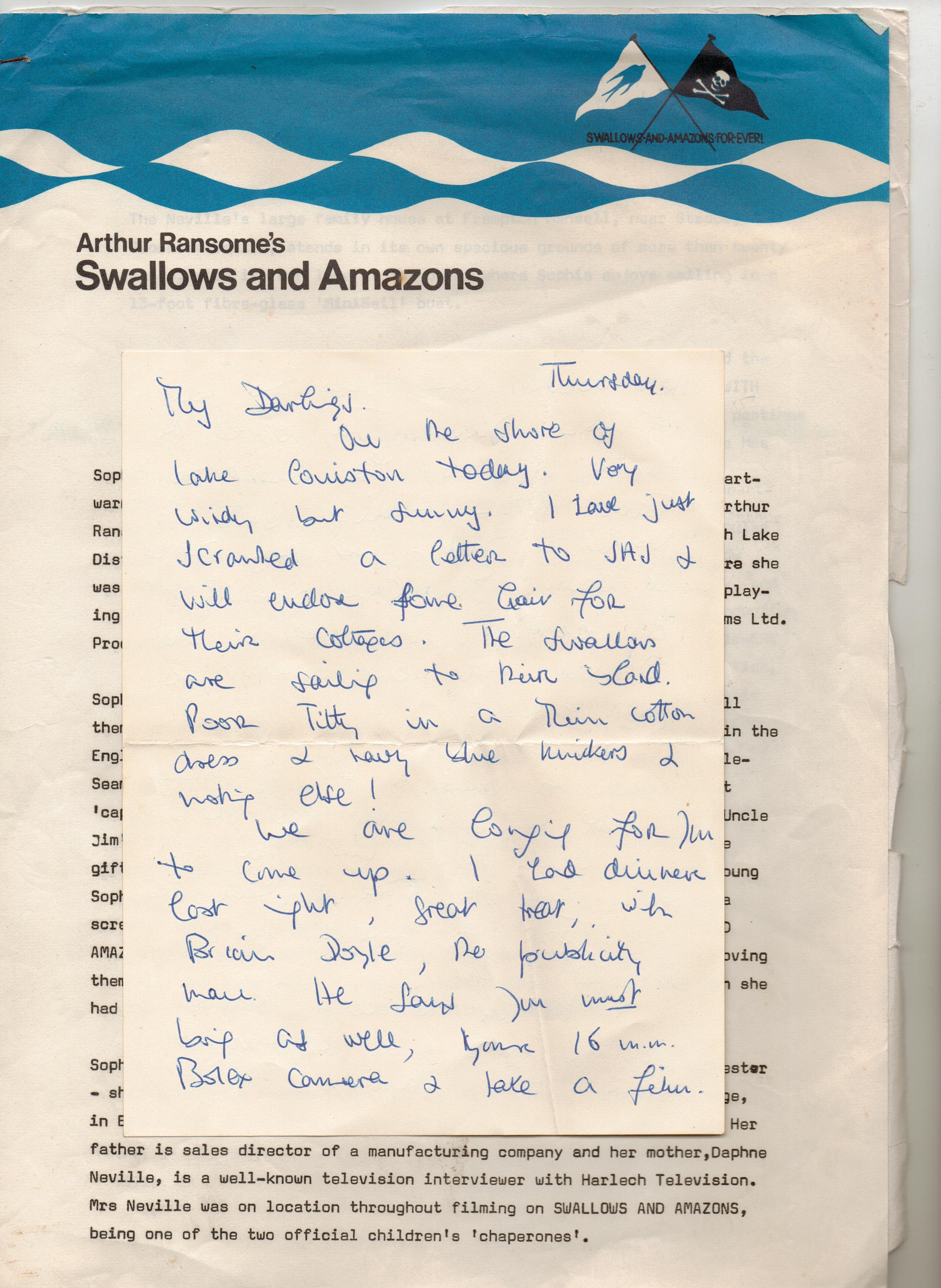
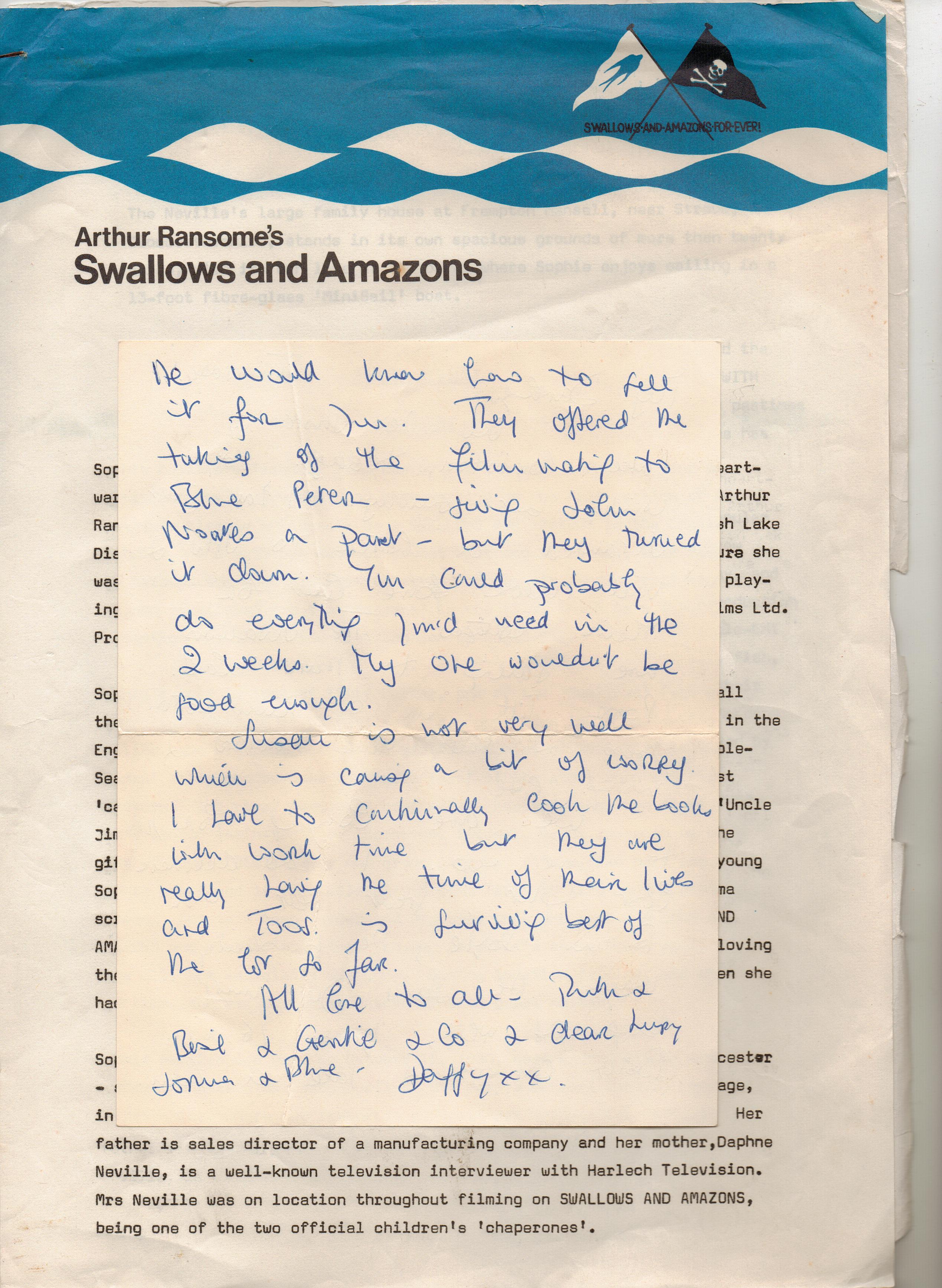
Filming the filming ~  I did not know until I read Mum’s letter, above, that John Noakes had been offered a part in Swallows and Amazons or that Blue Peter had been given the chance to document the making of the film. I wonder if John Noakes ever knew this? Biddy Baxter, the editor, was keen on ‘behind the scenes’ items.  Lesley Judd had worn a lovely red dress to make one earlier, in February 1973, about Dad’s Army with Arthur Lowe and John le Mesurier, who happened to be a cousin of Dad’s, but Blue Peter never made it to Cumbria. Instead my father bought 16mm stock for his company’s Bolex and shot a number of reels.  The footage was never sold but not forgotten. I found most of it in 2003 when the BBC included it in the Countryfile documentary presented by Ben Fogle that was re-issued as Big Screen Britain.

Notes on my Diary: It looks as if the food had improved. We had turkey for lunch on location, which was a great treat in the early ’70s, and ‘a super salad supper’ at the guesthouse, which I had evidently enjoyed. Does anyone remember such things being a real treat? 

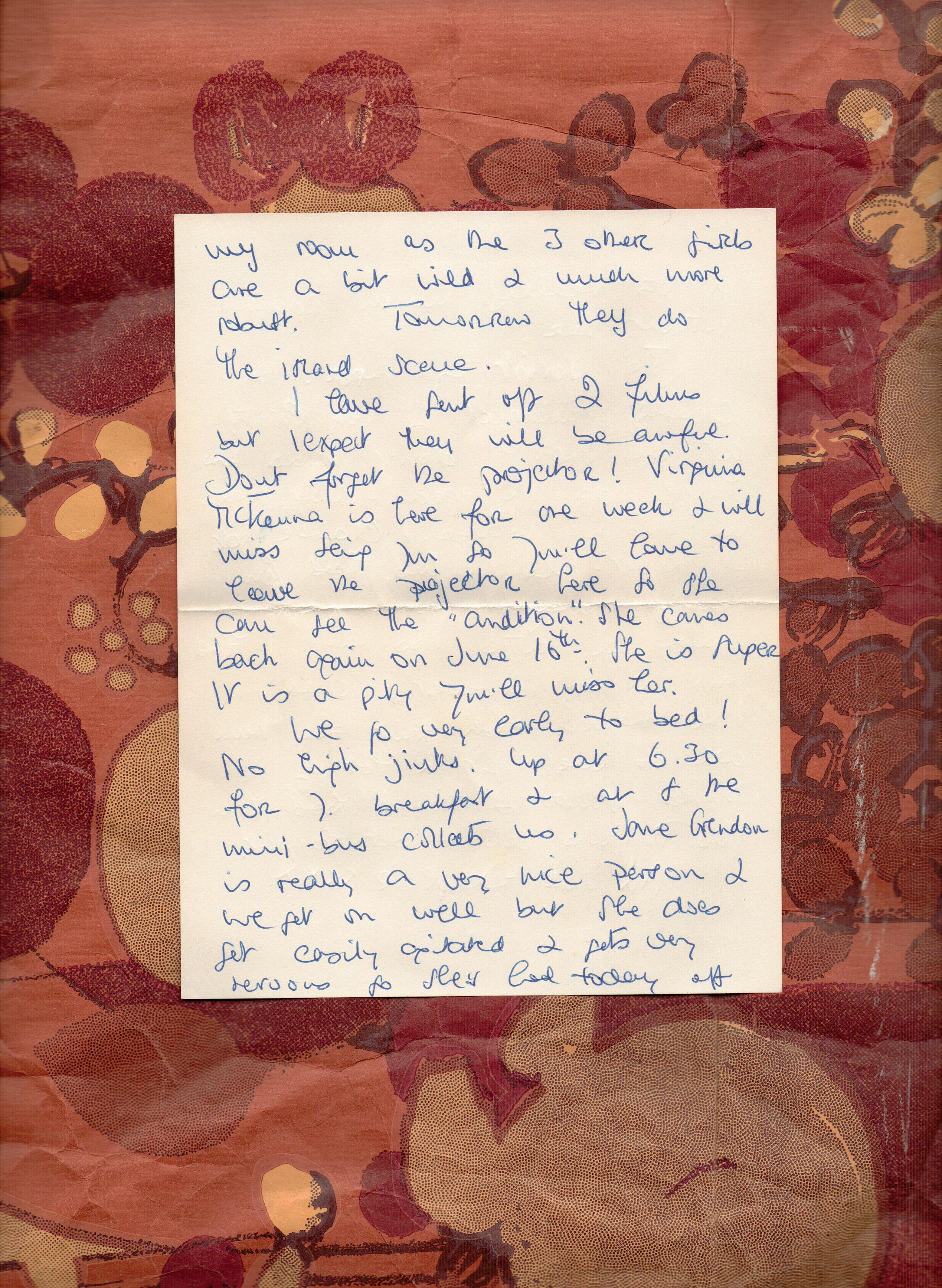
Translation of my mother’s letter home:

My Darlings = Dad and my sisters

‘Letter to SAJ’ = Sister Ann-Julian, my headmistress. She signed her name SAJ and everyone called her Saj.

When my long hair was cut for the part of Titty we sent the pony-tail back to my form at school so they could thatch the cottages of a model village they were making of medieval Childry. I was really sad to be missing the project.   

Toos = Mum’s nick-name for me.

Ruth = our cleaner from the village who was helping to look after my sisters

B…  = (no idea)

Gertie = Mum’s enormous Irish mare

& co = our moorland ponies

Lupy, Joshua and Blue = our dogs. She must have been a bit homesick.

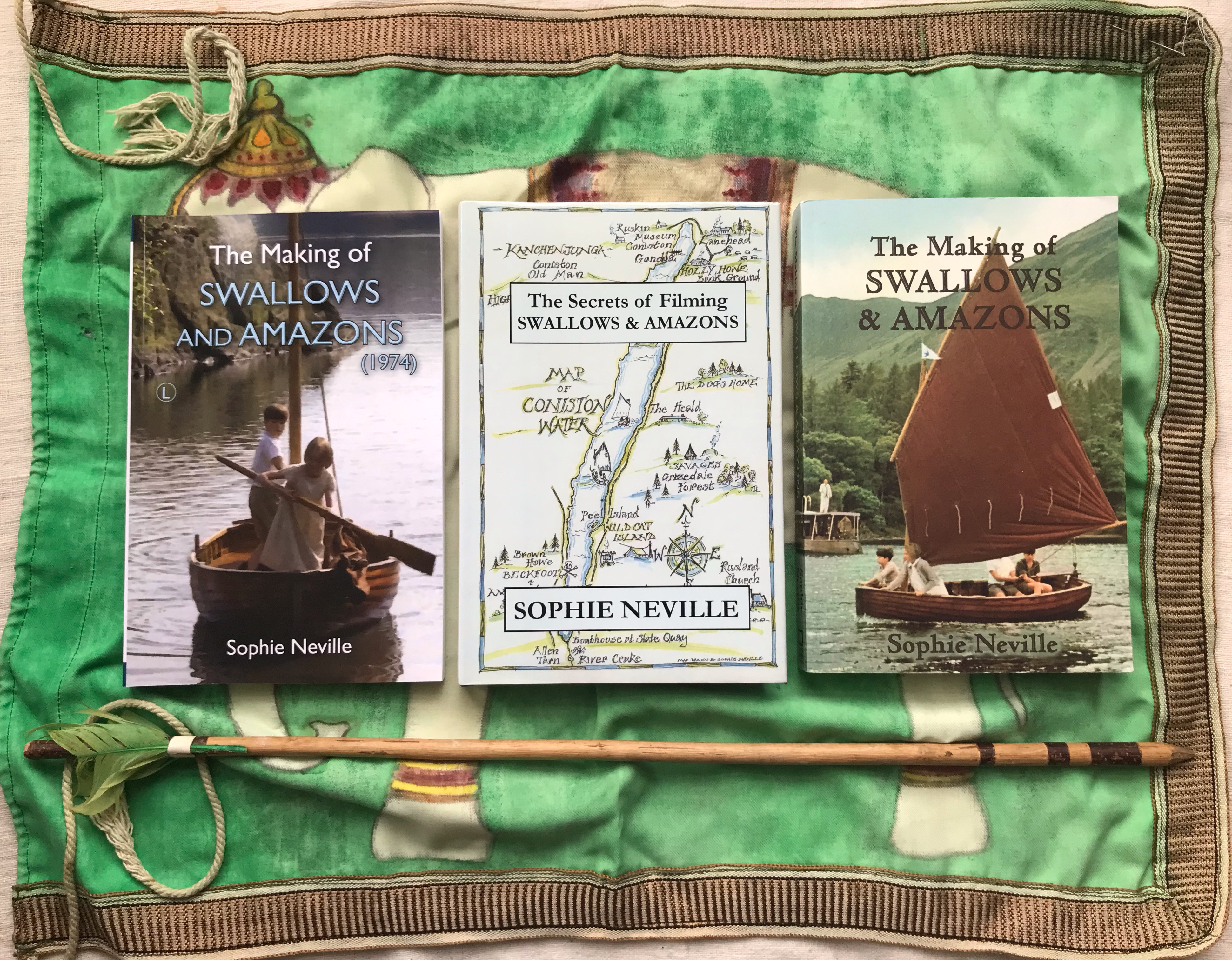
You can read the whole story of what happened next in ‘The Making of Swallows and Amazons’ or the ebook on ‘The Secrets of Filming Swallows and Amazons’, which includes links to behind-the-scenes cine footage:

A letter from behind the scenes on the third day of filming ‘Swallows and Amazons’ in 1973

16th May 1973, was the third day of filming the original movie ‘Swallows and Amazons’. My mother wrote a letter to my father who was at home in Gloucestershire with my two younger sisters.

Mum kept all her letters, my diaries and scrapbooks in a smart carrier bag. It once contained an expensive velvet dress bought for me in Carnaby Street when we met Claude Whatham, the director of Swallows and Amazons back in April 1973

1970’s English food ~

The food at our guesthouse was talking its toll. It was not a good idea to feed children on packet soups and baked beans in the days when 35mm film stock was so extremely expensive.  No one realised why, but the ingredients made Sten hyper-active, or as my mother put it, ‘causing a little hoo hah.’ A visiting  journalist wrote, ‘By the end of the day Roger, aged seven, had mown down the entire film crew using a hammer as a mock machine gun. He had fallen down several times and emerged with grazed knees all splattered with mud.’

Location catering ~

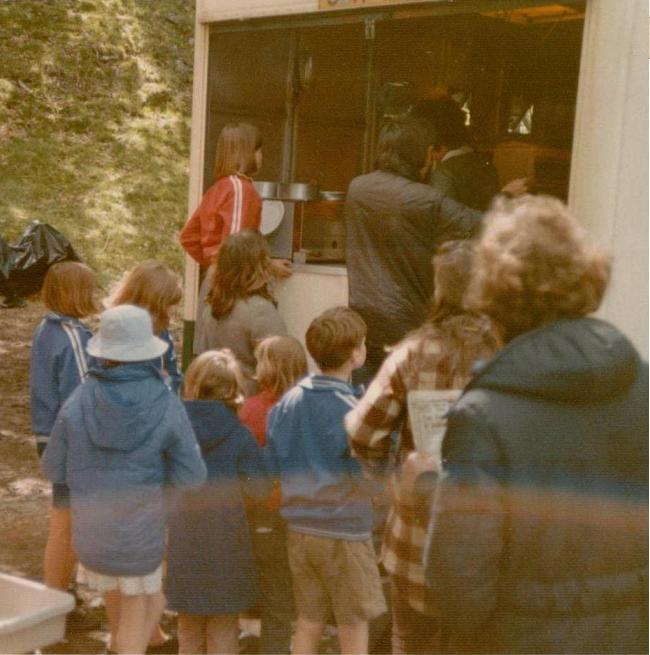
Suzanna Hamilton, who was playing Susan, simply refused to eat the revolting food.  Mum said,  “I couldn’t get her to eat anything.” Location catering is excellent now but back in the early 1970’s it could be pretty basic canteen food produced from a ‘chuck wagon’. We’d queue up for a tray of meat and two veg, which was usually consumed in a red London double-decker converted into a dining bus.  There were no salads, no fruit, just a working man’s lunch with coffee in plastic cups and paste sandwiches provided later with tea. The tea was good.

Pinewood location catering ~ Suzanna Hamilton pearing into the chuck wagon ~ photo: Daphne Neville

The fruit bowl in our bus ~

Mum started to order fruit and we relished it. Back then, it was a huge treat to have bananas or melon, oranges and grapes. A bowl sat in our bus where we were given lessons on Formica tables downstairs. The upper deck was used by Terry the Wardrobe Master as as our changing room. It was furnished with bunk beds, which Mum made me rest on after lunch. I don’t think she could pin down the Amazons and I objected at first but I must have needed to lie down and rest properly, especially when it was cold.

Daphne Neville with Richard Pilbrow1
Molly and Richard Pilbrow in 1973

Molly and Richard Pilbrow on location with the two red London Double Decker buses where coffee was being served ~ photo: Daphne Neville

The film crew ~

Apart from Sue Merry, the ‘Continuity Girl’, the film crew consisted entirely of men, forty-five of them. I include the Hair and Make-up Designers, the Wardrobe Master, the Art Director, Set Dresser, Prop Master and Carpenter, Sound Recordist and Boom Operator, the Director of Photography, Camera Operator, Focus Puller and Grips with the Electricians from Lee Electric who looked after the lights and generators, Lorry Drivers and Sailing Director, the Director, three Assistant Directors and the Production Associate and Producer. I think there might have been a Film Accountant and Location Manager. Being a feature film financed by EMI Films we had a permanent Stills Photographer and a Publicity Manager.  And this was a small crew as Terry seemed to cope without Wardrobe Assistants or Dressers. They all knew each other pretty well from being on previous movies. I have a list of where they had digs in Ambleside. It’s quite interesting to see who shared with who.

Whenever we needed boats, six local boatmen could also join the queue for the chuck wagon – and the mobile loos.  Mum wouldn’t let me use them. They were looked after by a ratty looking chap who later managed to persuade one of the Ambleside girls that he was the film’s Producer.

Neville  Thompson, who was effectively the on-line Producer, had a production secretary called Sally Shewing, but she must have been stuck in the office as we never saw her.  Molly Friedel, Richard Pilbrow’s girlfriend and assistant, was often on location. We adored her. She was American, tall with long brown hair and always had time for us. I remember her working on the lighting design for the next Rolling Stones Concert by the shore of Coniston Water whilst we milled about, playing on the rocks.

We had our tutor, Mrs Causey and a wonderful mini-bus driver called Jean McGill. She had been a top air steward but had returned to Cumbria to look after her ailing mother and drove us around the area to keep busy. As soon as we found out that she was also a qualified nursing sister, Mum made sure that Jean was taken on as the official location nurse. This was great as it meant she could be around the whole time and we never had to wait for the bus. We found we soon needed a nurse too. Someone was always hurting themselves.

Jean McGill, our driver and location nurse, operating the radio with Sophie Neville ~ photo:Martin Neville

So in all, with our chaperones there were usually about six women around as well as journalists, friends and relatives who came to watch. It was a huge circus with often eighty people milling about. Certainly the Call Sheet asks the caterers to provide lunch for seventy on normal days. It would be much more when we had crowd scenes such as when we explored Rio.

The male:female ratio on crews is very different today. There are often more women than men, perhaps not on movie sets, but certainly on BBC drama crews. It was already different by 1983 when Richard and Molly Pilbrow came to visit us on the location of  Coot Club in Norfolk, when there were about equal numbers of men and women on location. It made for a better, family atmosphere, certainly more appropriate with so many children involved. Since he still held the rights to Arthur Ransome’s series of Swallows and Amazons books, Richard Pilbrow was the Executive Producer on the BBC serial Joe Waters produced. It was so good to see him again. I gather he is still going strong having just been awarded the Knights of Illumination Lifetime Recognition Award for more than fifty years of work in theatre lighting.

You can read more about ‘The Making of Swallows and Amazons’, now available as an audiobook.

'The Making of Swallows and Amazons (1974) by Sophie Neville'
Different editions of ‘The Making of Swallows and Amazons (1974) by Sophie Neville’