Diary of a Litter Picker: Finding Stolen items

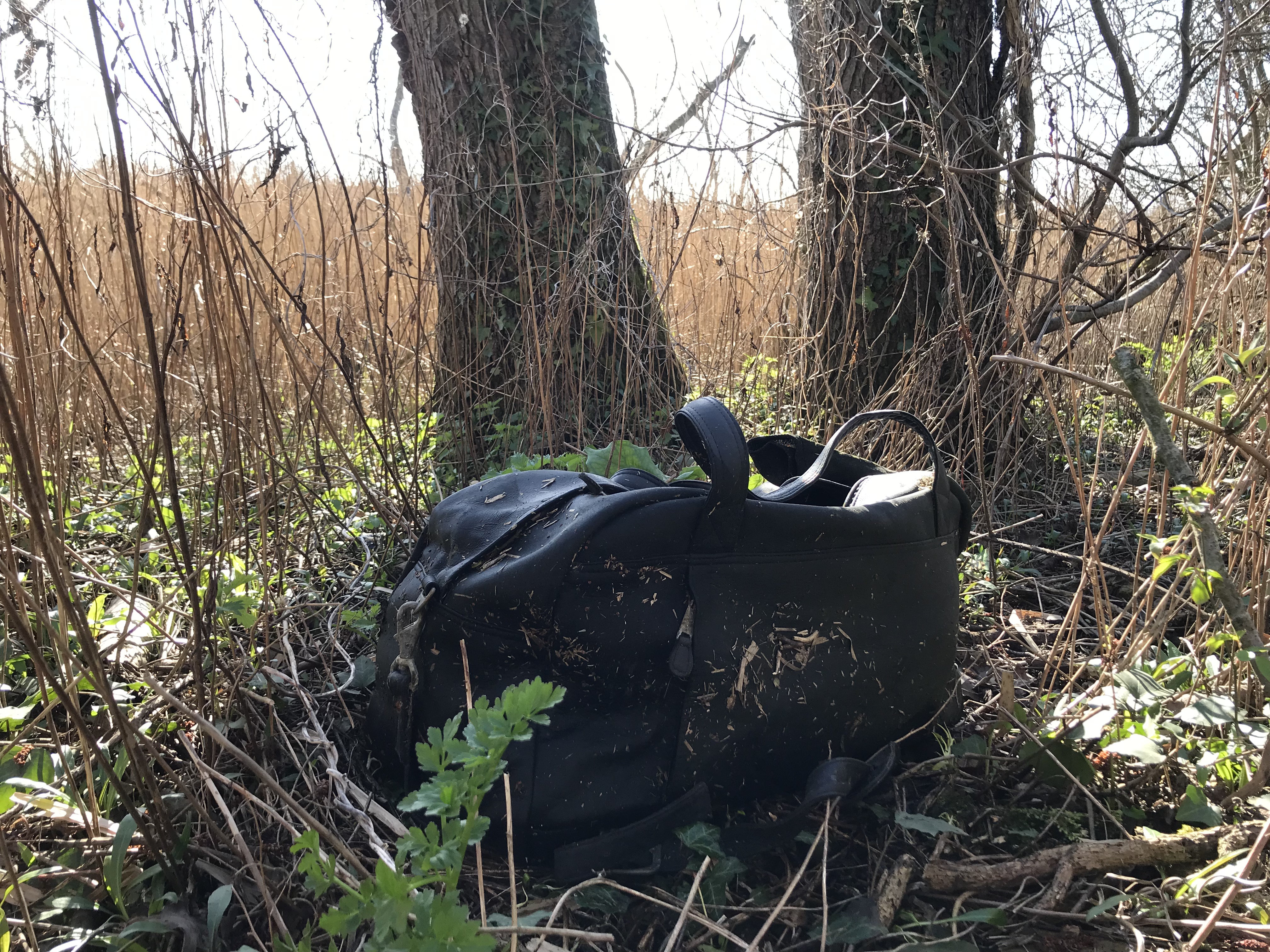
A stolen holdall containing shoes and a jewellery box handed in to the police

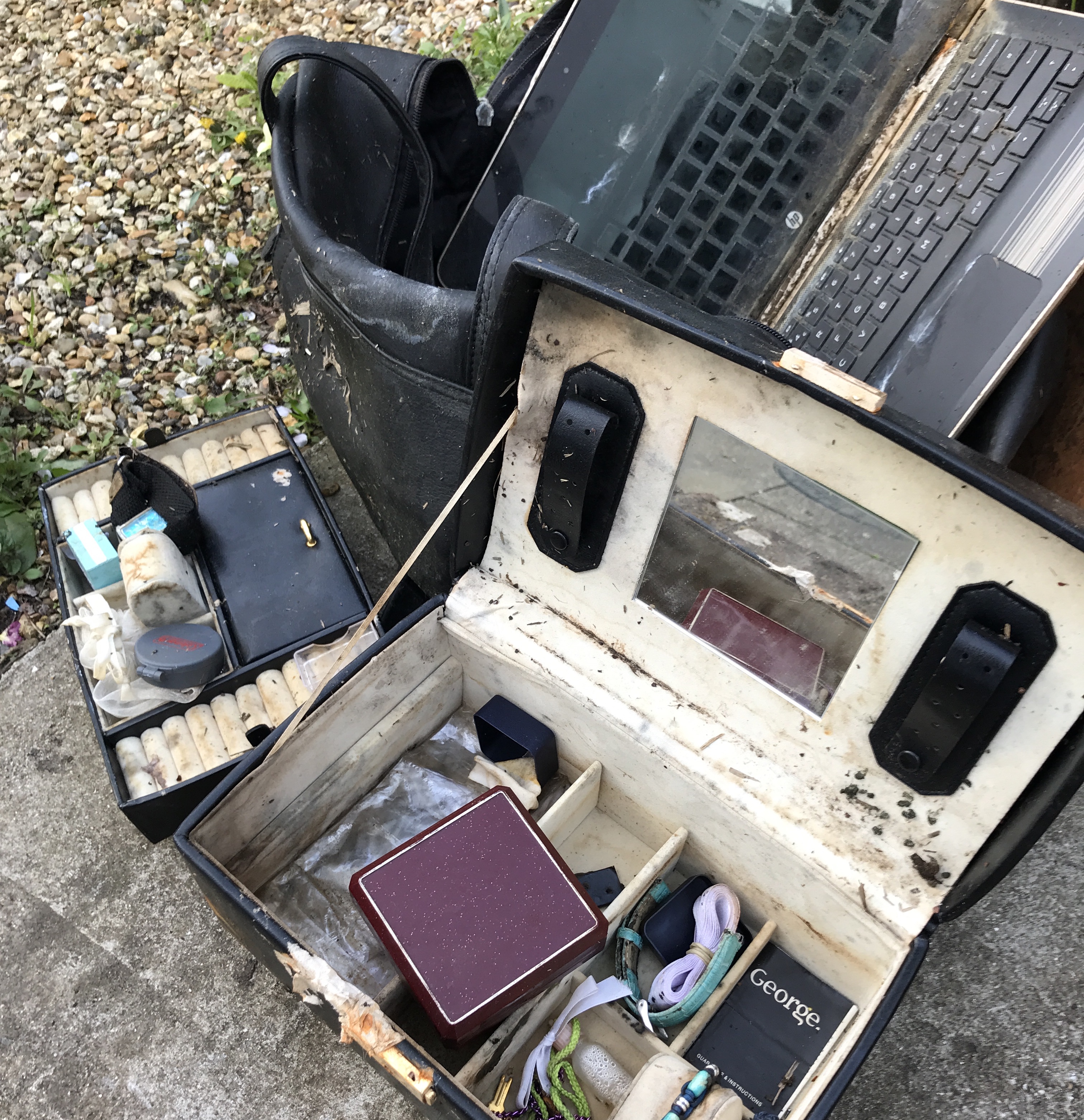
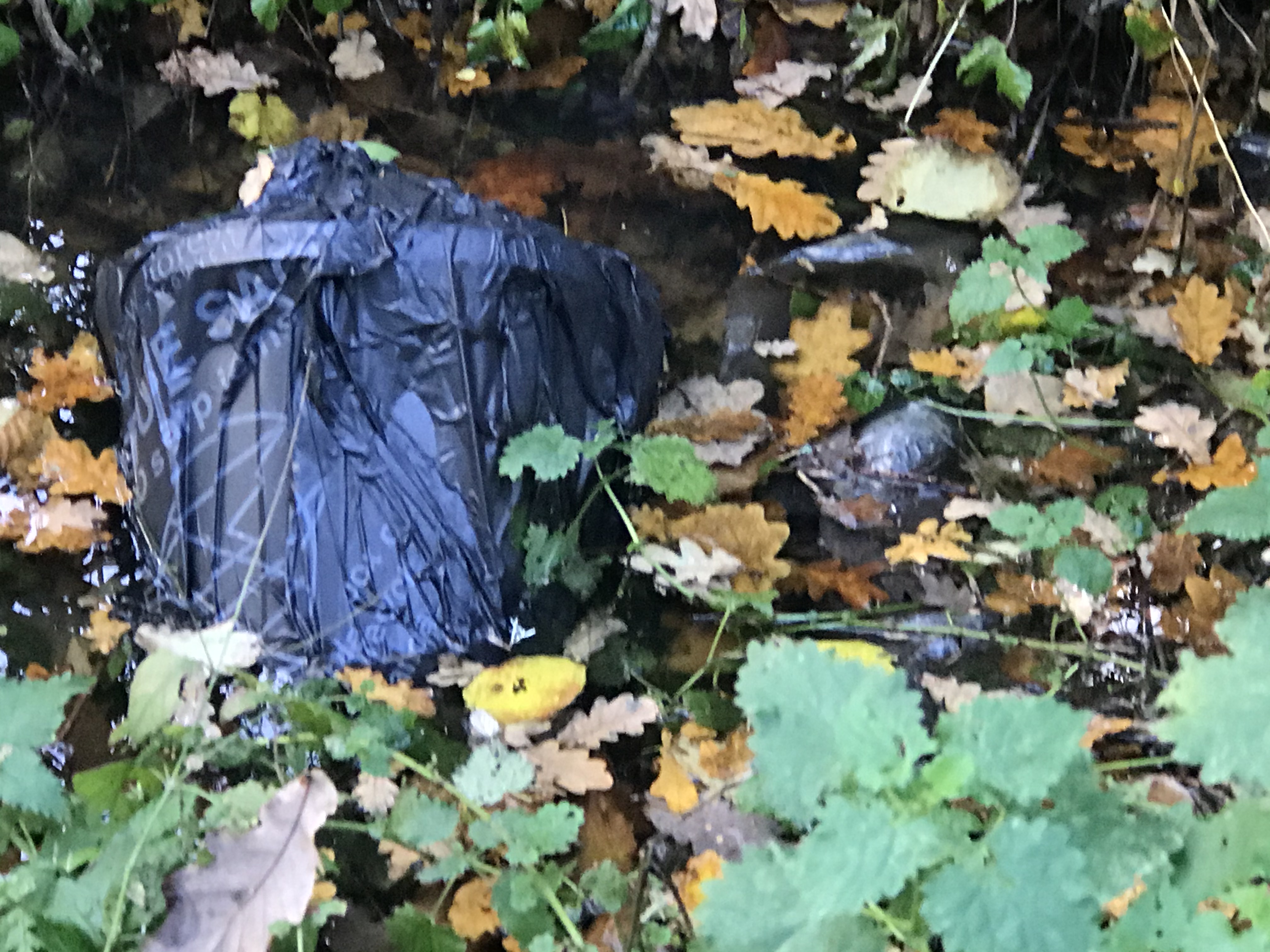
You know something is wrong when you find a high quality holdall chucked in the reedbeds – with a lap top and empty jewellery box inside. I called the police, explaining that I was an Ambassador for Keep Britain Tidy who had be registered as a litter picker.

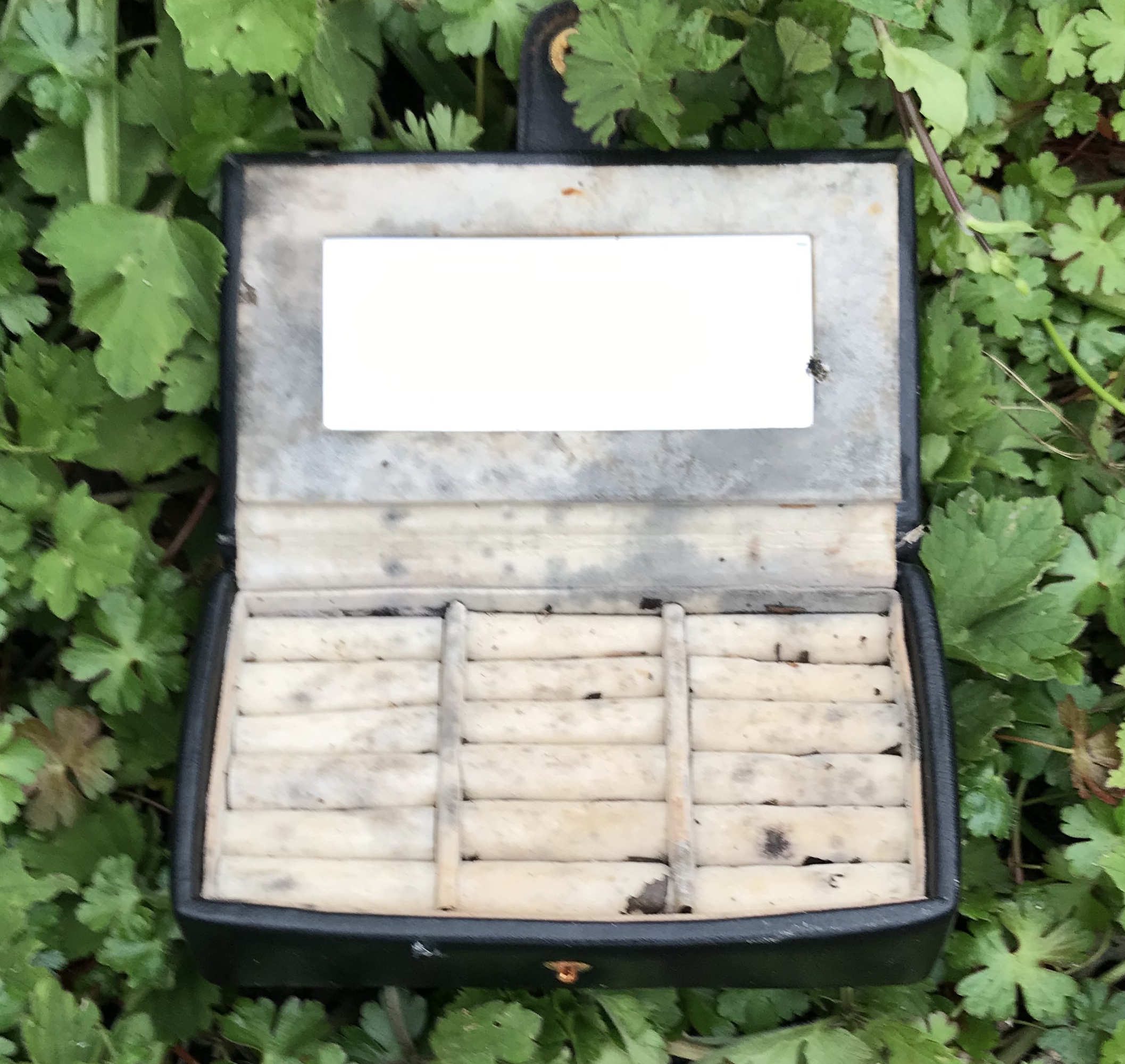
A jewellery box handed in to the police

I apologise if you find this distressing. It is distressing. Heartbreaking. I only hope the thief was eventually caught and can appreciate his wrong doing.

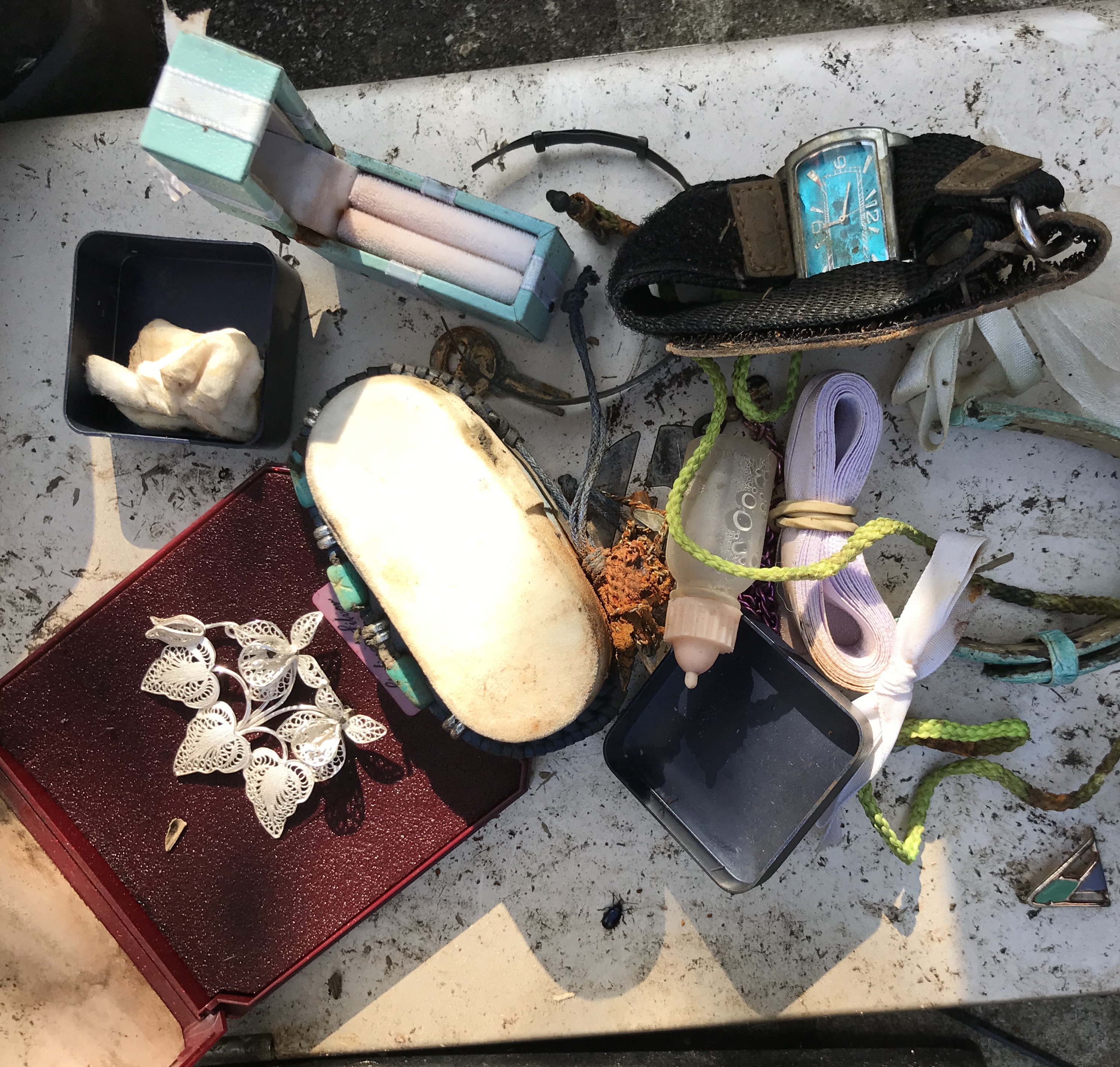
A detailed shot of the abandoned items handed into the police

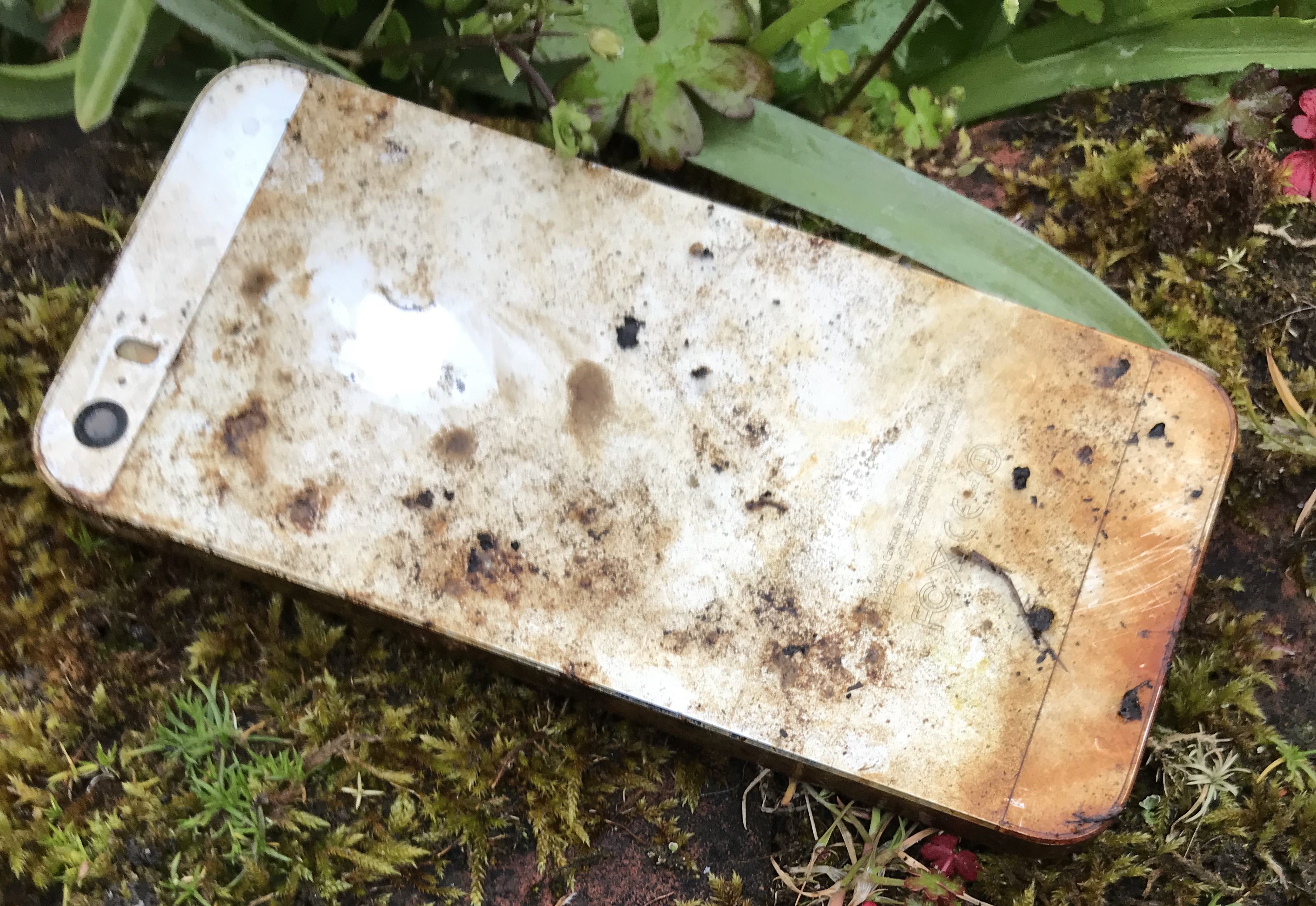
This iphone was found further down the river, as part of a separate haul.

An iphone found near a lap top in the National Park

Having been chucked in the reedbeds there was no DNA for the police to find.

A lap top chucked in the nature reserve

The stolen laptops and phones were obviously password protected and of no use to the burglar. They could have been left somewhere dry for their owner to reclaim – such as a bus shelter but, no. Instead this jewelry box was chucked in a ditch, easily seen from from the tar road but soon ruined by falling rain.

An empty earring case chucked in a ditch

Why was this open penknife chucked out of a vehicle on a bend coming out of town?

A penknife found on a roadside verge

We may have had just one thief who repetitively used the local river as a dump for unwanted stolen items. I would have reported a weapon to the police but by the time I found this, I had spent too much of my life waiting on the 911 line.

A stolen handbag reported to the owner who had business cards inside

This handbag had been stolen some time ago from the owner’s car parked about ten minutes’ drive away. A family of mice had made a warm dry nest in the interior. There were three pairs of spectacles inside but not the necklace that she valued.

Spectacles inside the handbag

I’m always finding abandoned pub glasses, which technically have been stolen from local pubs. I returned this and a few others but glasses can turn up in the middle of nowhere.

A glass stolen from the local pub – now returned. How much do these cost?

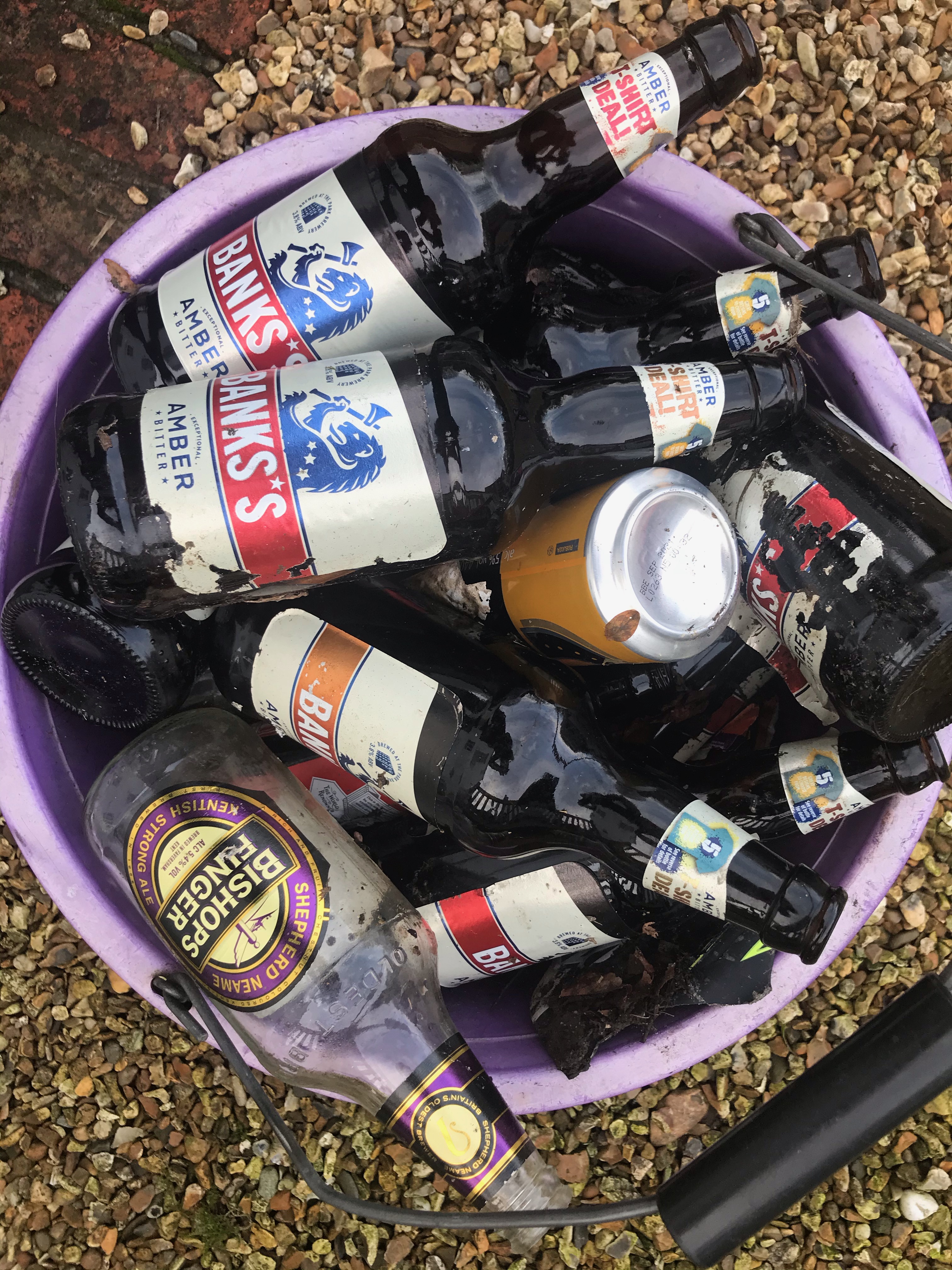
I’m told that unopened chocolate bars, cans of larger and half consumed bottles of vodka will probably have been stolen. They lack value to the person who abandoned them – who obviously didn’t want to be caught red-handed.

Ordinary customers have to bear the cost of stolen cans of larger

I once found a brand new – and boxed – microwave oven tucked into the bushes at this location, a quiet spot where you can park:

The items in this bucket aren’t known to be stolen but the strawberry punnets could have been returned.

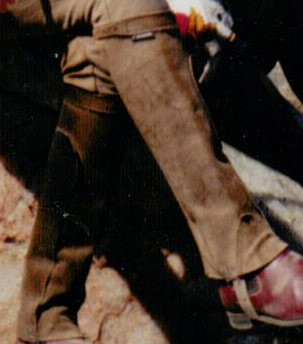
I once found a single, leather, horse riding chap on a bridge, deciding that it must have fallen off a trailer. It turned out to be part of a haul of riding equipment worth thousands that had been stolen the night before. I contacted the owner but she was distraught and couldn’t use one, single legging.

Sophie Neville in the Masai Mara, Kenya
My own riding chaps.

To see other unexpected items I find litter picking, please click here

Stolen by friends?

Diary of a Beachcomber: Sea plastic and pick it up

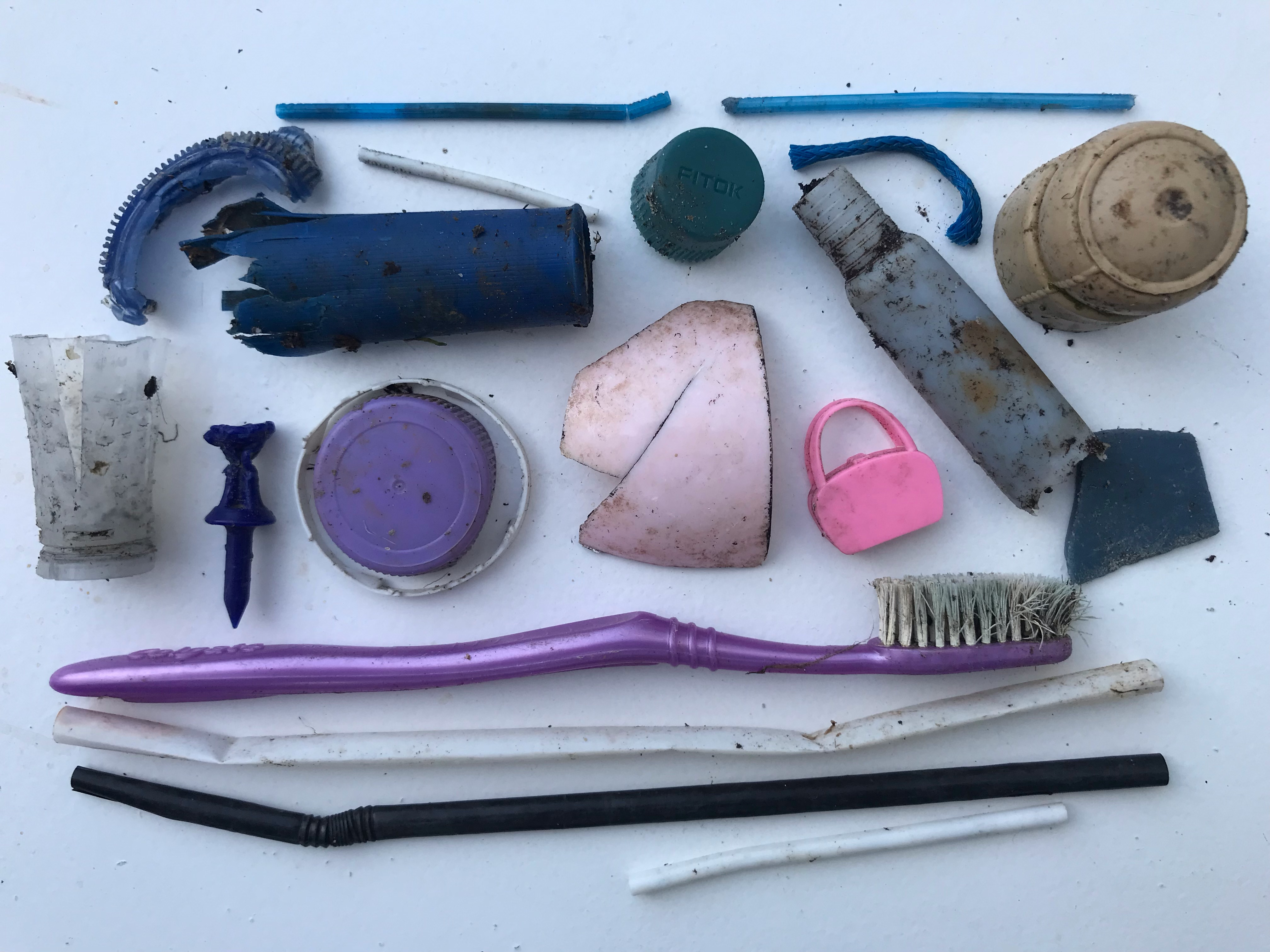
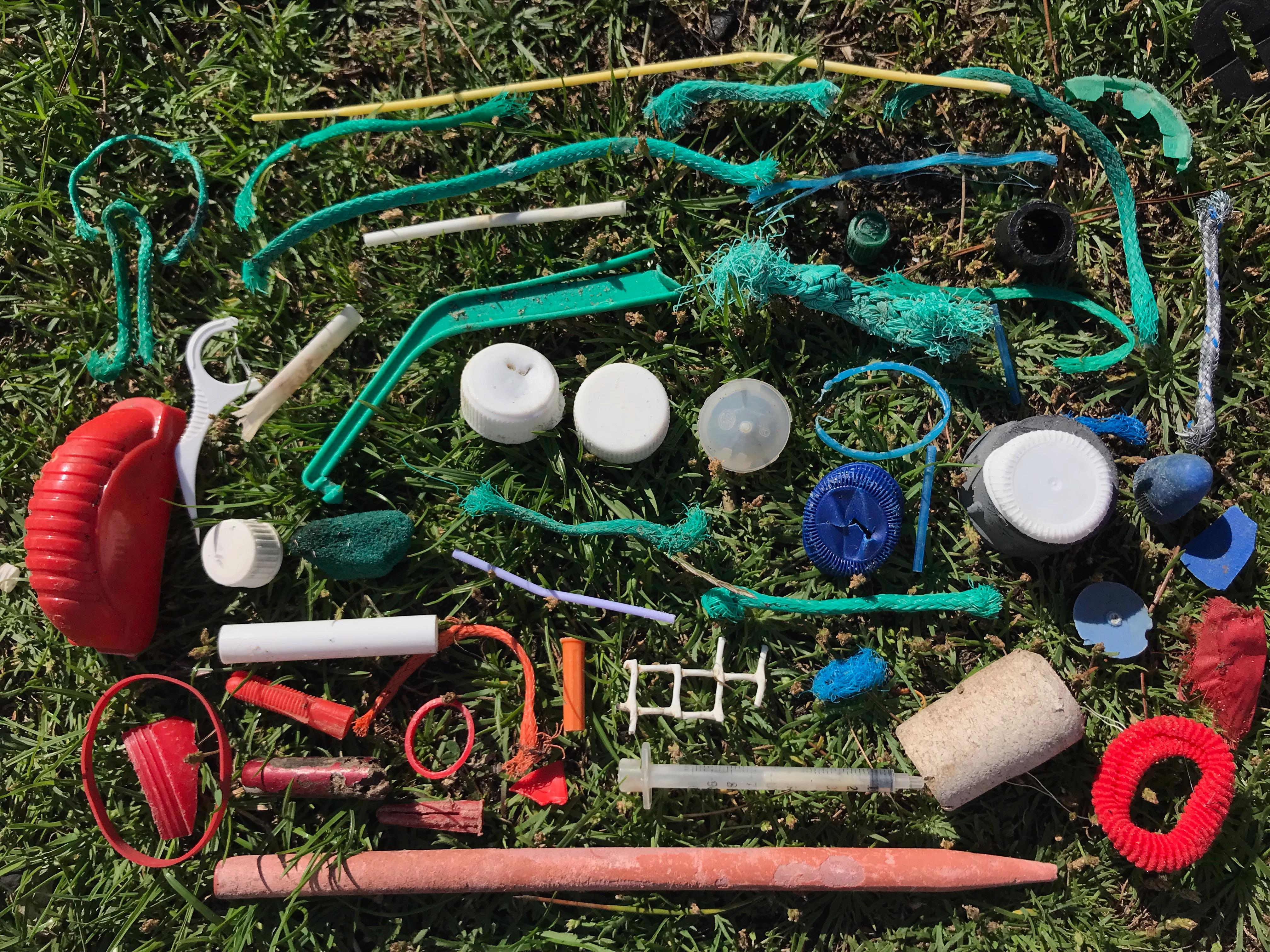
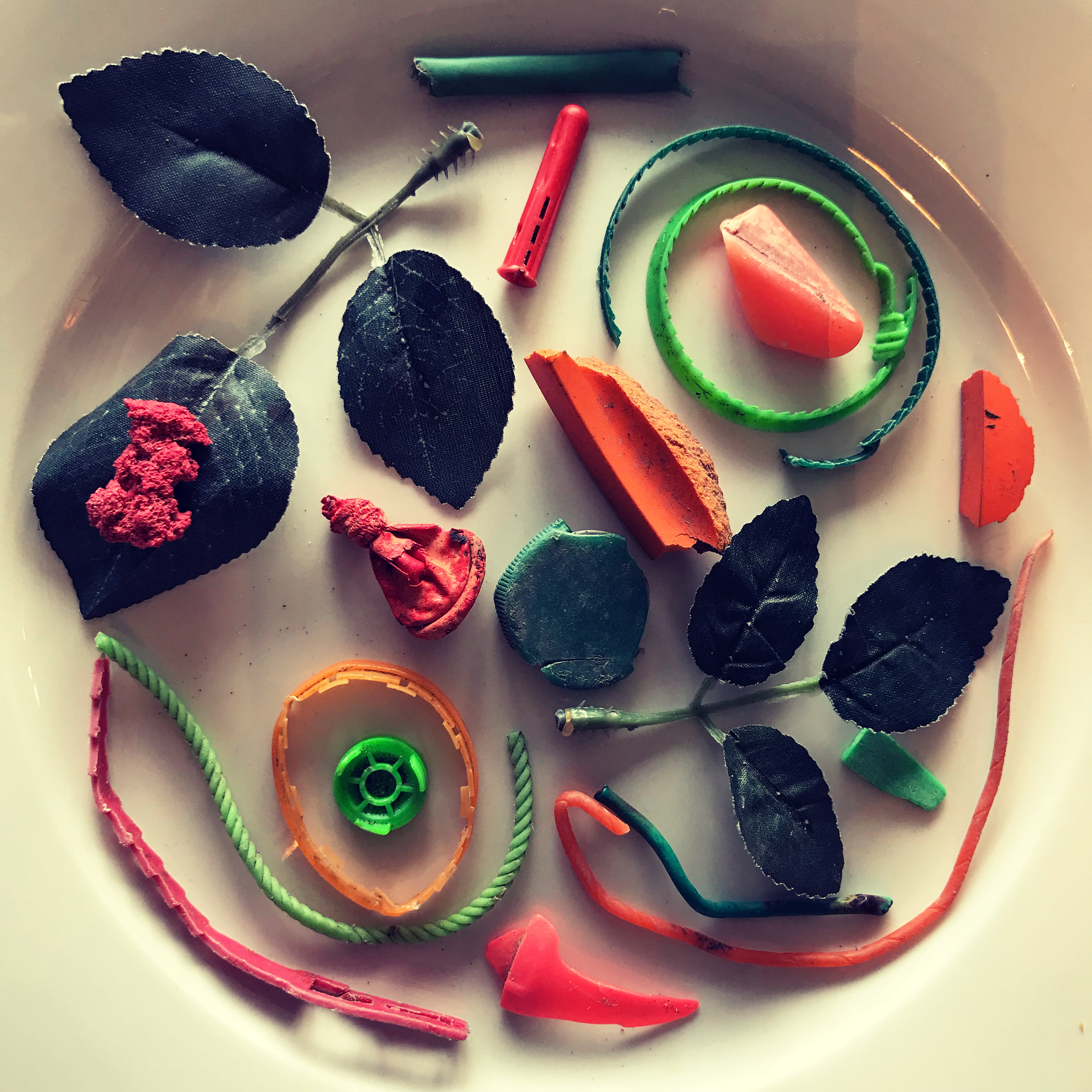
A sample of sea plastic washed up on Solent shores, 2021

Plastic straws and cotton bud stalks, along with plastic tampon applicators and shot gun cartridges, have become a sad portrait of society: what the sea sees of us. Why do we come across so many short pieces of PVC rope and fishing net?

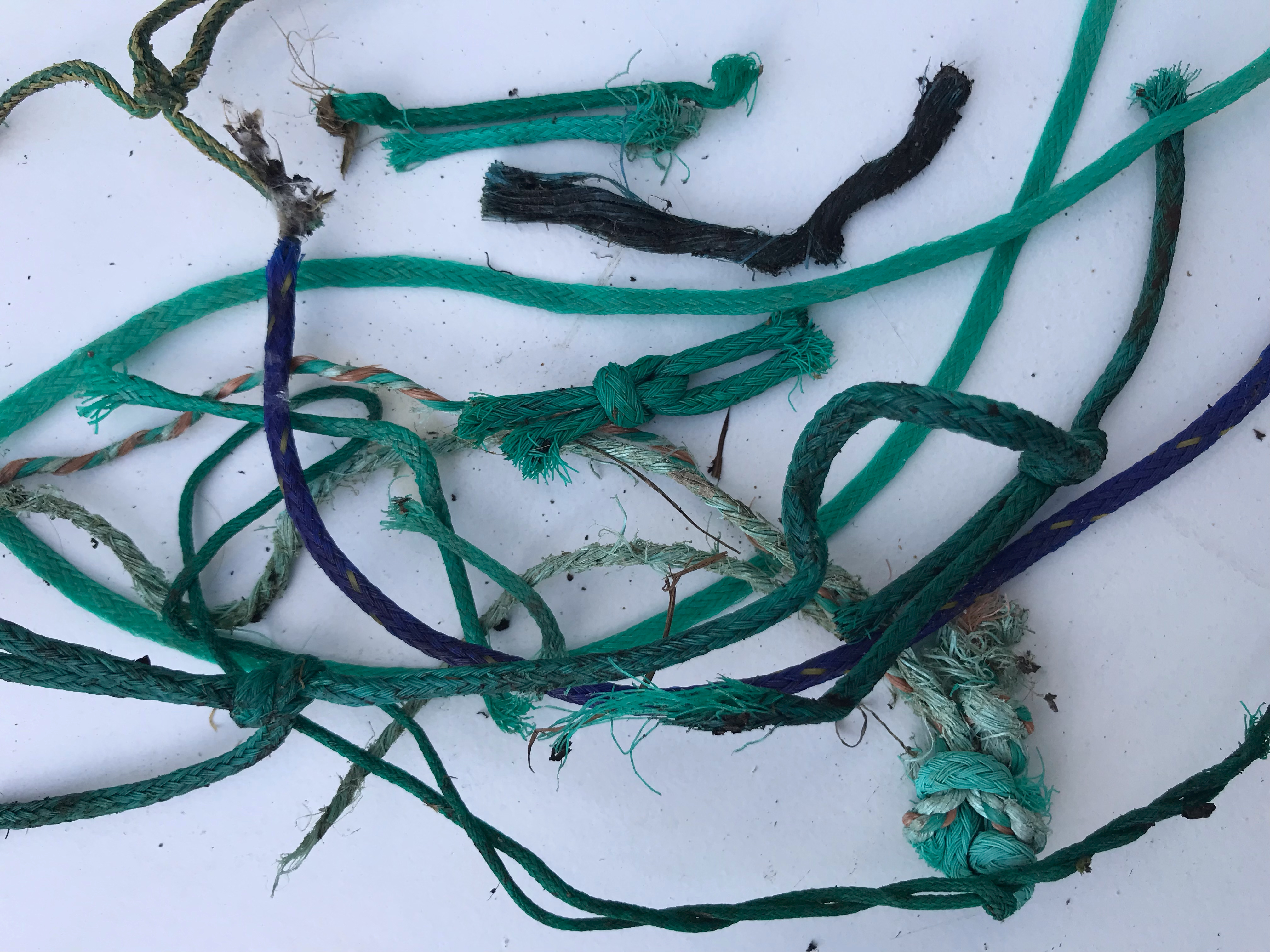
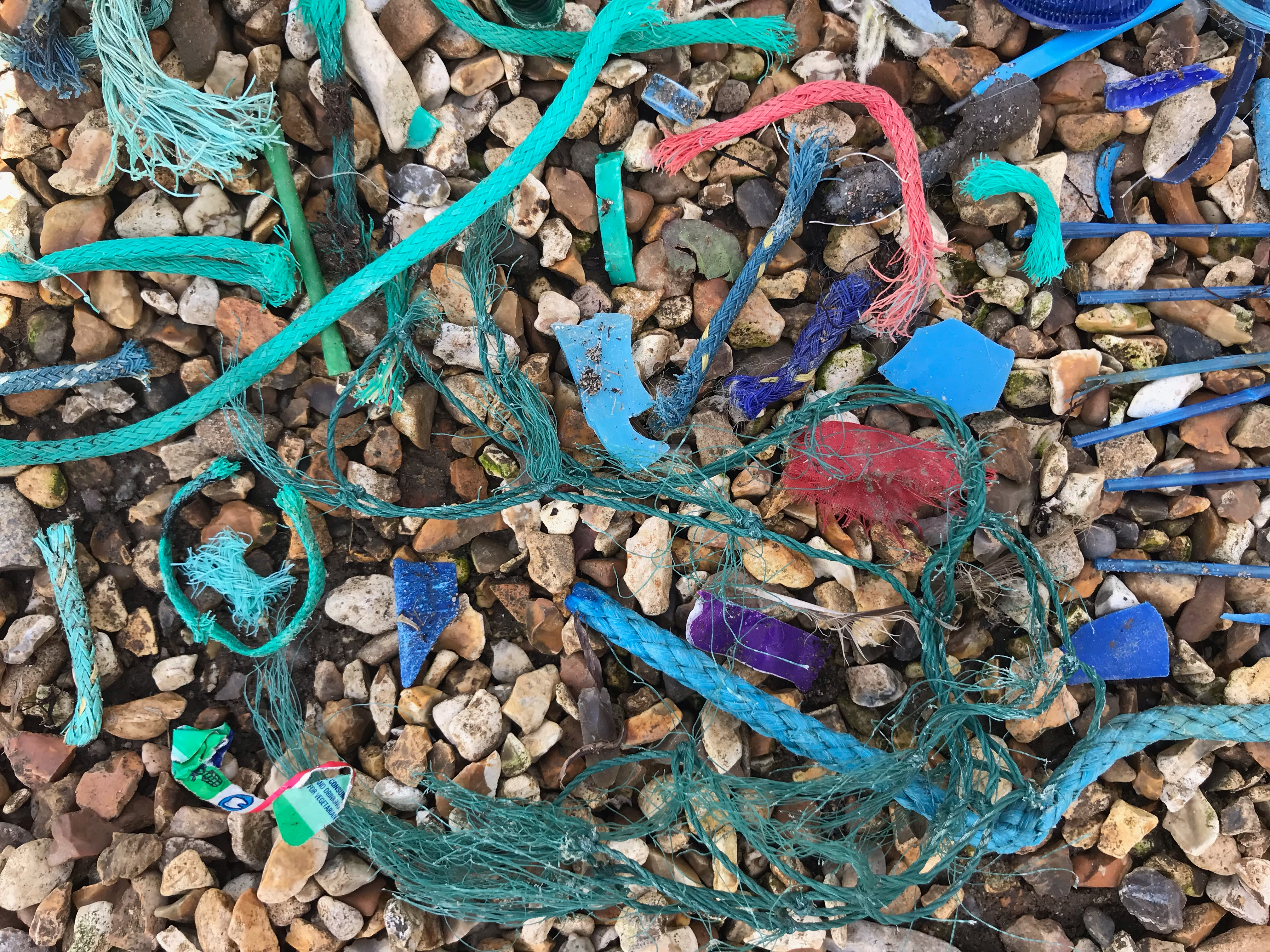
‘Sea kisses’ found washed up on the Solent 2021

I am told these ‘sea kisses’ are the result of trawlers shredding torn nets at sea and dumping this ‘waste’ overboard as it is cheaper and more convenient than bringing it ashore to be buried.

Will this ultimately poison fish and make them inedible?

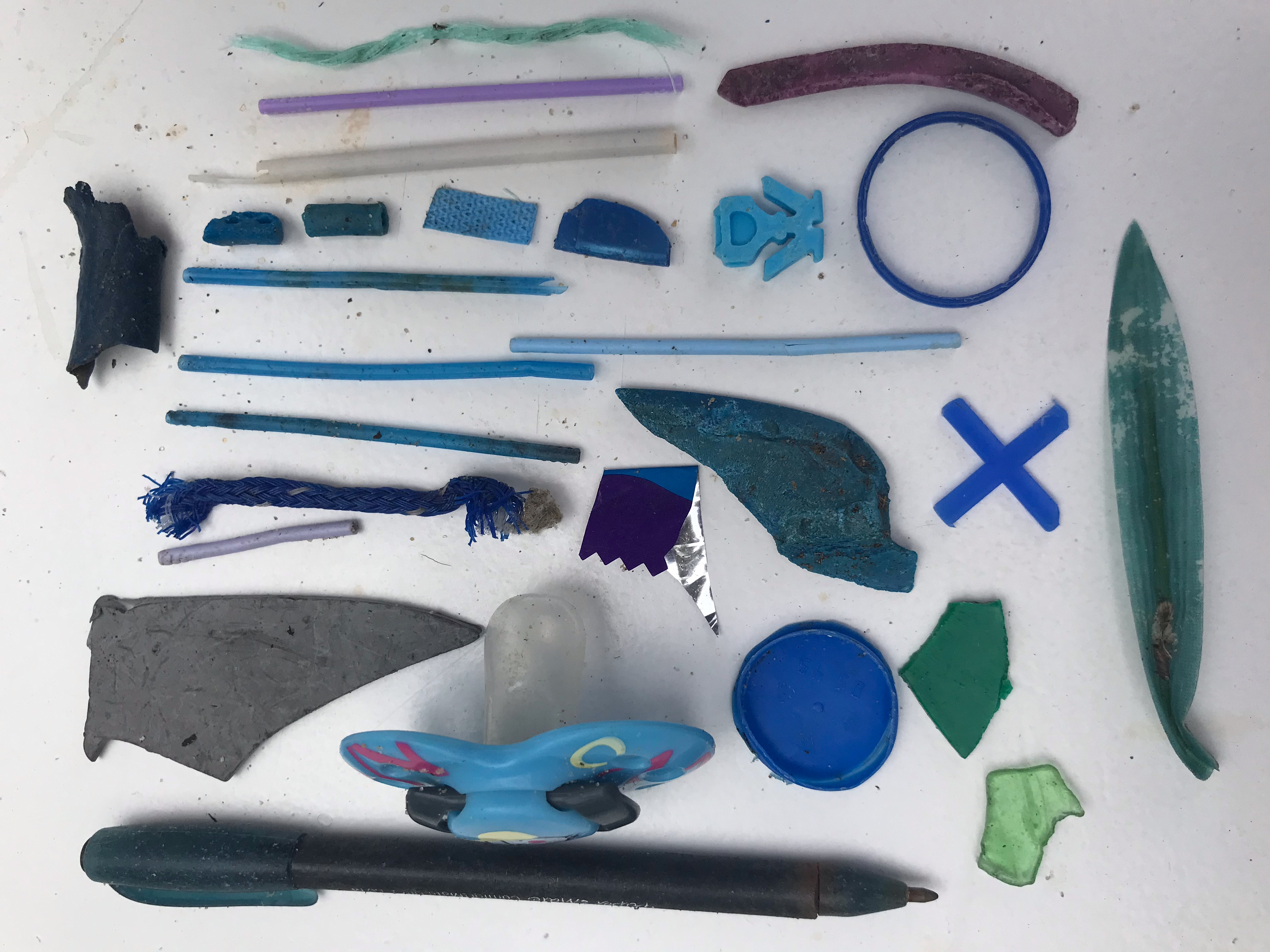
All these micro-plastics have washed up on the shores of the New Forest National Park. I’ve been trying to make ‘beautiful pictures of horrible things’, as the broadcaster JJ Walsh describes my photographs and framed collages.

Cotton bud stalks indicate sewage is entering the Solent

Any throw-away plastic rings should be regarded as ‘wildlife crime’ – they strangle too many birds.

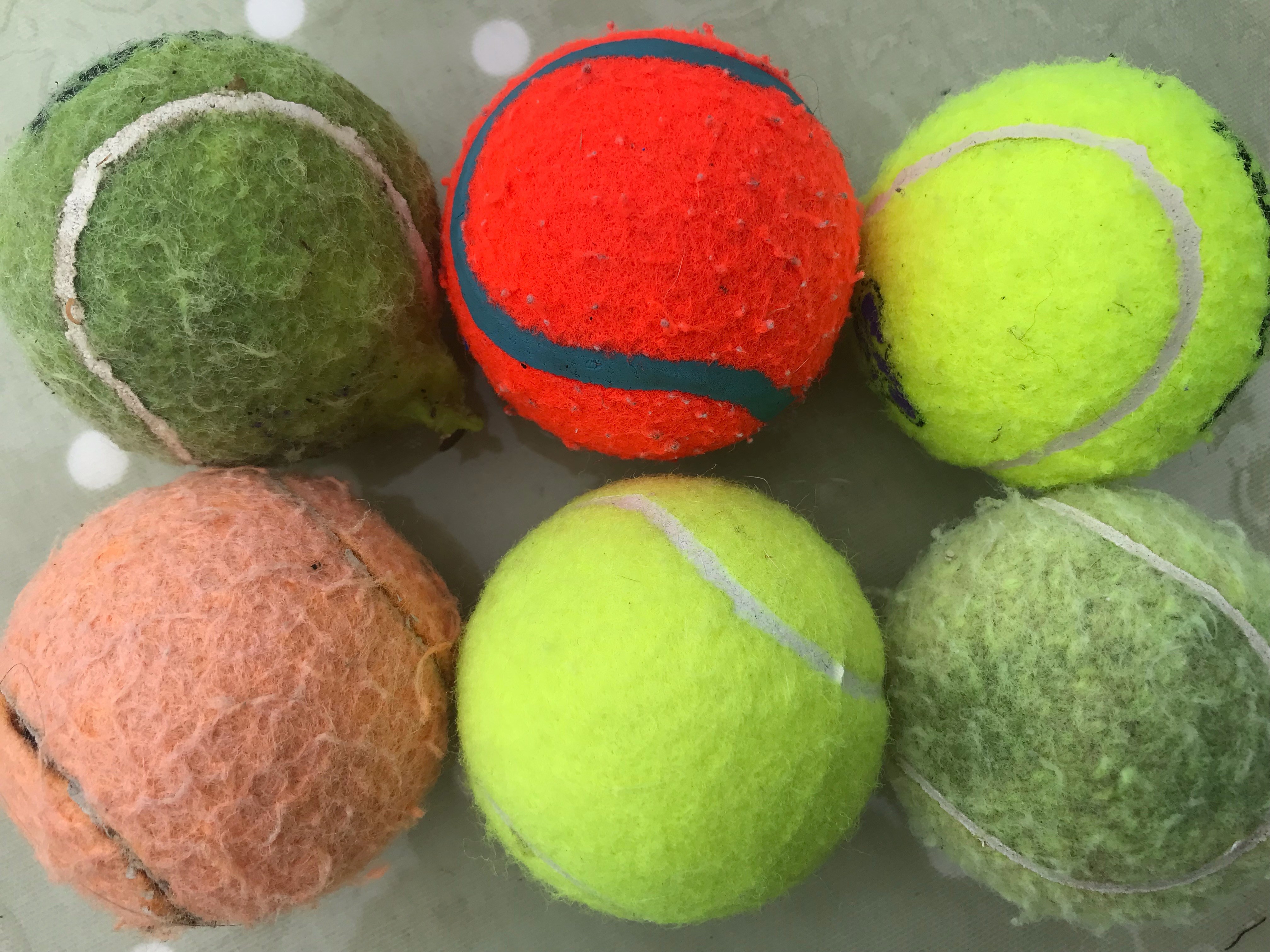
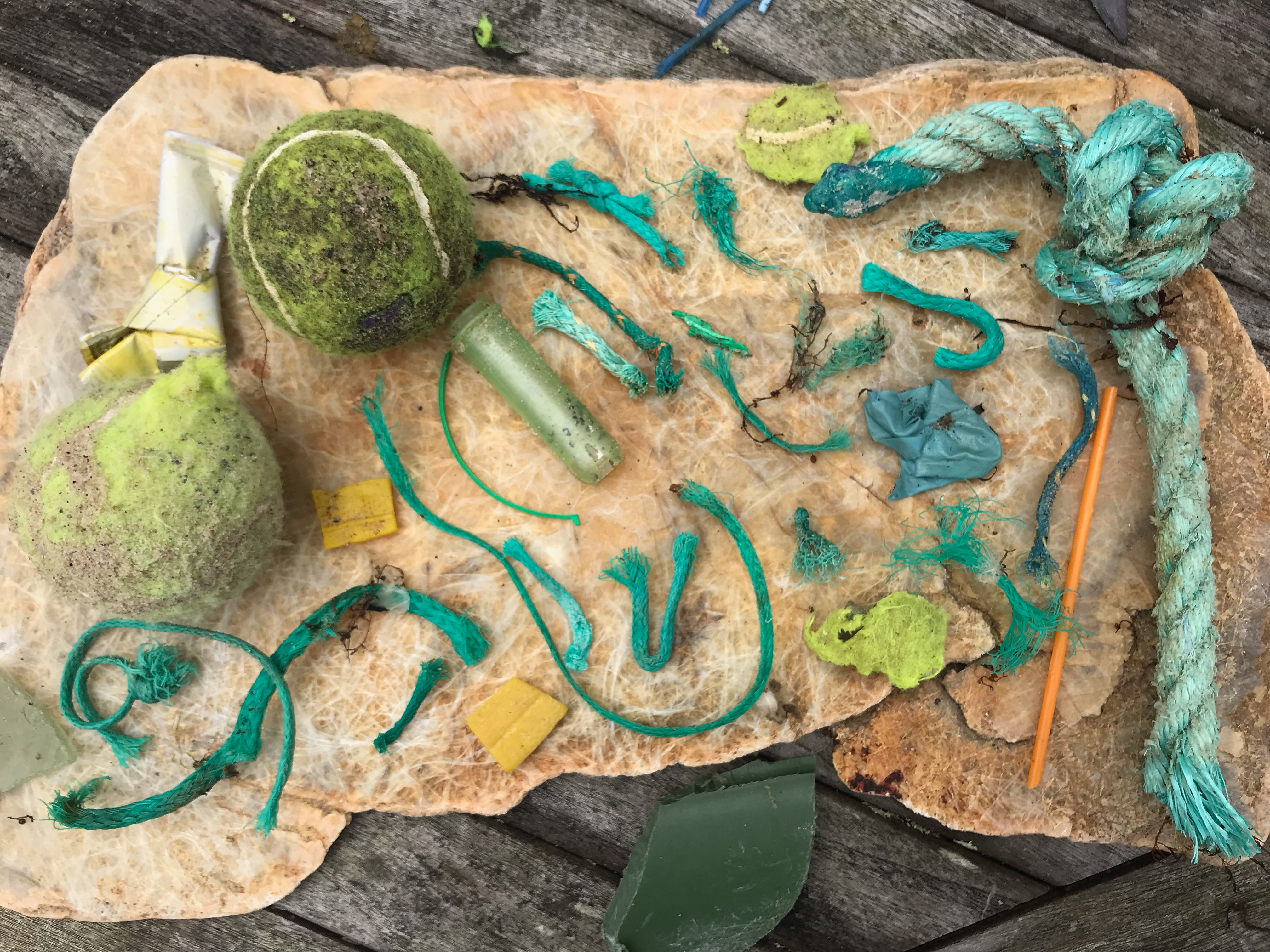
Do you know how much lead there is in a tennis ball? Despite the fact they they are not recommended as toys for dogs, huge numbers are washed up on our beaches. I find them all the time.

Tennis balls found on Solent beaches, 2021

One of my biggest hates are the plastic things used to sell six-pack drink cans as they easily get stuck around creatures’ necks. I often find four-pack plastic was washed up near a seabird breeding colony. Cut these things apart before re-cycling.

Washed up near a major seabird breeding colony

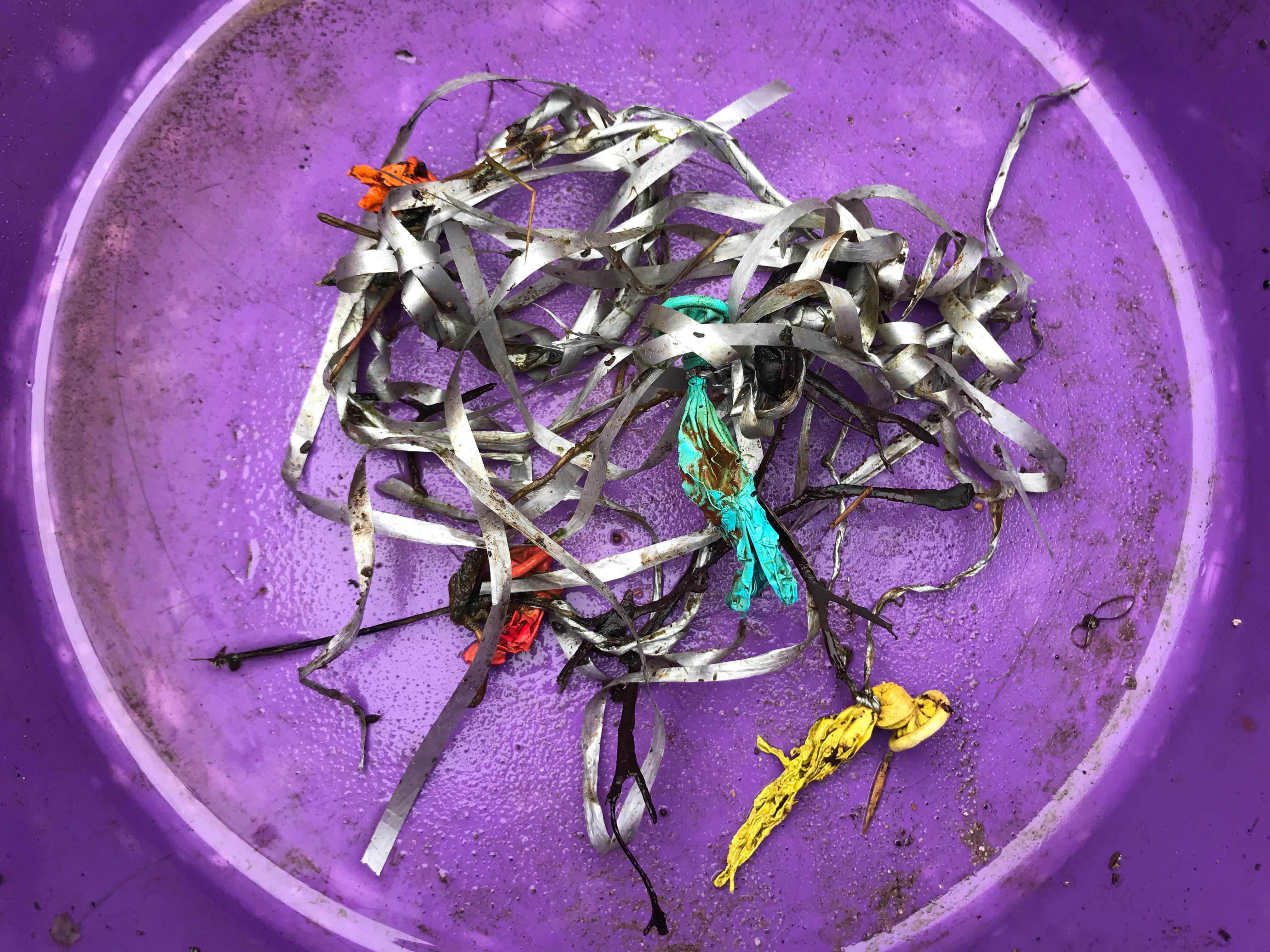
The ear-loops on masks also need to be cut, along with PPE gloves. They are washed up on the shore every day as are helium baloons and their ties.

Rubbish - the remains of helium balloons
The wretched remains of helium balloons

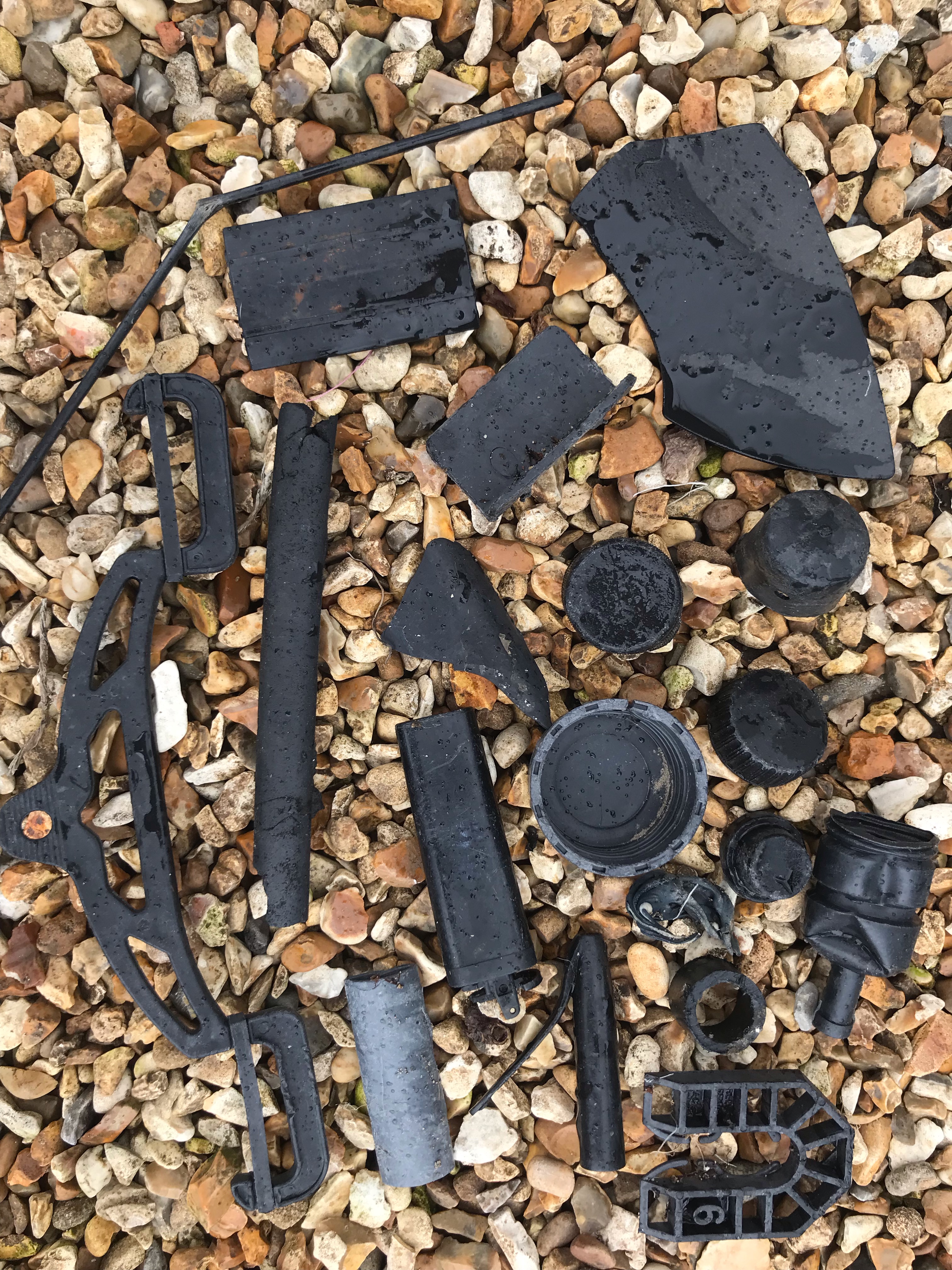
Children tend to be good at finding micro-plastics on beaches once they catch the vision. We have begun classifying them by colour or type. This black party-popper was a favourite.

I’m assured that some councils need to check beaches for ‘sharps’ before volunteer litter-pickers are allowed to begin collecting in earnest. Can you spot the needle and syringe here?

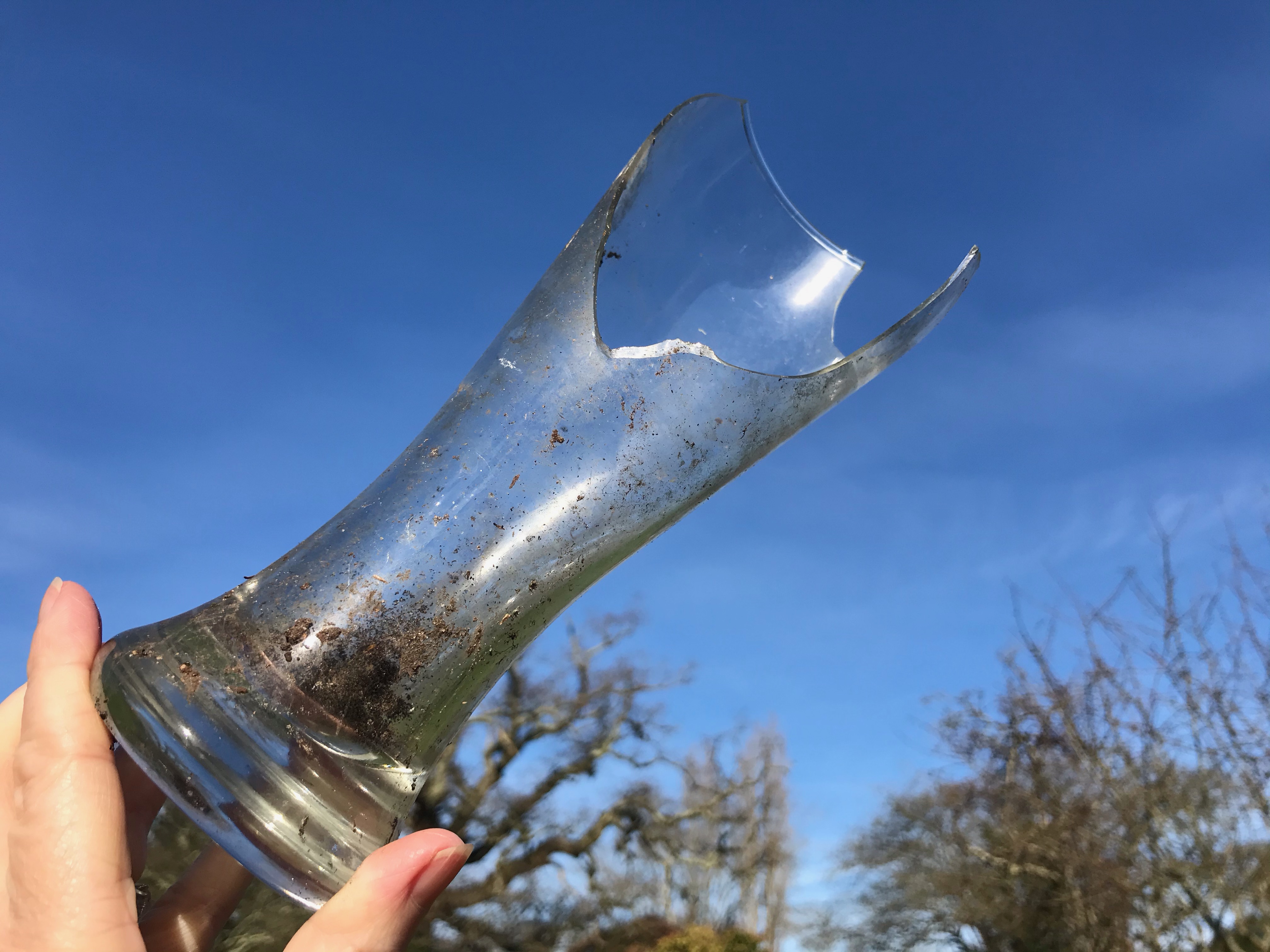
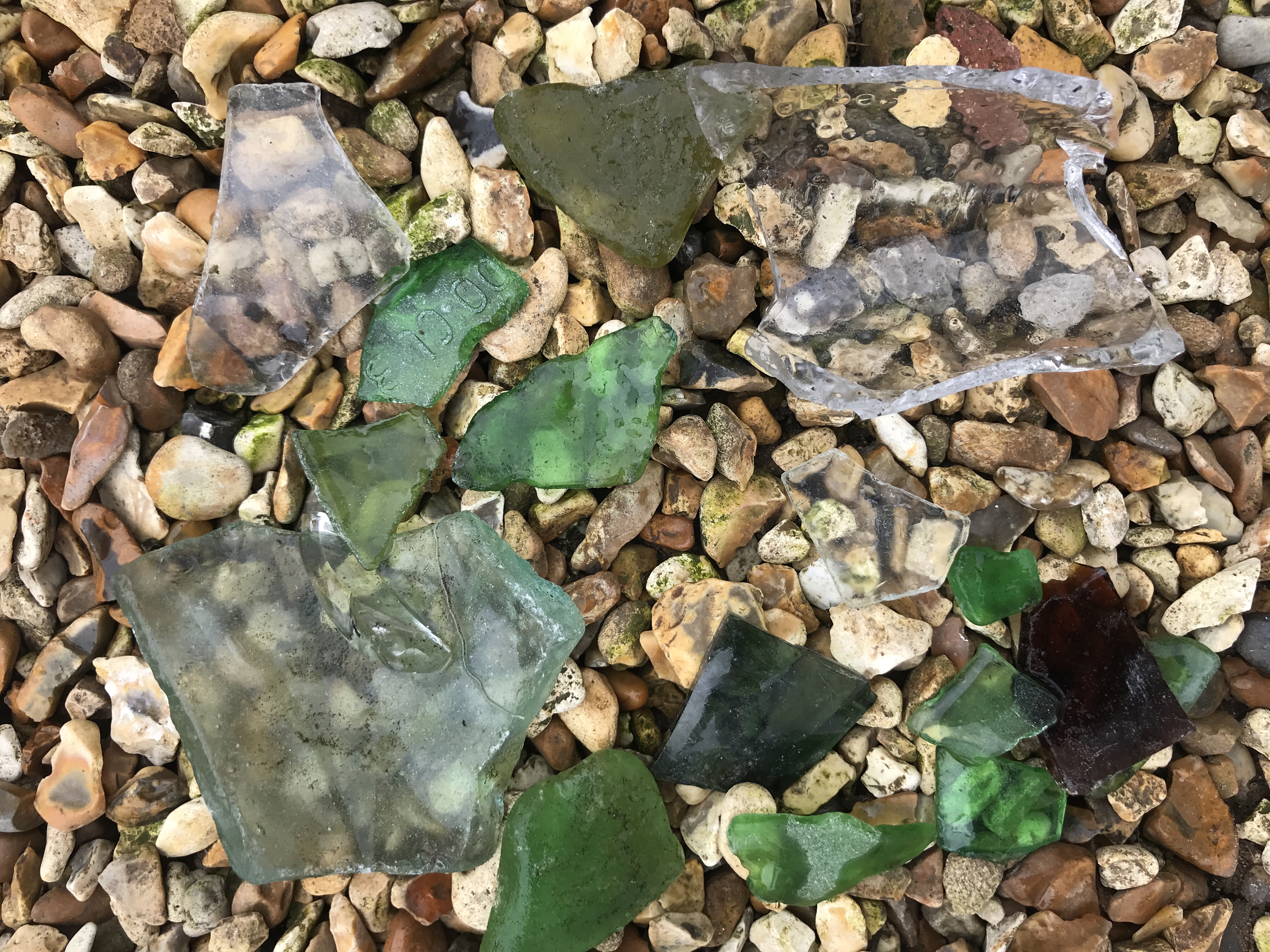
Collecting all these tiny pieces takes time and one has to watch out for hazards – but if it is not collected children will no longer be able to play on our beaches. Some parts of the coast have so much broken glass that you can’t pick it up with a dog in tow. It remains sharp for decades where there is no wave action.

Broken glass collected on a beach where children play barefoot.

The Marine Conservation Society likes to classify sea plastic into Litter, Fishing by-products, and sewage-related finds such as cotton-bud stalks and plastic tampon applicators.

We counted 21 cotton-bud stalks collected with this haul

After collecting flotsam, it takes a different mind-set to do the sorting, but it’s important to analyse and report back on what the tide is bringing in.

Sea plastic littering the New Forest National Park

I began to collect fishing tackle in a crate that was washed up on the Solent. Let me know, in the comments below, if you ever need some of this for a talk on conservation or plastic pollution. I’m giving it away freely.

For a list of weird and elderly things found washed up on the Solent, please click here

Plastic detritus washed up on Solent shores where wild geese and New Forest ponies graze

Diary of a litter picker: clearing the verges of vintage litter and other odd things

Country roads of the British Isles are strewn with litter, usually things that have been in people’s mouths. It’s surprising we have not been facing a worst epidemic. I collect so many tins and bottles of alcohol that I can only conclude there is a lot of drink-driving.

These cans of alcohol have been lying in our verges for over ten years

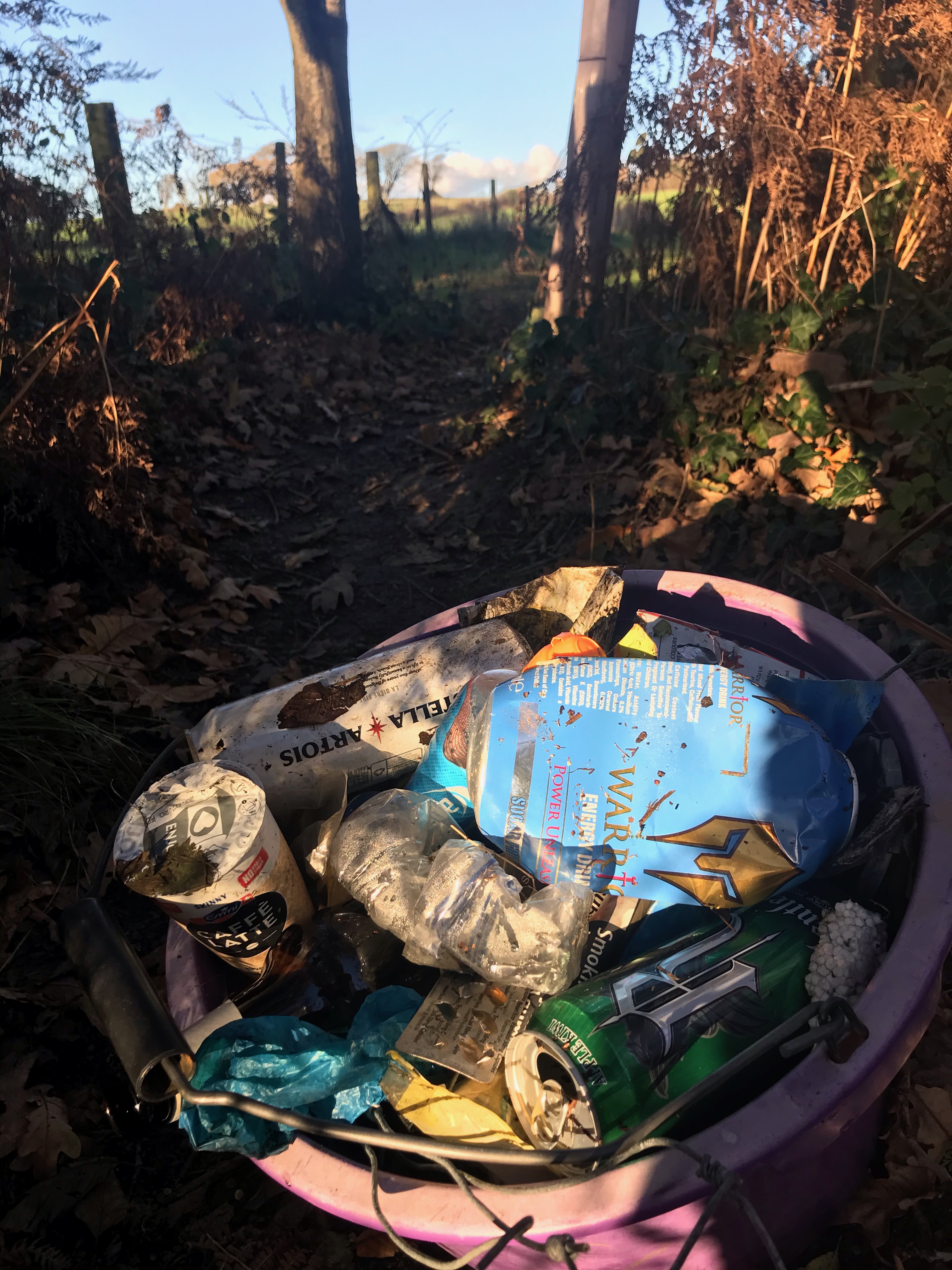
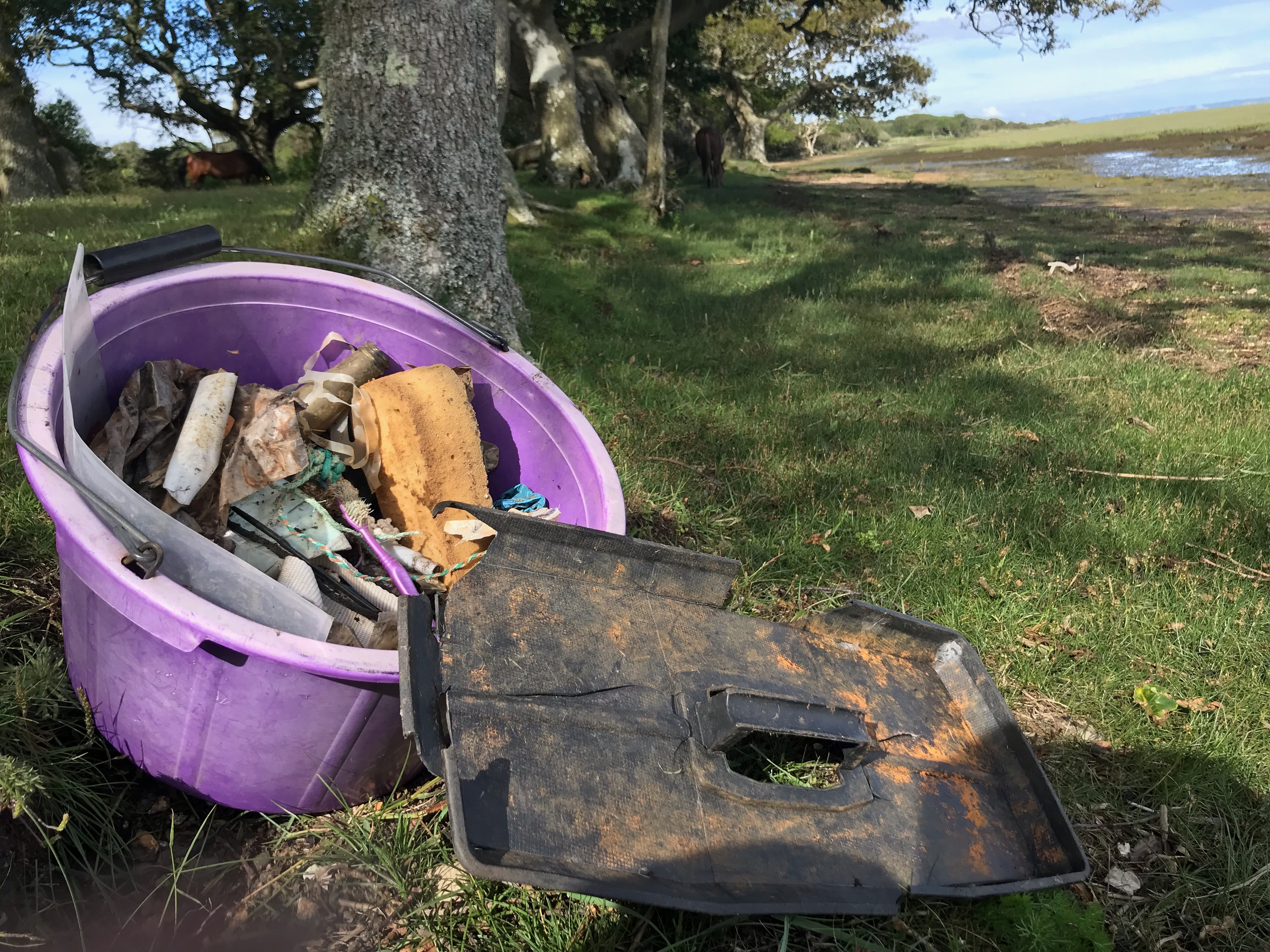
Motivated by fury, I stopped my car to collect this litter chucked into the New Forest National Park. As one of my litter-picking friends pointed out, most of the cans are high energy drinks that somehow don’t provide the imbiber with enough energy to put them in the bin.

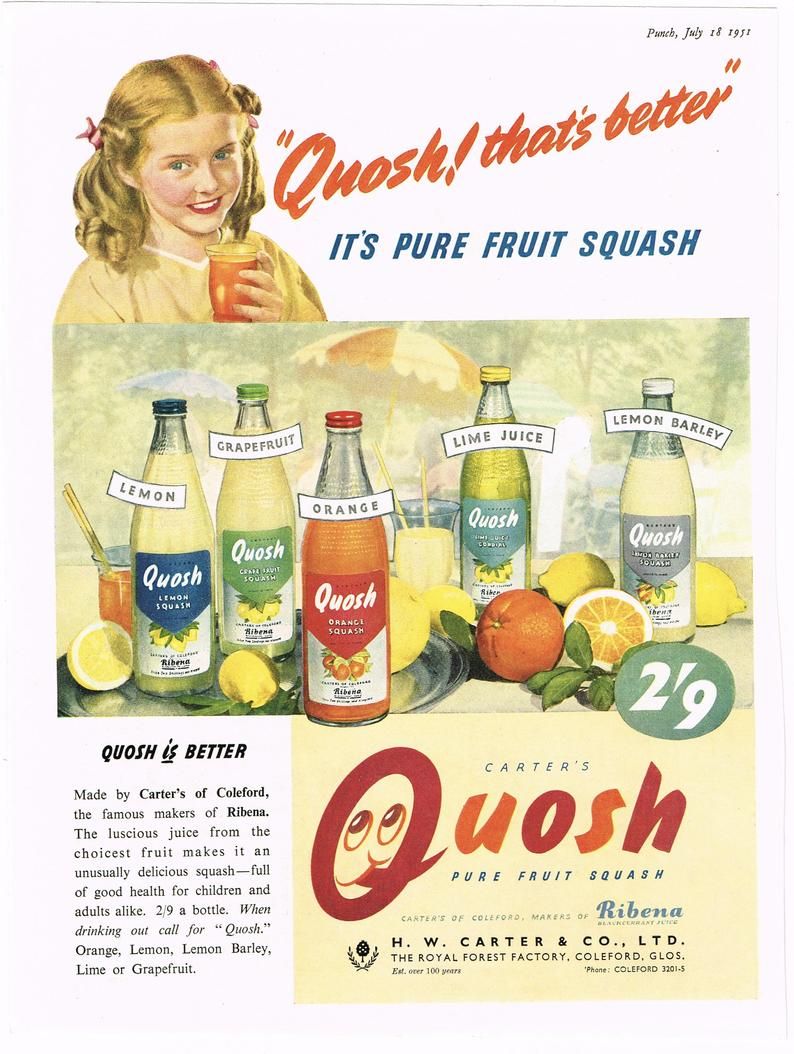
In contrast, I found a bottle stamped with the word ‘Quosh’ in one rural ditch. It must have been languishing there for fifty years.

Made by Carter’s of Coleford who produced Ribena, Quosh was advertised as originally costing 2’9d, a ‘pure fruit’ squash, no less.

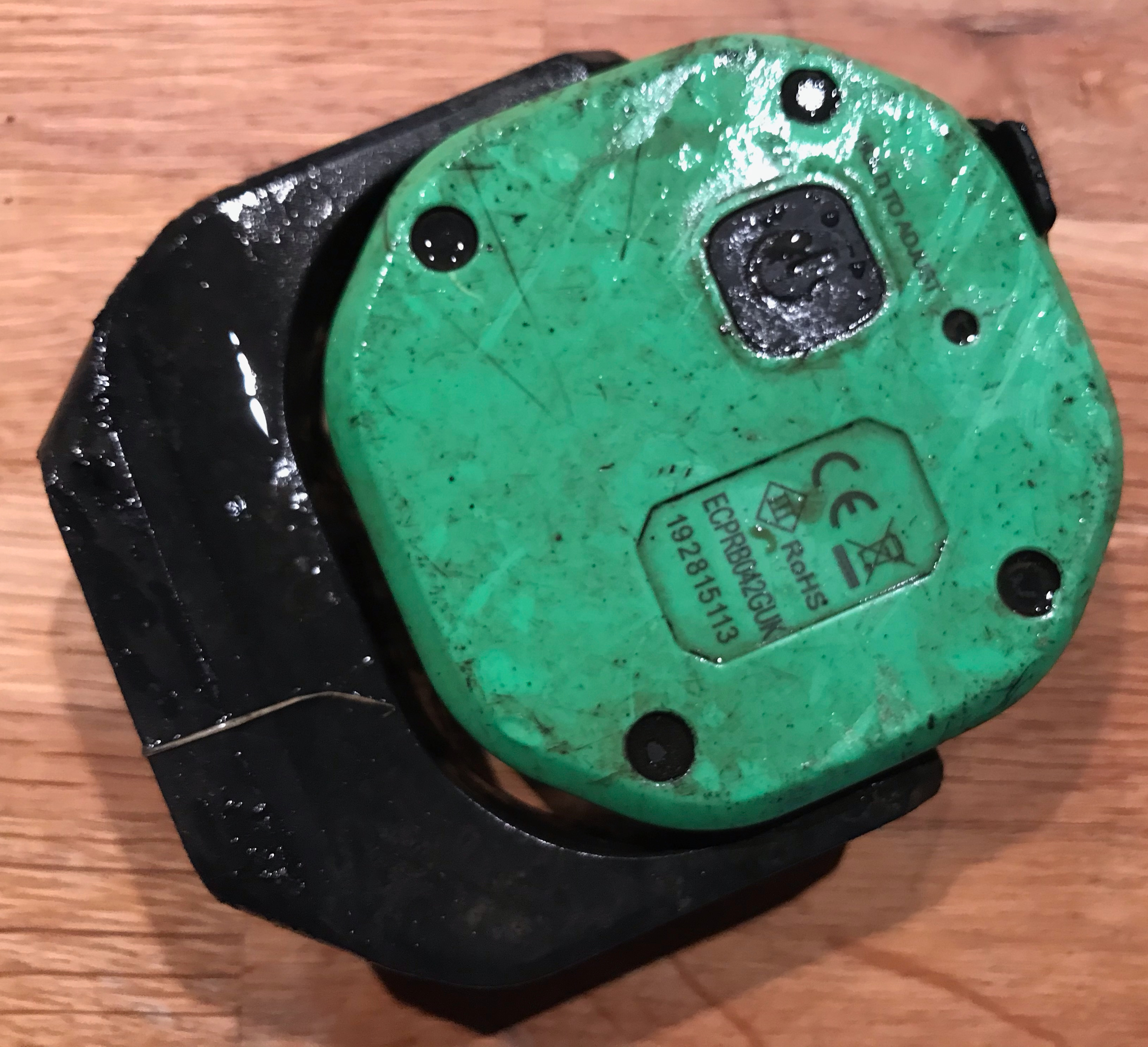
Occasionally there are bonuses. I found this incredibly useful item that, being water resistant, still works, although it took a while for me to work out its function.

It’s a project torch: waterproof, rechargeable and quite expensive.

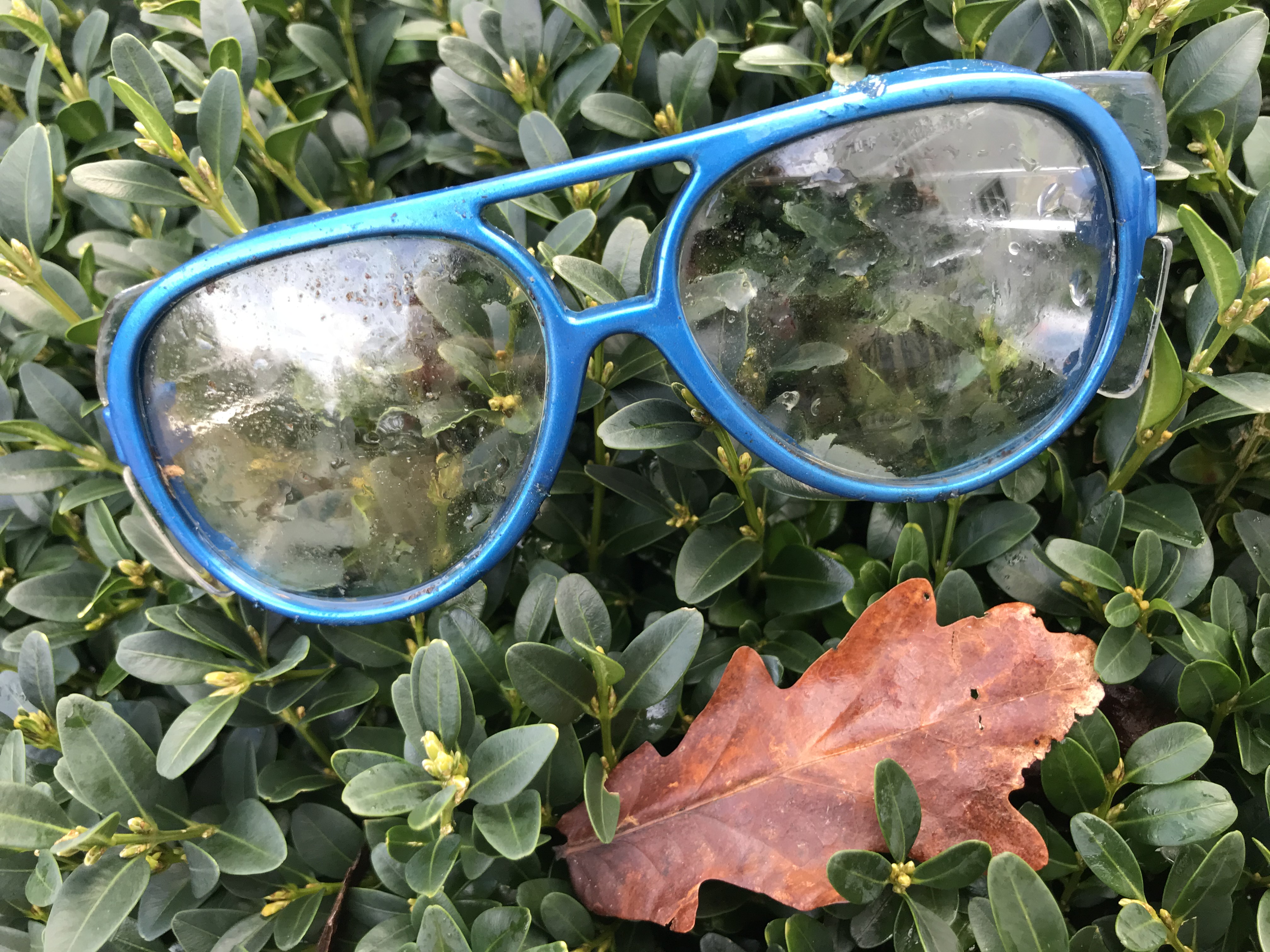
I’m not sure if I want to use these goggles myself, but they are intact.

Do people assume that their litter throwing will not be noticed? The results are becoming increasingly conspicuous. We see. Surely anyone can? Did they see what I saw?

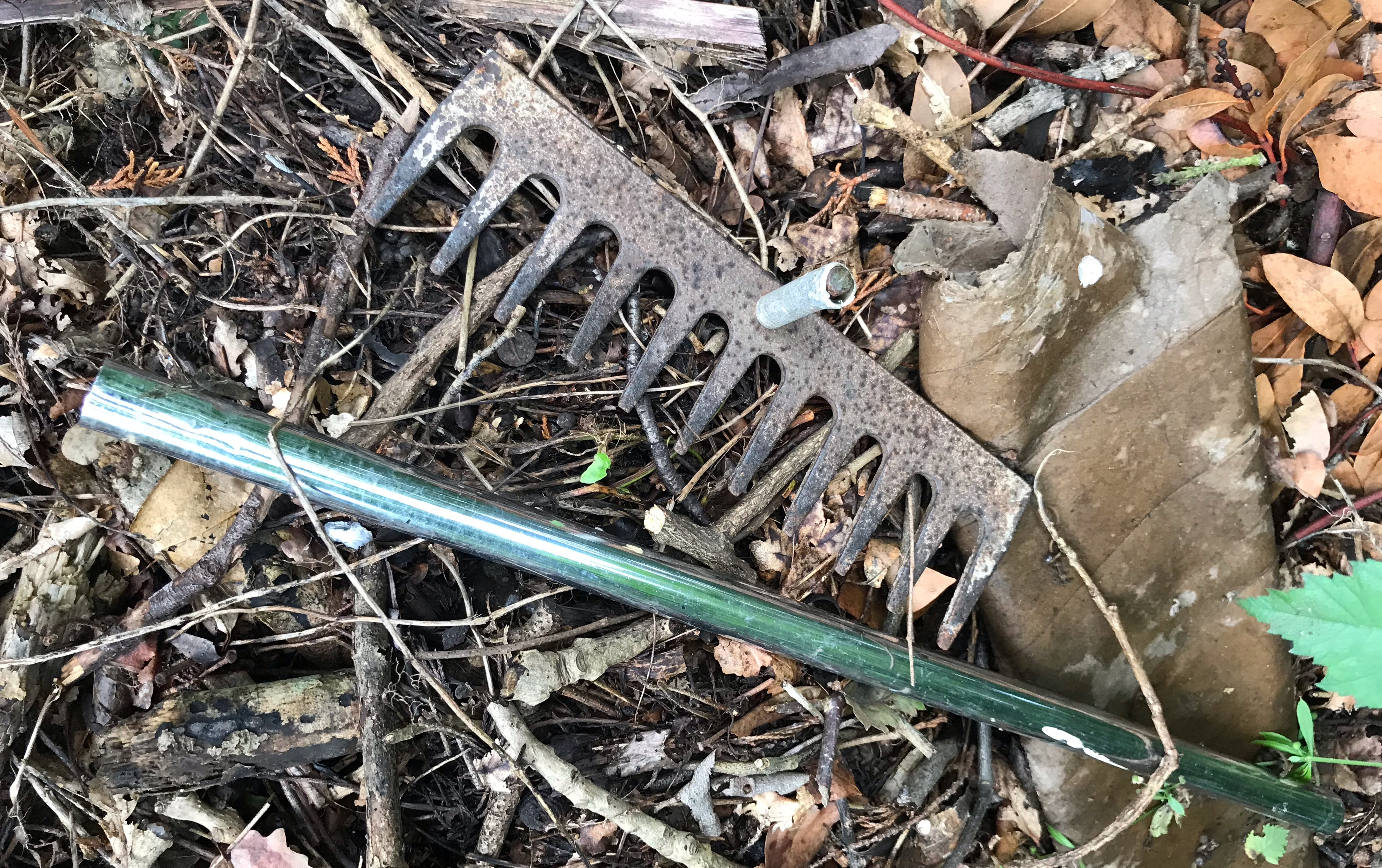
I found an odd looking garden rake:

An odd-looking garden rake

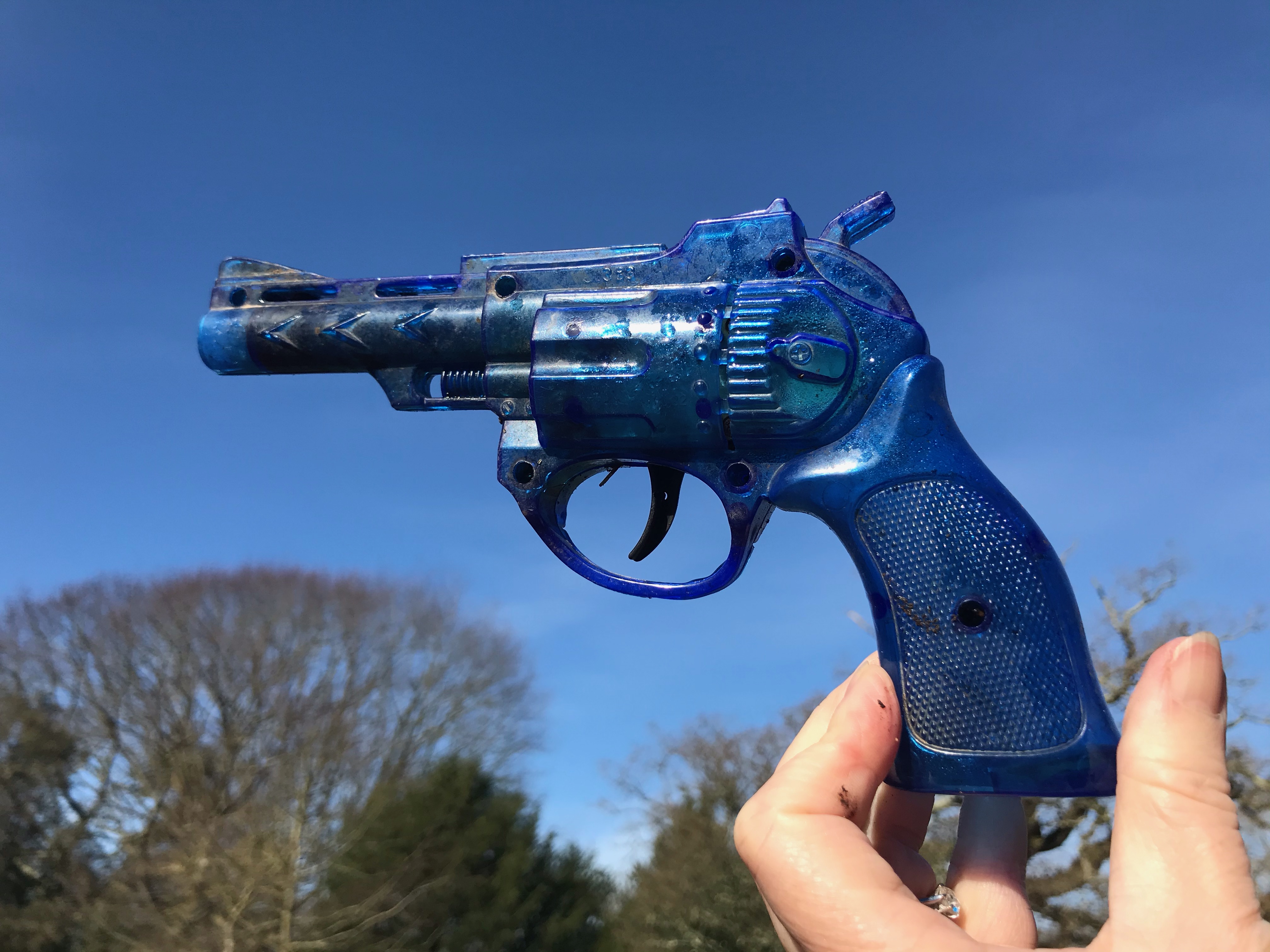
And a plastic revolver:

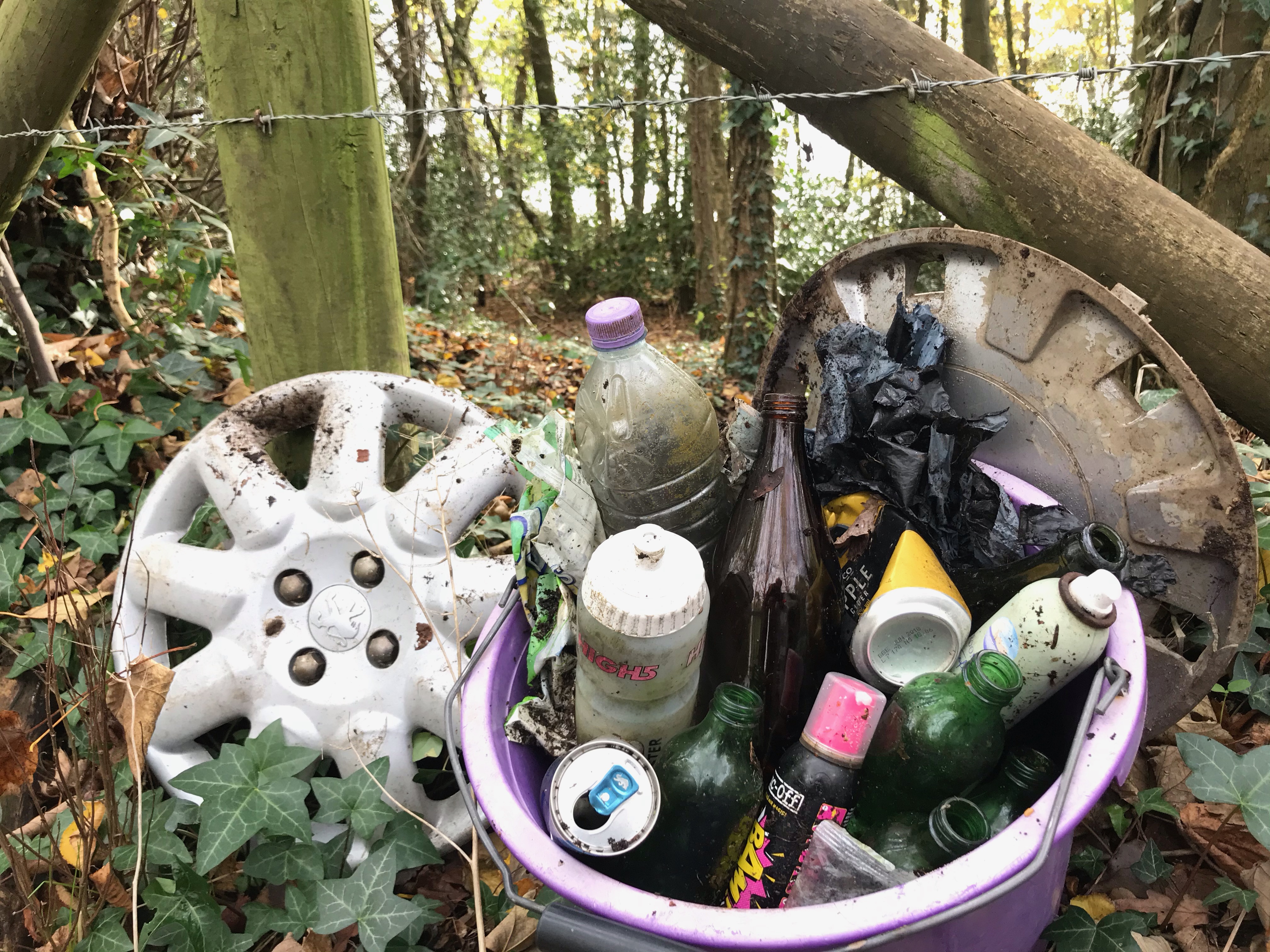
All this litter is being flung into the New Forest National Park on a daily basis. Everything in these photos was collected in one week, apart from the rake. Car parts add to the detritus that is becoming dangerous, certainly to wildlife.

Fly-tipping – in the Nature Reserve – is a regular occurrence. It has to stop.

There have been over 400 cases in the New Forest in the last year.

It goes on and on.

Up-cycled plant pots that somehow lack beauty

I reported these items some time ago. The tyres in the river (below) have been collected but it took a while for the ‘pot stands’ to be collected.

Think of registering with the charity Keep Britain Tidy who can give advice on litter-picking and help tackle this national problem. You can find more information here.

To read about weird and aged litter I’ve found, please click here

Diary of a Litter Picker: The ten most beautiful or useful things I have found

The very first things I ever found when litter picking in the New Forest National Park were these cut-glass jam pots found in a box that had been left in a rural car park. If they belong to you, and you’d like them back, please let me know.

These days, it is quite common to find discarded camping equipment in wilderness areas. Most items are brand new. I washed these green equipment bags (below) and sent them to an appropriate charity.

All litter pickers report back on finding glasses, usually abandoned near pubs. I must have rescued six or seven. Children’s toys are often left on the beach, but I leave them somewhere where the owners can pick them up or other children can enjoy them.

This silver broach lying in a stollen jewelry box was collected by the police. I also found a lost silver bracelet that I took to our local Police Station.

I have been making a collection of fishing equipment, which presumably could be re-used. Although this lure had lost its hooks, I have four or five like it. Our children were most thrilled when I found a plastic shark.

7d136e71-c05f-45e9-97e9-3eba0a7d36e7

I am yet to wear them, but these sunglasses were perfectly serviceable after being put through the dish-washer. I have added them to local Lost and Found post on Facebook but have had no takers. Other lost items have been gratefully re-claimed, from a lens caps to expensive trailer parts, and temporary road signs abandoned by contractors.

img_9485

I found this open penknife on the verge of a road where nobody walks, which was strange. I still wonder if it was flung out of a car window. It’s in my toolbox with a serviceable paintbrush and an expensive project torch I came across later.

Rubbish penknife

While not exactly beautiful this tow-hitch guard was just what a friend of mine needed and made an amusing hostess gift. I found it walking along the pavement on my way to Book Club.

For a list of weird things I’ve found, please click here

Think of joining the charity Keep Britain Tidy today. You can find more about how they can help here.

Having posted this blog on their site, members replied saying the most beautiful thing they had found litter picking was friendship – new friendships made, old friends litter picking together and fulfillment in forming groups.

Washed up on the beach – now translocated to my bathroom

Diary of a Litter Picker: Lockdown Reflections

A rainbow of discarded cigarette lighters

For some odd reason we have seen a rise in litter since Covid-19 broke out. Why is this? Does it reflect national frustrations or just an increase in takeaway meals and outdoor parties?

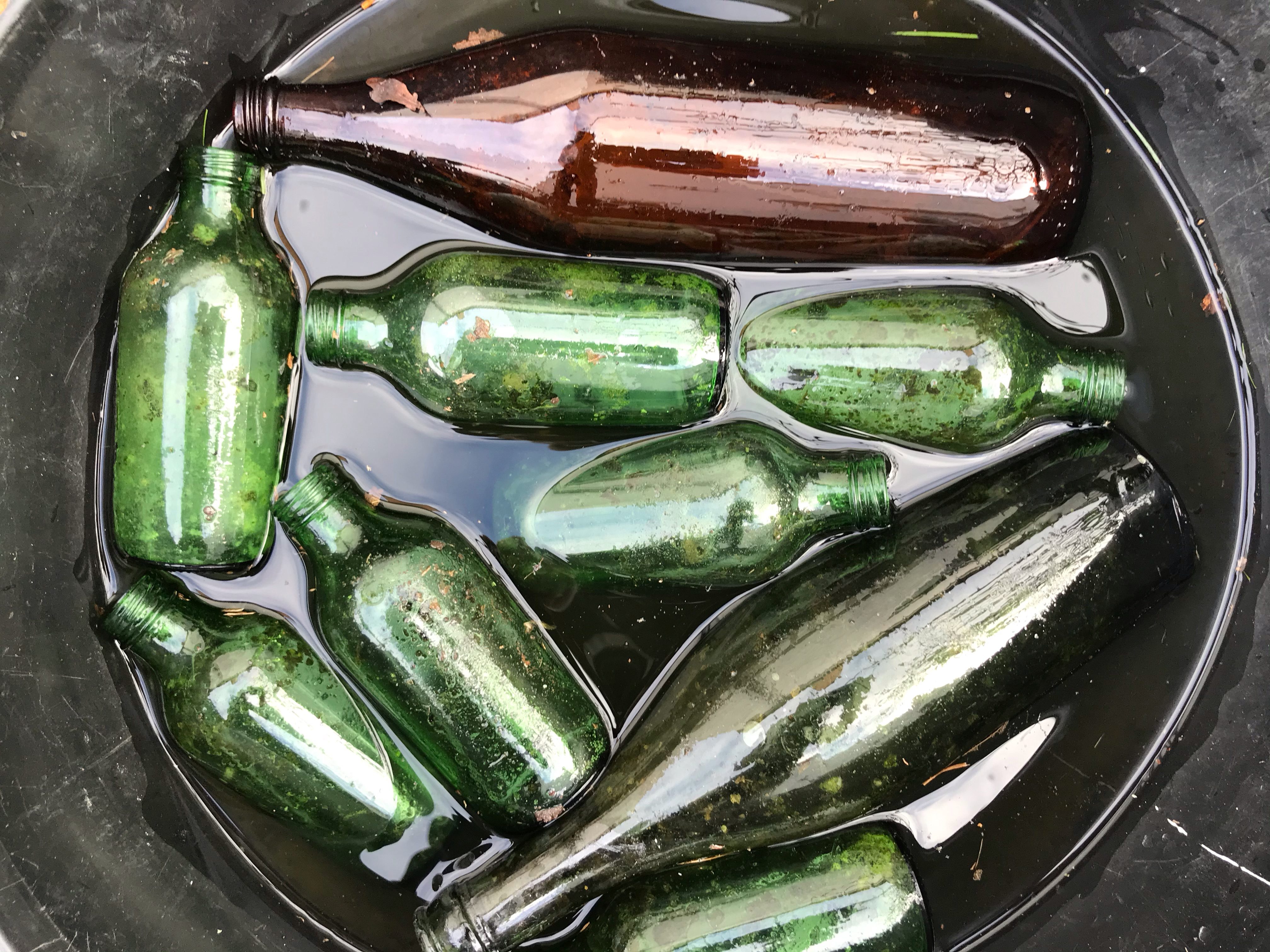
Green bottles found in ditches and beaches during Lockdown, sorted for recycling

It is strange that people continue to discard PPE despite obvious health risks. Have we ceased to care about endangering wildlife and polluting the environment? Ben Deutsch described it as, ‘an act of libertarian defiance.’ Jill Crouch decided, ‘we are coming out of a me me me time – a superficial needing of more and wondering why we are not fulfilled when we get it.’
There will always be lost things but have we lost pride in Britain?

This rubber shoe was found washed up on the shore with a mask, but there has been gradually less sea plastic found on my stretch of the Solent, presumably due to fewer ferries and less shipping.

A mask and other plastics washed up on the Solent along with an elderly bottle and scaffolding parts

I have been reporting finds in the local newspaper in an effort to inspire others to begin collecting flotsam.

SophieNeville, beach-hedge-and river-saviour,” one reader commented. “It’s frightening just how much litter she removes. I’m inspired to try to emulate her.”

Articles in The Herald by Sophie Neville

Meanwhile, there have been lots of vehicle part to retrieve on dry land.

Vehicle parts dumped in a Hampshire bluebell wood

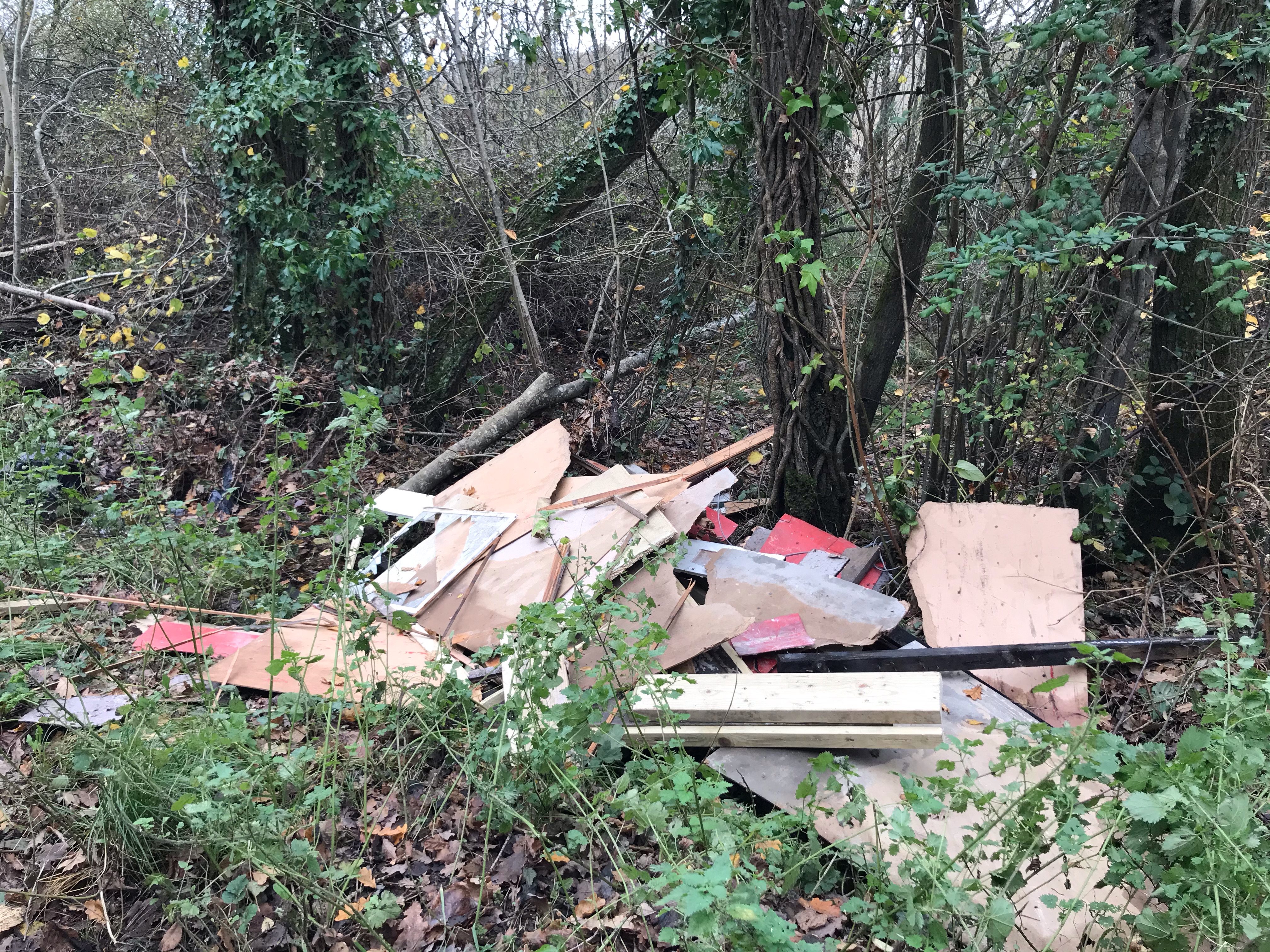
Lockdown certainly bought an increase in fly-tipping as people used time off work to clear out their sheds and attics or redecorate. At the same time, Council dumps closed during the first Lockdown and then introduced various restrictions, which proved disastrous. The New Forest National Park was hit particularly hard with bed mattresses and junk being dumped in precious wilderness areas.

Matt Rudd, writing in the Sunday Times Magazine was horrified by the increase in rubbish strewn about during Lockdown. He wrote, “There are two schools of thought on why people litter. The first is that they hate themselves for cramming all that junk food into their faces. Chucking wrappers out of the car window is just self-hatred by proxy.” Certainly, most of the litter I find has once wrapped over-sugared, over-salted, over-caffeinated food and drink of some kind. I would add tobacco and harmful drugs to his list. It’s as if people want to distance themselves from guilt and shame.

“The second,” Matt Rudd claims, “is that the further you are from home, the less you care about the environment.” And yet, he witnesses that, even in strict Lockdown, our local parks and car parks are strewn with newly dumped masks. Does the fear of contracting a virus make people more selfish?

However, the response has been amazing. Despite restrictions, individuals have used their daily exercise allowance to clean the beaches and verges of Britain. Litter-Pickers of the New Forest have gained over 1,300 volunteers in the last year, with an active Facebook Page and Justgiving site. They encourage members with sponsors delivering rewards for volunteer achievements.

A gift of encouragement from Litter-Pickers of the New Forest

If you happen upon a litter-picker, do give them encouragement, and if possible, lend them a hand. We are all fighting the same battle.

To find out about Waste Less, Live More, please click here

A pillow washed up on Solent shores

Diary of a Litter-Picker: Roadside survey for ITV’s ‘Tonight’ programme

I was asked to take photos of pieces of litter for ITV’s ‘Tonight’ progamme who were conducting a survey. This took me twenty-five minutes and left me fuming.

A second recently discarded ‘disposable’ face mask greeting visitors

Forgive my rant, but cars never stop while driving out of town around this bend. These items were thrown from moving vehicles, into a Nature Reserve within the New Forest National Park, in the space of a few weeks while Lockdown measures were in place.

Those intelligent enough to pass the Highway Code, obviously think plastic bottles and tin drinks cans are bio-degradable, that there is no need to take responsibility for items that have been in their mouths during a pandemic.

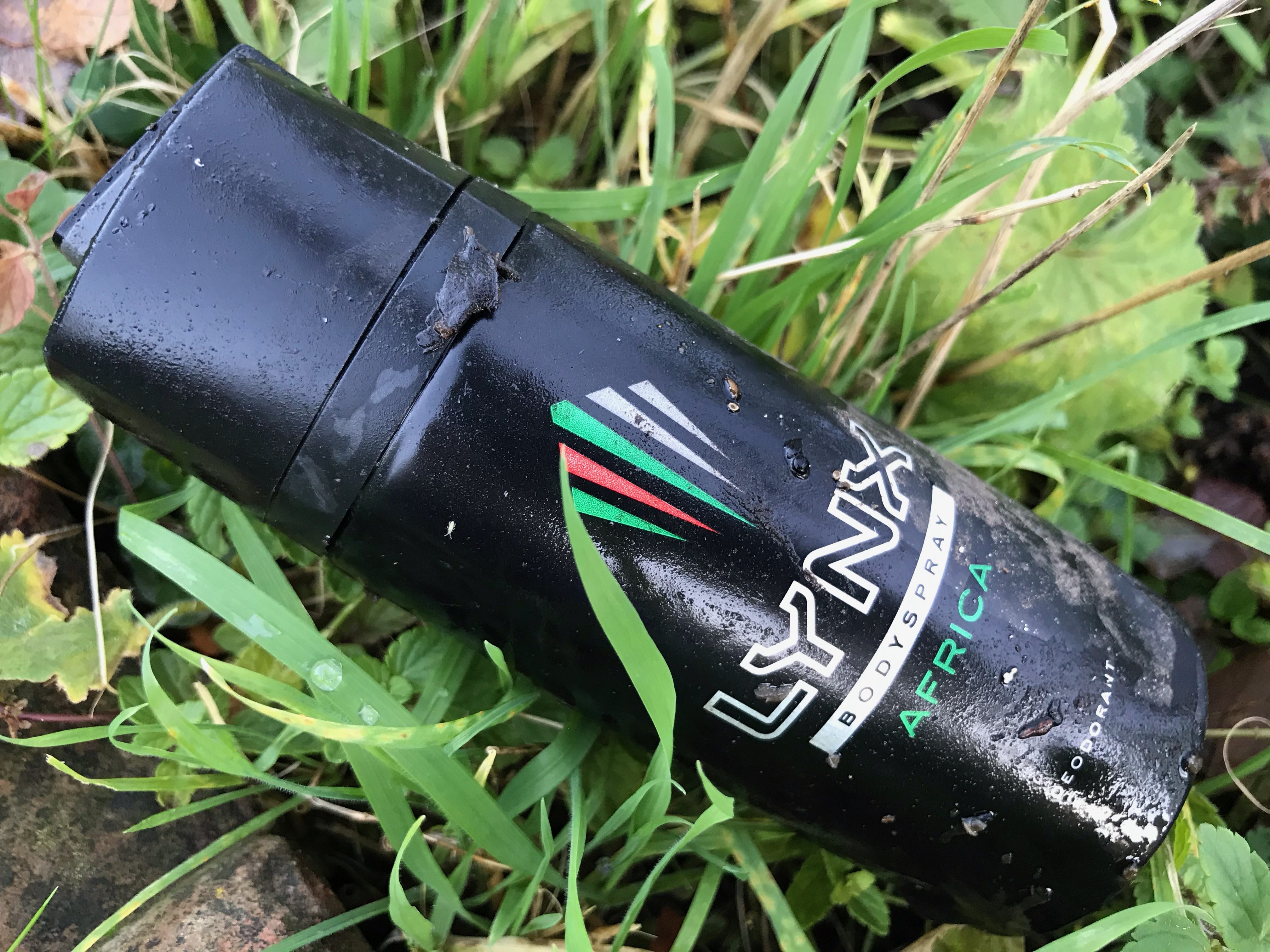
This is not the first time I have found Lynx Africa in the New Forest. I am assured it is sniffed as a recreational drug. This canister was undoubtedly chucked out of a vehicle. Are drivers sniffing it as well as consuming alcohol?

You get three points deducted from your driving licence if something accidentally falls off your roof rack. How many points do lorry drivers get for losing a load – nine? Surely, litterers and fly-tippers should have points deducted inline with this policy? Fly tipping and throwing litter from movie vehicles is hazardous. Being abandoned, the repercussions are endless.

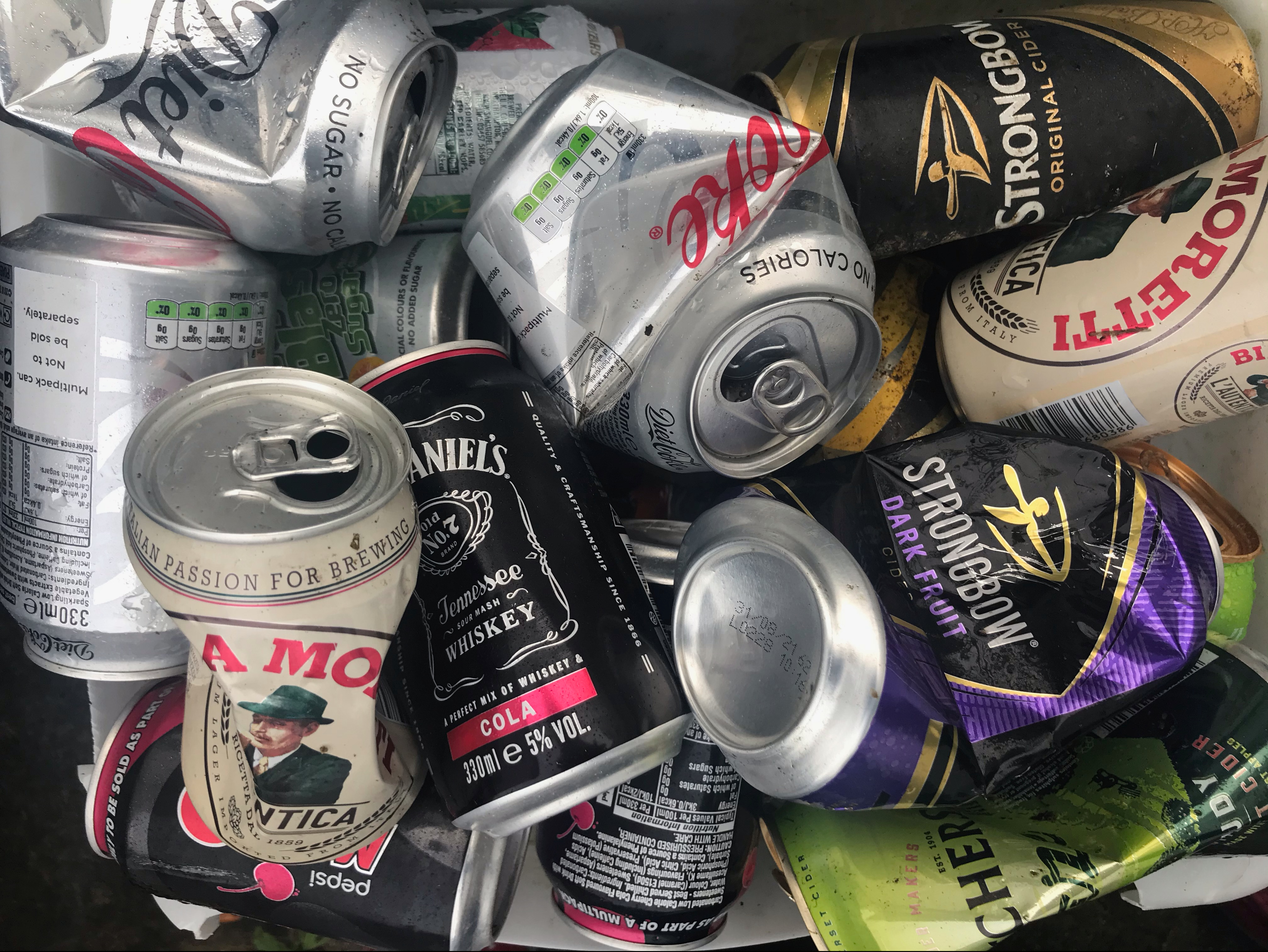
What hope is there for the planet when people can’t be bothered to recycle their own drinks cans?

This McDonalds carton probably came from the Southampton takeaway 19.9 miles away. There is a nearer outlet 12 miles away but it would still have been carried for twenty minutes in a vehicle.

Everyone knows that plastic rings can choke wildlife. There is a sign on this bridge saying ‘Otters Crossing’ but I see cars speeding across at 50mph.

So much of the litter I find could be fatal to wildlife. We all know plastic rings can be lethal. This rope was found the other side of river, looking north. You can see the wildfowl near the reedbeds.

Litter-picker kindly supplied by Litter Pickers of the New Forest

It goes on and on. This is litter collected in an area frequently cleaned by volunteers. I ended up dragging this traffic cone out of the estuary and adding another face mask to my haul.

Items removed from the Lymington river Estuary – May 2021

To see photos of items retrieved from this estuary two years ago, please click here

Diary of a Beachcomber: collecting sea plastic from Crown Estates on the Solent

I’ve been getting involved in Keep Britain Tidy’s Great British Spring Clean – making an attempt to spring clean the section of the South Coast where we live, only to be shocked by our own findings. Some of the plastic washed up on the Solent has been around for so long the vegetation has grown over or through it. This is not a rock:

This bucketful of flotsam was brought in by one storm, although some items must have been floating around for a while. A week later I found this washed up on the same 600yard stretch of Solent foreshore:

I collected these tins, plastics and polystyrene from a tidal riverbank. Our waterways are full of drink cans.

The sheer amount of bottles that must have been thrown out of moving vehicles, is staggering. All this needs to be sorted and recycled.

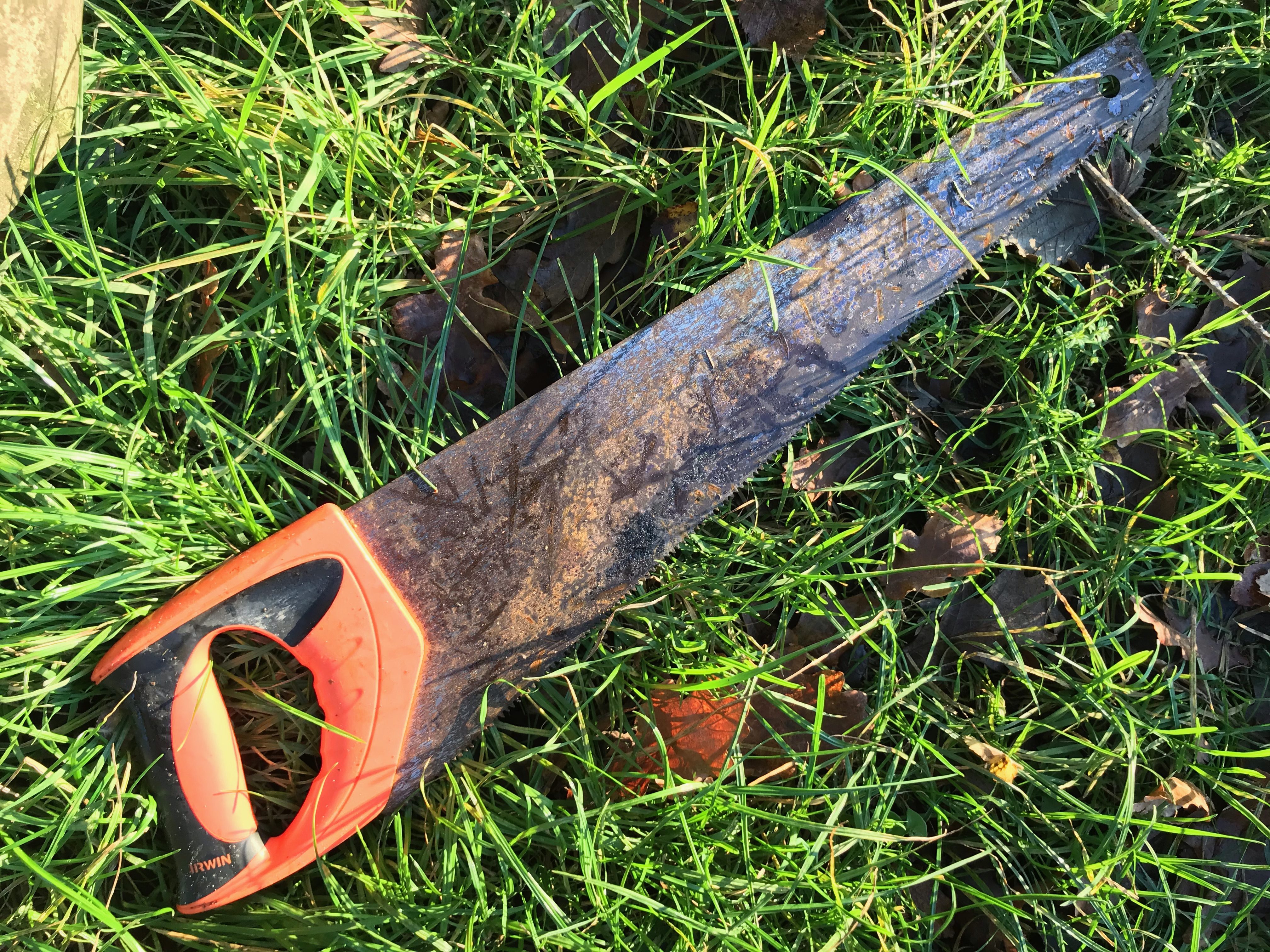
I have found a number of discarded tools including carpenter’s saws. My husband wanted to resurrect these pliers, but they were beyond hope.

There is often a mask amidst the detritus, none of which will rot. What distresses me most is the ardent fly tipping. These cans of motor oil were nearly full and looked uncontaminated. Why were they discarded? How many litres of river water would they pollute?

These full containers were dumped in a nature reserve within the New Forest National Park. Does someone imagine these things will decompose?

Get involved in Keep Britain Tidy – its fun! You can find more info here

Swallow’s flag and the bamboo fishing rods featured in the 1974 movie ‘Swallows and Amazons’

The flag Titty made for Swallow in the original film ‘Swallows and Amazons’ (1974)

Were some of these stitches mine after all?

A few weeks ago, BBC Antiques Roadshow featured some of the flags from the original movie ‘Swallows and Amazons'(1974) in which I played Titty Walker. These film props had been sent to me by the producer Richard Pilbrow who now lives in Connecticut. I take them with me if I’m ever asked to give a Q&A or talk about ‘The Making of Swallows and Amazons’. Film fans enjoy taking selfies with them.

I explained that they were made on location in 1973, possibly by the Art Director, Simon Holland, who enjoyed painting. Equally, they may have been made by the Set Decorator Ian Whittaker, who went on to win an Oscar and nominations for several more. Bob Hedges who was in charge of the action props was also adept at making props in the days when health and safety regulations were more relaxed.

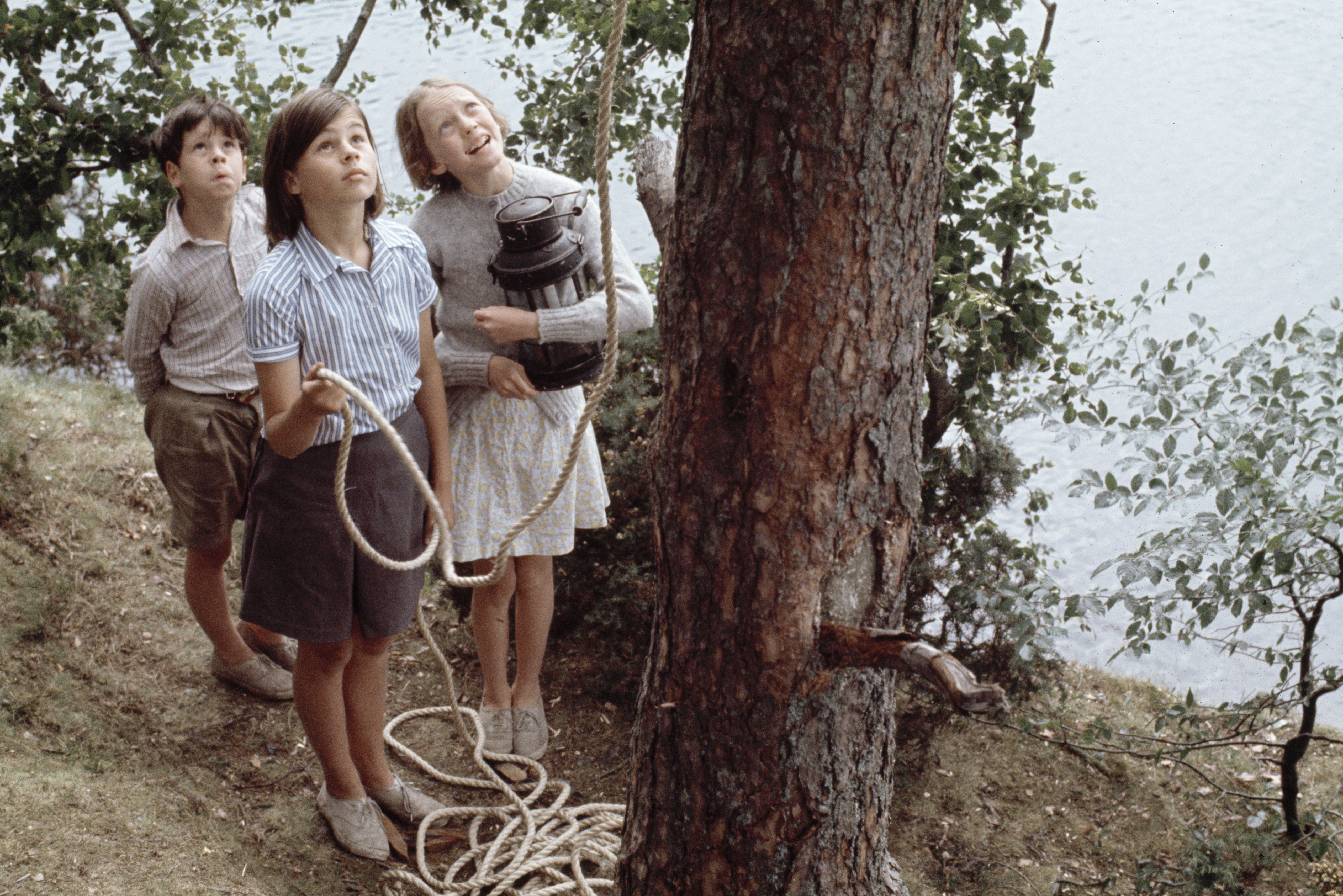
In the story, Titty decides to make a new flag for the Swallow. I was keen on sewing as a child, and was thrilled to be given a needle and thread to stitch a blue swallow on the flag myself in a scene with Virginia McKenna, who played Mrs Walker, shot at Holly Howe (Bank Ground Farm) above Coniston Water in the Lake District. Rather a modern reel of cotton was caught in vision.

Virginia McKenna, as Mary Walker with Sophie Neville playing her daughter Titty Walker busy stitching Swallow’s new flag in preparation for the voyage to the island (c)StudioCanal

It was not until I returned from recording Antiques Roadshow at Windermere Jetty and had the flag on my desk that I noticed some of the stitches are different from others. It looks as if the small, white stitching on one wing could have been my own. As a child, I had thought the larger stitches rather clumsy but am sure they looked appropriate in vision. It would be worth far more if it was known to have been made by Ian Whittaker. He won an Oscar and was nominated for his work on a number of other films.

Ian Whittaker with the Art Director Simon Holland

‘Properly’, as Titty would say, the bird should be flying towards the mast, although I am assured that Arthur Ransome did once draw a diving swallow on one flag. In his book, the swallow was sewn into the cloth rather that plonked on top of fabric browned by tea but our flag has lasted for 48 years.

Property Master Bob Hedges keeping the perch alive

After Antiques Roadshow was broadcast, a lady who grew up in Bowness on Windermere, wrote to say, ‘It may be of interest that we still have the fishing rods that were used in the film. They belonged to my father Leslie Borwick and were lent to the film crew. They are rather worse for wear but still treasured as I was a big fan of the books when I was young. Unfortunately I was living abroad when the film was made so have no memories of it.’
Leslie Borwick on Windermere

Leslie Borwick, was a keen fisherman who took his daughter out to catch perch. She said that the bamboo rods are quite fragile but one has a wooden reel, which is interesting.

Ronald Bousfield fishing at about the time ‘Swallows and Amazons’ was written
“My mother’s side of the family were very keen fishermen. Their surname was Bousefield and there is a fly called “Bousefield’s Fancy”(Frank Bousefield)”

You can read the original post about filming the fishing scene on Elterwater here

A clip of Swallow’s flag being valued on BBC Antiques Roadshow can be watched on BBC iPlayer.

The whole story of the making of Swallows and Amazons (1974) can be read here:

Memories of making ‘Swallows and Amazons’ (1974): part six

Sophie Neville playing Titty Walker in the 1974 movie

‘Titty from Swallows and Amazons’ often gets typed into the Goggle search engine but when I attempt to use it as a ‘tag’ a message pops up saying: ‘Sorry, you are not allowed to assign the provided terms.’ I can only conclude that Google lacks literary enlightenment but the BBC were happy for me to talk about Titty on BBC Antiques Roadshow recently.

Sophie Neville on BBC Antiques Roadshow

‘Memory picks and choses,’ as Arthur Ransome said in his autobiography (p.33) but those who love his novels often wonder what would have happened to the characters when they grew up. It dawned on me that this might be one reason why people are interested to know what we all did with our lives. I played Titty Walker in Richard Pilbrow’s 1974 movie of ‘Swallows and Amazons’. In 1962, the film actress Susan George played the same character in the black and white BBC television serial of ‘Swallows and Amazons’ with her hair in pigtails. She was called Kitty, apparently with Arthur Ransome’s approval. BBC Films decided to call the Able seaman ‘Tatty’ in the 2016 movie ‘Swallows and Amazons’, when she was brilliantly played by Teddy-Rose Malleson-Allen who went on to star in ‘Four Kids and It'(2020).

The character was inspired by a real little girl, Titty Altounyan, who stayed at Bank Ground Farm (or Holly Howe) when visiting her grandparents who lived above Coniston Water. In 1939, Miss Joyce Cartmell acquired a signed note from Arthur Ransome explaining that, ‘Titty is short for Tittymouse which is what she was called when she was a baby. Nobody ever calls her anything but Titty now’. It appears that Ransome was also asked for a photograph of himself, to which he responded, ‘Too ugly’.

Edward Thomas (1878-1917) described Arthur Ransome as ‘exuberant, rash and intelligent.’ In 1973, I can only assume the film director Claude Whatham was looking for the same spirit in us children. It was certainly captured by Wilfred Joseph’s nautical film score.

What constantly impacts me is the number of people who write in to say how much they wanted  Titty to become their best friend. In many ways the characters from Ransome’s books become friends for life. You can easily gain others who have the same outlook on life by joining The Arthur Ransome Society, who offer activities and grants for young people as well as adults with a literary bent. You too can stay at Bank Ground Farm and run down the field to dip your hands in the lake.

Staying at Bank Ground Farm – ‘Holly Howe’ with TARS

You can read more about making the movie in the multi-media ebook entitled ‘The Secrets of Filming Swallows and Amazons’.

And in the illustrated paperback on ‘The Making of Swallows and Amazons’ by Sophie Neville available online and from the Nancy Blackett Trust


Talking about ‘Swallows and Amazons’ (1974) movie memorabilia on BBC Antiques Roadshow

Marc Allum socially distanced from Sophie Neville and her bow

“Really enjoyed watching @Sophie_Neville talking about Swallows and Amazons and showing memorabilia from the film on @BBC_ARoadshow I never usually choose to watch this but my Mum text to say ‘it’s brilliant!’ So I watched it on catch up straight after! #SwallowsAndAmazonsForever” Mel Wardle on Twitter

When BBC Antiques Roadshow returned to Windermere Jetty in the Lake District there was huge interest from Swallows and Amazons fans and readers of the Daily MailOnline.

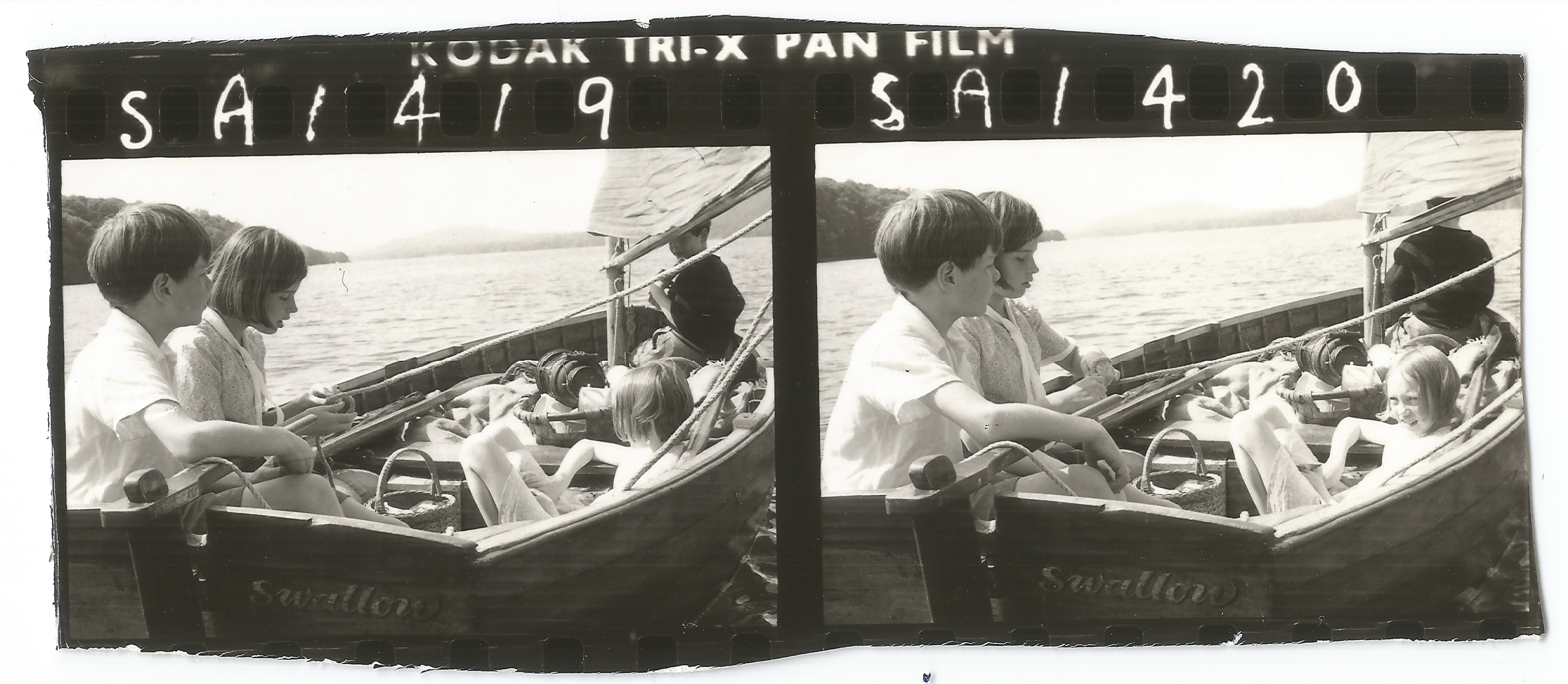
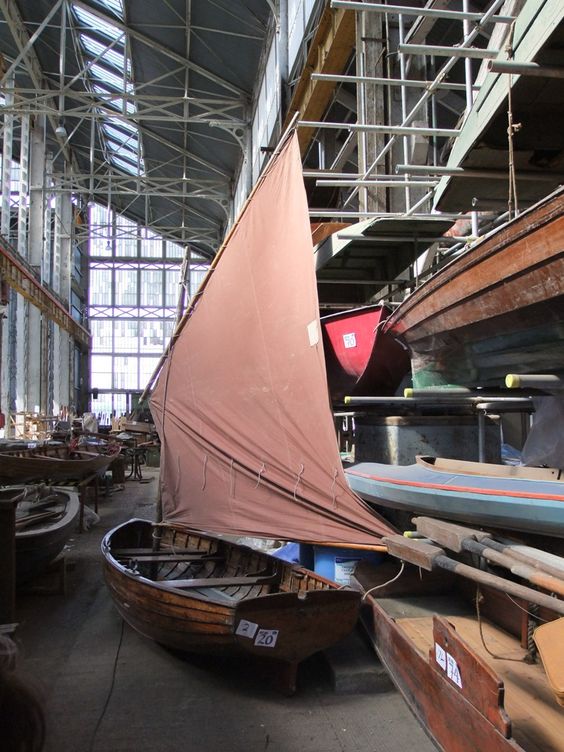
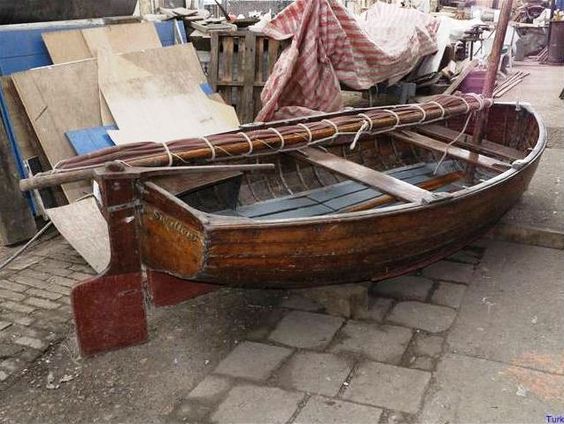
The first episode broadcast from the museum featured Swallow, the dinghy from the original movie made on location in the Lake District in 1973 and brought to cinema scenes in 1974.

The movie poster of ‘Swallows and Amazons’ (1974) I’m in pink

‘Such an iconic film,’ the expert Rupert Maas, commented, admitting that it once inspired him to sail across the Atlantic Ocean.

He chatted to Rob Boden who looks after Swallow for the organisation Sail Ransome before placing a pretty high value on the old girl. They had just enough wind to sail off into the sunshine. It was great publicity for me as I had featured Swallow on the cover of two editions of my book on the making of the film

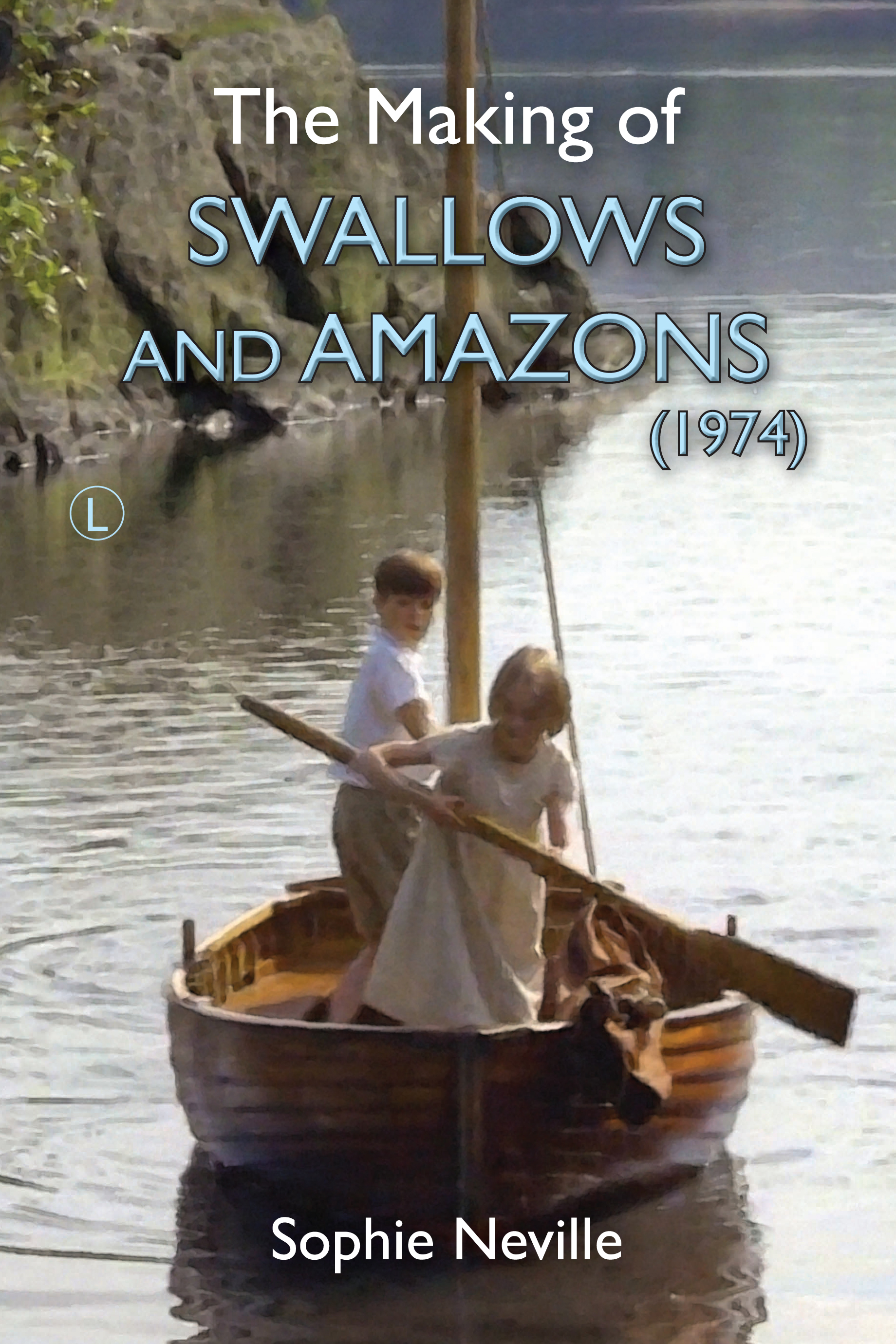
'The Making of Swallows and Amazons (1974) by Sophie Neville'
Different editions of ‘The Making of Swallows and Amazons (1974) by Sophie Neville’

I had been invited along for the second episode, recorded the next day, when it poured with rain. While others were arriving with exquisite treasures, I staggered into the museum with two carrier bags of old photographs, a few flags and what my family regard as clutter.

Rupert Maas was busy valuing a painting by the waters edge but came to say Hello in the lovely new cafe at Windermere Jetty while we watched the expert, Marc Allum value a steam kettle.

Marc later walked around to inspect my collection of ‘movie memorabilia’ relating to the film of ‘Swallows and Amazons'(1974), filmed in the Lake District forty-eight years ago.

Swallow being rowed by Sten Grendon and Sophie Neville (c)StudioCanal

He liked the LP, the programme from the premier and the original black and white film stills, along with the penants kindly sent to me from America by Richard Pilbrow who produced the movie now distributed by StudioCanal who have a remastered cinema Bluray and DVD with Extras.

Premier ticket for the Gala of ‘Swallows and Amazons’

The camera crew seemed adept at keeping their equipment dry, but lining up shots was tricky since everyone had to be carefully distanced.

I knew that signed, first edition copies of Arthur Ransome’s book ‘Swallows and Amazon’ are worth up to £11,000. A note sold in an envelope addressed to a Miss Cartmell postmarked 1939 and accompanied by a small card signed by the author with a pen and ink sketch of a sailing boat, sold recently with an estimate of £1,000-1,500 but I did not think my collection of movie memorabilia from the early 1970’s would be worth much.

Marc Allum lining up a shot with Sophie Neville

Marc invited me to take up the bow an arrow, whittled on location during the filming and fletched with feathers from a ‘Red Indian Headdress’ purchased from a toy shop in Ambleside in 1973.

Marc Allum and Sophie Neville with the director

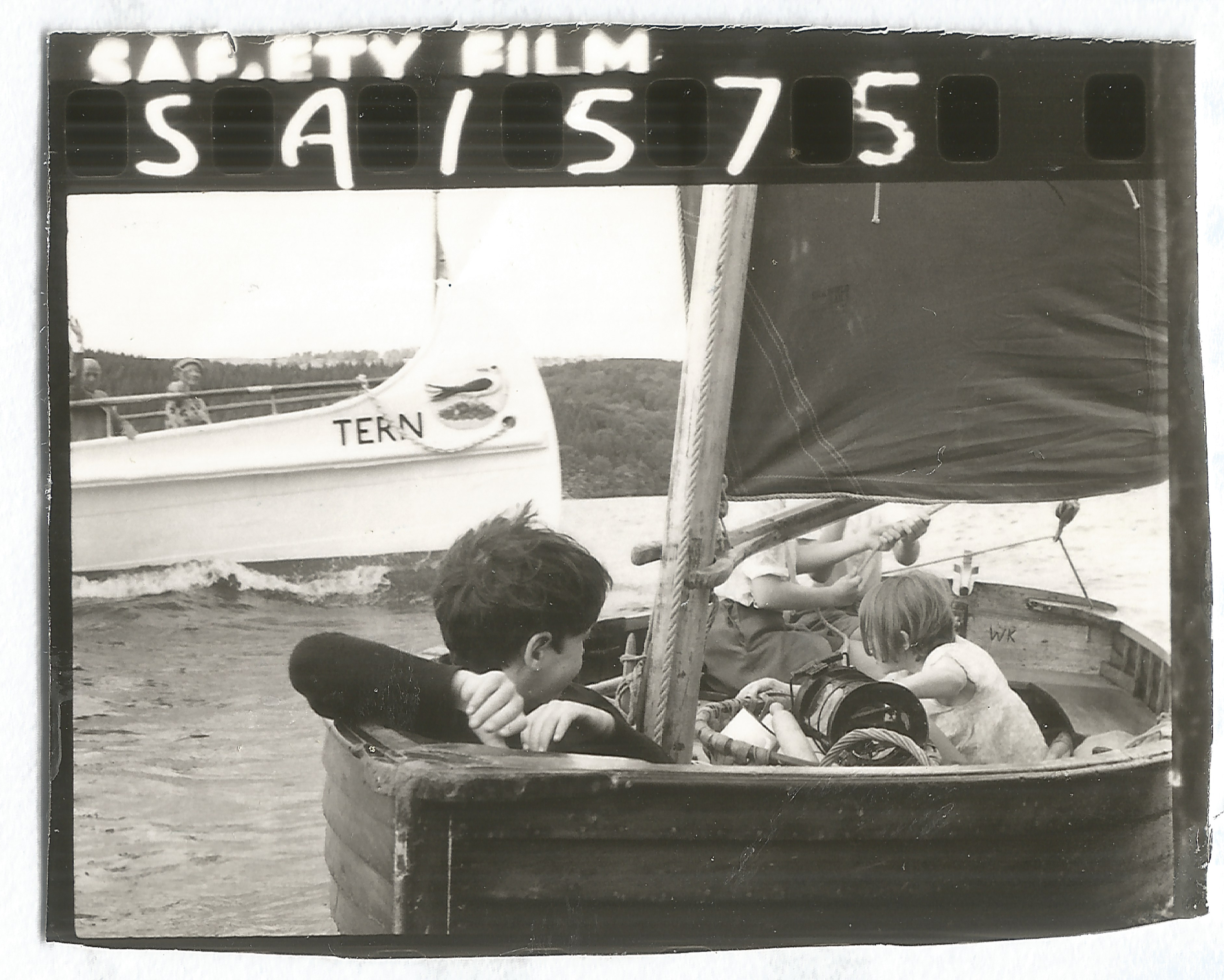
I suggested the director might like to take a shot of the ML Tern as she passed but visibility was too low. Marc concentrated on my collection, which had nearly been thrown out in a fit of de-cluttering years ago. He valued it at far more than I ever would have imagined.

I wondered if my item would ever be included, thinking it could easily hit the cutting room floor, but this well a kind reader alerted me to the Radio Times billing here

To see more photos of BBC Antiques Roadshow at Windermere Jetty, please see the previous post here

Here is the clip as featured in the Daily Mail Online. It was also written up in OK! magazine, which rather embarrassingly looked like this:

You can find the illustrated book on ‘The Making of Swallows and Amazons’ here:

For details on the BBC Antiques Roadshow website, please click here They tell me they, “would be delighted to hear of any developments that may occur following the transmission of the programme. For instance, further information about the history of an item occasionally comes to light or a decision is taken to put the featured piece up for sale. Should you have any such news, please contact the Antiques Roadshow Office at antiques.roadshow@bbc.co.uk.

The episode ‘Windermere Jetty 2 – series 43’ is on BBC iPlayer here

Detail of an original ‘Swallows and Amazons'(1974) movie poster hanging at Windermere Jetty Museum

You can read more about how ‘Swallow’ was bought at auction and restored, in Yachts and Yachting and on the Sailransome website.

You can listen to Sophie chatting about the experience on BBC Radio Cumbria here

Swallow’s original burgee and the White Elephant flag captured from Captain Flint’s houseboat, featured in the 1974 film of ‘Swallows and Amazons’