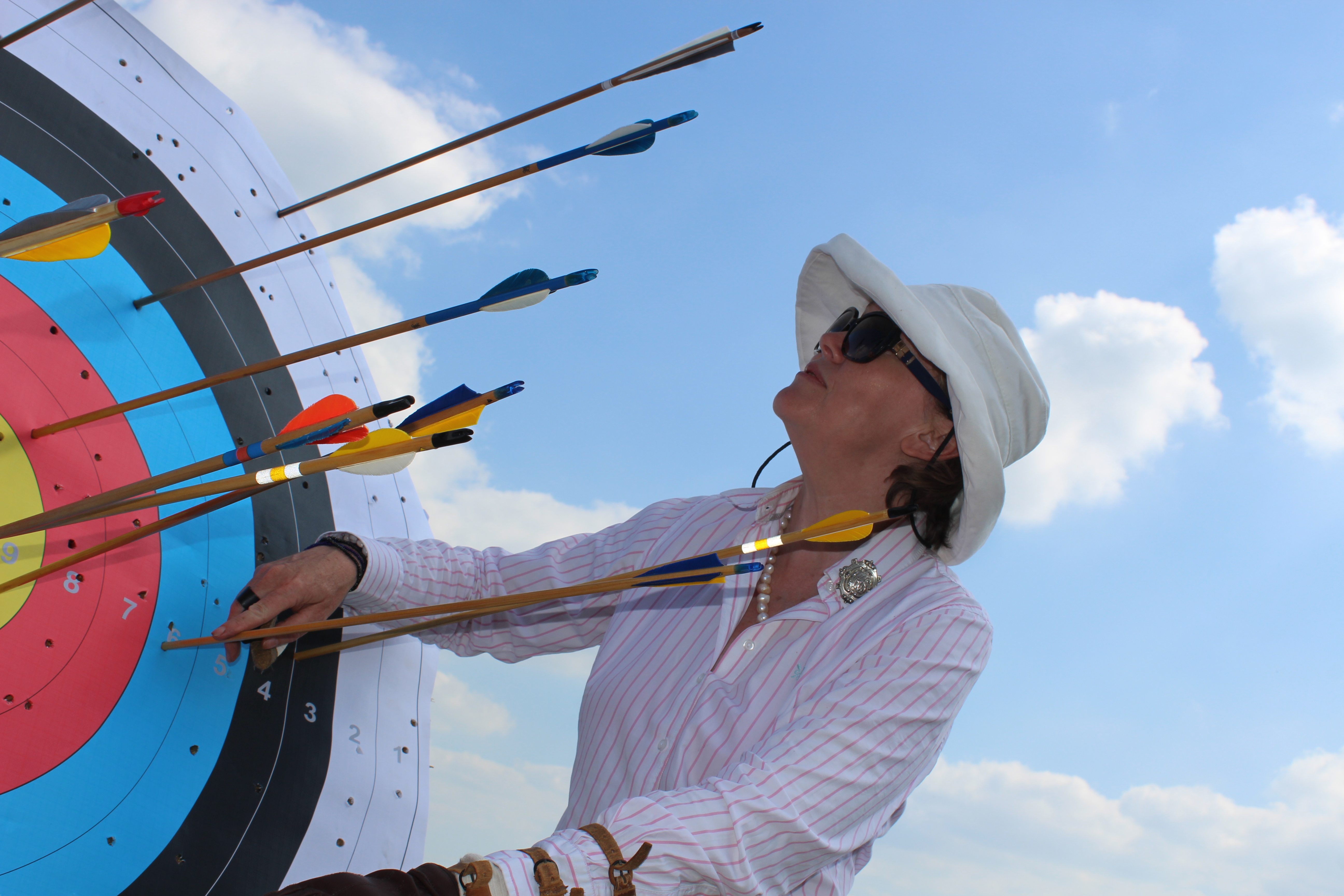
Sophie Neville is interviewed by New Media Film Festival’s director Susan Johnston.

Having won a Top Three Scripts award at the New Media Film Festival in Los Angeles, Sophie was asked about her screenwriting.

Can you tell us a little about how you got started?

I began writing for BBC Television at the age of twenty-two. It was a disaster. Instead of presenting a polished script, I produced a rough draft that I thought we could develop in the rehearsal room. Developed it was – by Nicholas Parsons, one of the stars. He rewrote his own soliloquy, taking all the credit and a substantial fee. I’ve welcomed harsh feedback from beta readers ever since.

What was the biggest challenge you faced in your journey to becoming a writer? How did you overcome it? Can you share a story about that that other aspiring writers can learn from?

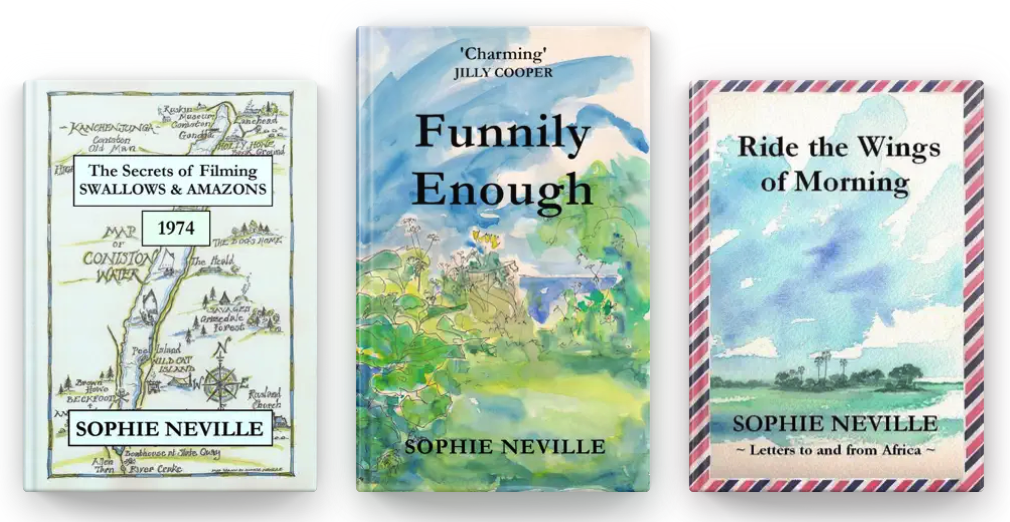
Instant success with my first book was challenging. My illustrated memoir FUNNILY ENOUGH was at number 1 in Humor on Amazon Kindle in the UK (after free copies had been downloading at the rate of 250 a minute) but I had self-published, and had no team support. Instead pressing the go-button with a PR firm and marketing team, I was weigh-laid by the small stuff. Writers need skilled networks in place, especially in the age of New Media.

Funnily Enough – the paperback has black & white illustrations

It has been said that our mistakes can be our greatest teachers. Can you share a story about the funniest mistake you made when you were first starting? Can you tell us what lesson you learned from that?

I began my career in television by working with children. I could see the potential and it gave me a niche, but the hazards were numerous.

A teacher opened one scene for me by saying, ‘Some people believe the world is flat.’
A five-year-old called out, ‘No, but it’s not! It’s bumpy.’
The mistake was that we had too much camera judder – my cameraman had dissolved in hysterics. A lesson learned: I used a tripod when capturing the opinions of eleven-year-olds. The results were so amusing that they were repeatedly endlessly when Daytime TV was launched in the UK.
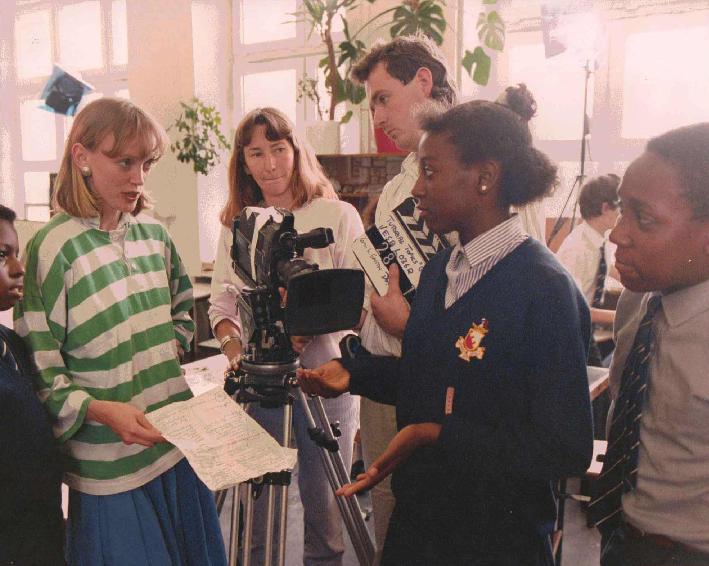
Sophie Neville directing a sequence with BBC cameraman Lorraine Smith

What are some of the most interesting or exciting projects you are working on now?

I felt compelled to write A BOY CALLED FREDDIE when I discovered Freddie Mercury, escaped from the violent 1964 Zanzibar revolution at the age of seventeen. If a year older, the man who became an international rock idol would have been forced into slave labour on coconut plantations. As it was, his family fled to London where his talent flourished and found stardom. Born Farrokh Bulsara, he became known as Freddie at school. The story of how he chose the name Mercury involves NASA but is only revealed in my screenplay – right at the end. Freddie’s father, Bomi, was a Parsee who worked as a cashier at the law courts where my Great-uncle Ronnie served as Chief Justice. I’ve been able to draw on my cousin’s stories of life in the heady days before a convicted rapist from Uganda brought mayhem to the archipelago of tropical islands, forcing the Sultan to escape by sea, along with my aunts and a plucky English women who had set up free and fair elections a month before mass murder broke out akin the movie HOTEL RWANDA (2004).

I’m also developing THE MEETING HOUSE, an exceptional true story from WWII about an East African serviceman I met who was airlifted out of a POW camp in Japan by his boyhood friend just before America bombed Tokyo. They landed in Silesia in the snow, which he’d only seen previously on the peak of Kilimanjaro, where he was born.

Can you share the most interesting story that occurred to you in the course of your career?

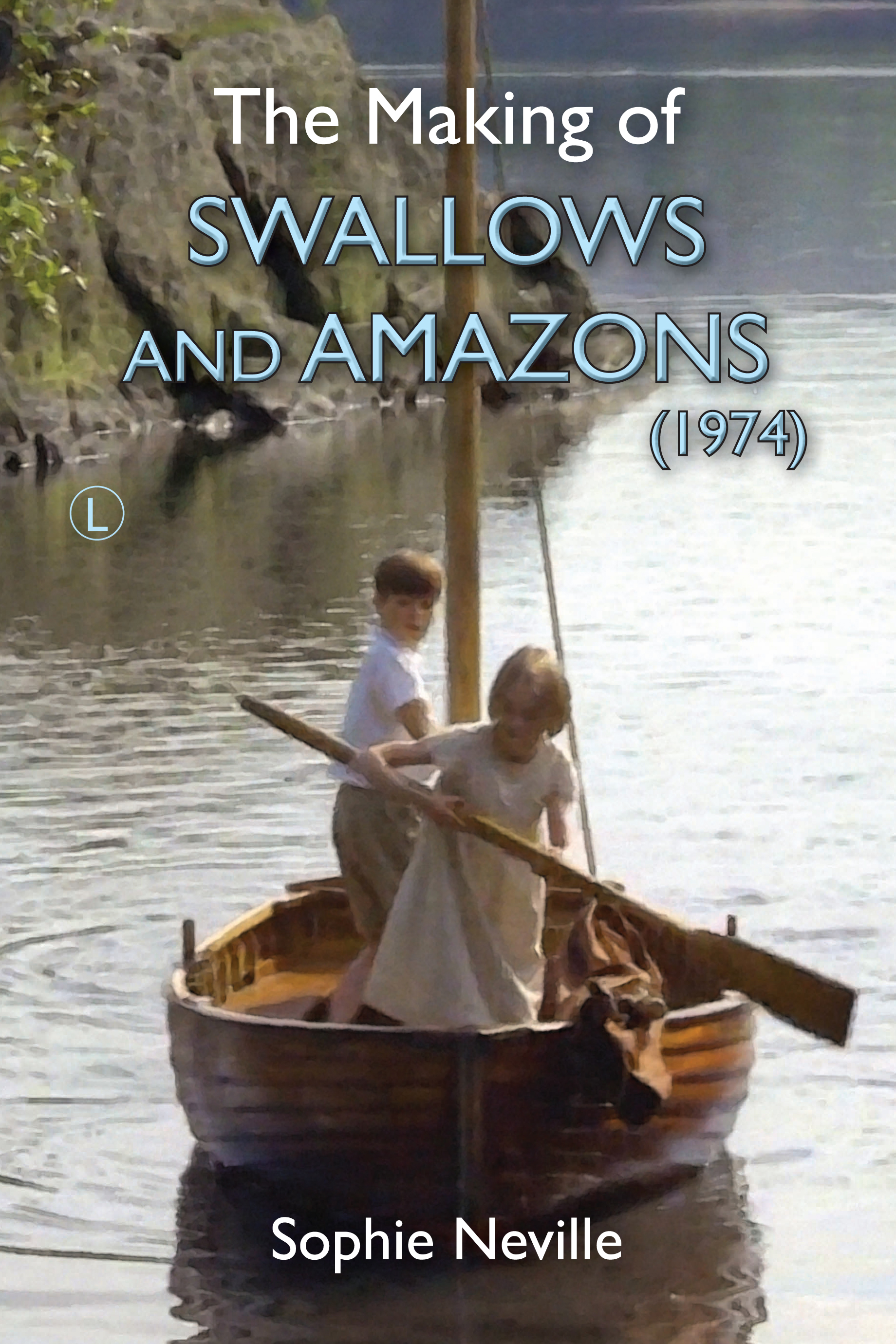
Film fans love to hear about disasters that befell us while making the EMI movie ‘Swallows and Amazons’ before the advent of CGI. I was persuaded to write THE MAKING of SWALLOWS and AMAZONS, now published by The Lutterworth Press.
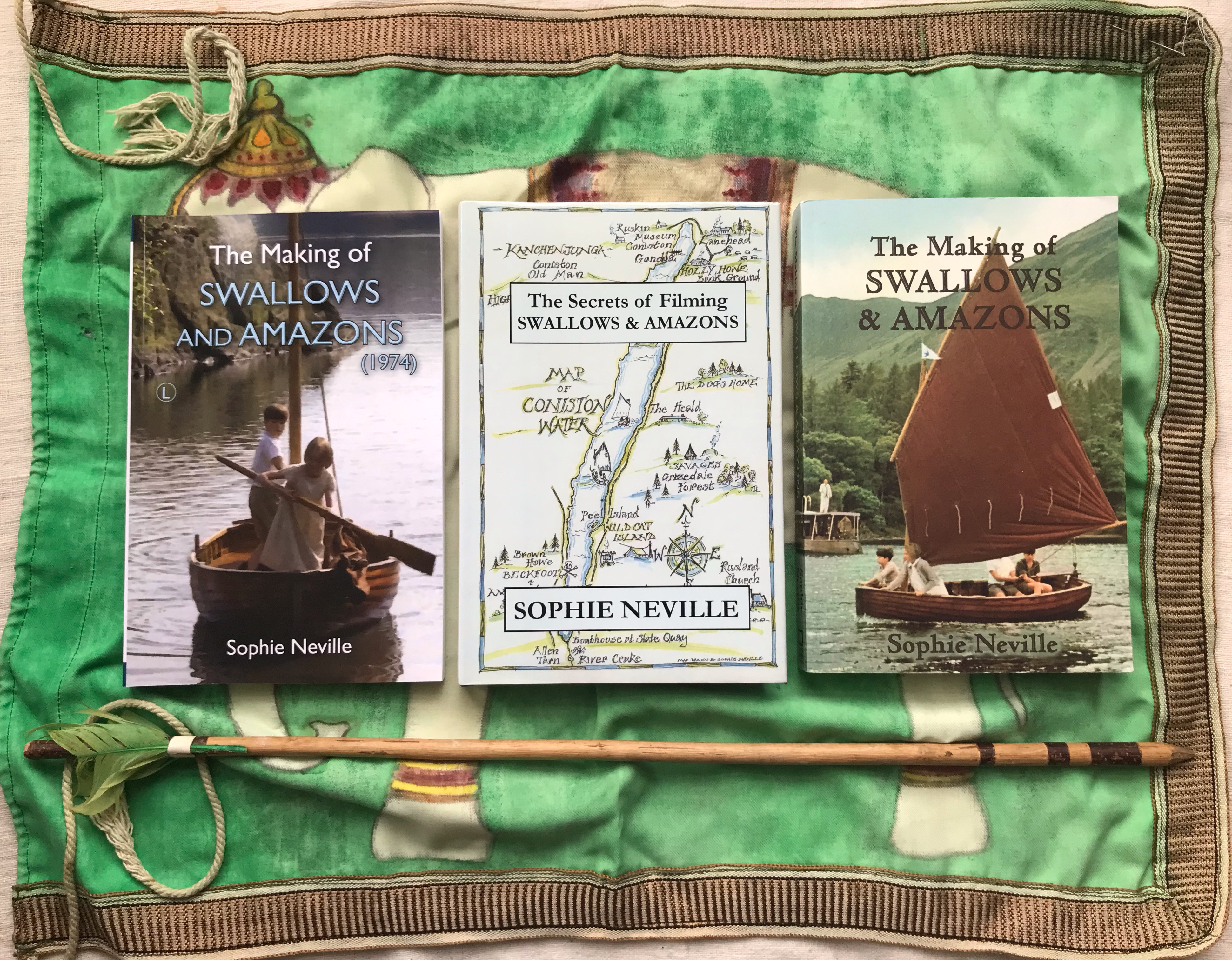
'The Making of Swallows and Amazons (1974) by Sophie Neville'
Editions of ‘The Making of Swallows & Amazons (1974) by Sophie Neville’

Although it’s been screened on television more times than any other British movie, it remains a classic that some have never heard of. ‘Why are you here?’ I was asked at the 50th Anniversary screening.

‘I’m giving a couple of talks on how the film was made,’ I muttered.

‘How would you know how it was made?’

‘I was there.’ In almost every scene. ‘I worked on it.’

‘You couldn’t have been,’ the man insisted.

I could only take this as a compliment, but he looked aggrieved.
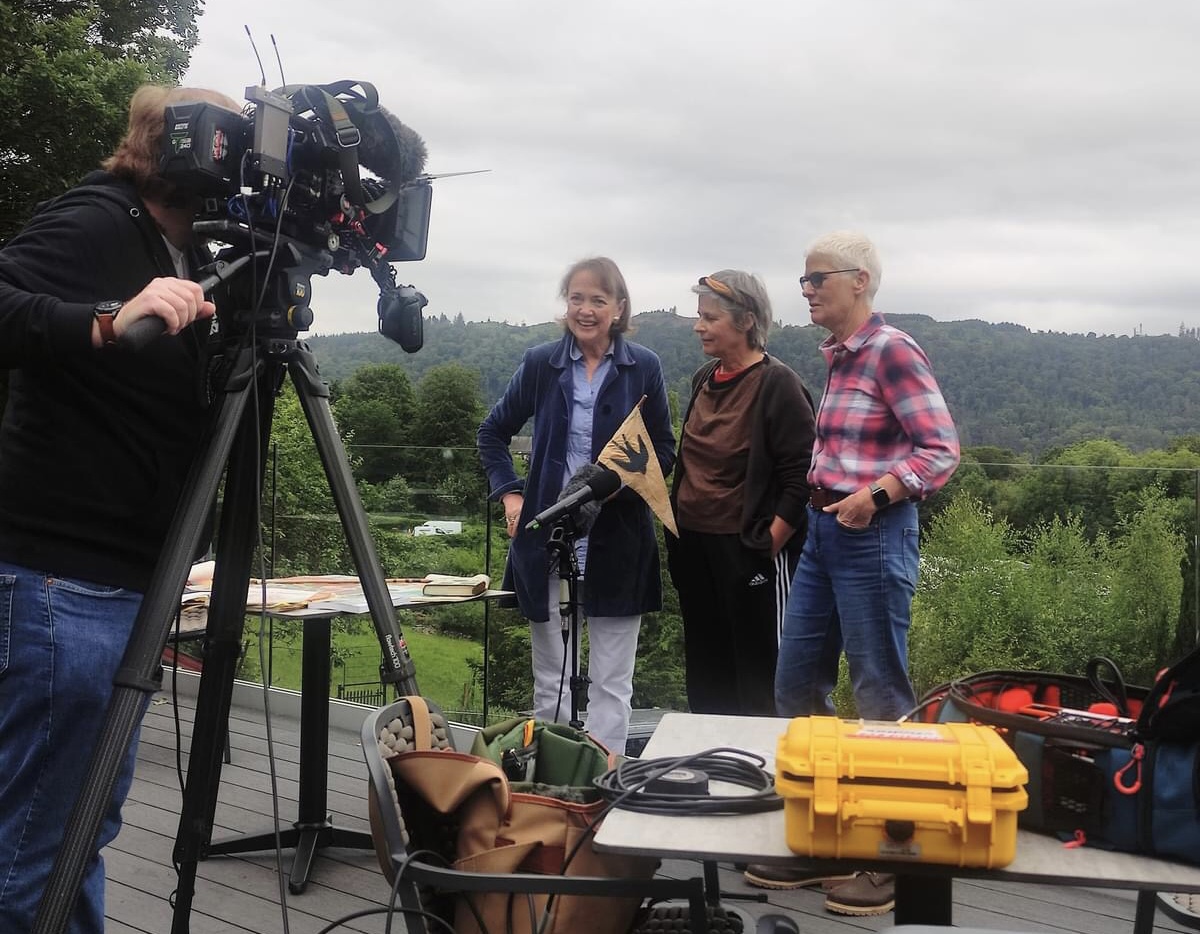
Sophie Neville, Suzanna Hamilton and Kit Seymour setting up for BBC Breakfast
Sophie Neville, Suzanna Hamilton and Kit Seymour in Cumbria

StudioCanal also thought I was an imposter as Dame Virginia McKenna had the star billing. Then the marketing executives watched the movie. When the DVD was launched they had me hosting Q&As at twelve cinemas and provided footage for all manner of TV programmes from CINEMANICS with David Wood the screenwriter to BBC BREAKFAST with my co-star Suzanna Hamilton.

Sophie Neville, Suzanna Hamilton and Kit Seymour on BBC Breakfast

I’m currently working on an inspiring comic tale: BANANA MAN, THE TRUE STORY about Phil-the-Geek, a shy but good looking physicist, who increased the national consumption of bananas by 20% after exploiting a supermarket deal and making 8 pence on every bunch he bought – and gave away. His story hit international News headlines and won him the heart of a beautiful girl. I was her bridesmaid. Last week, their daughters have just graduated from Yale and Harvard, respectively. I intend to present the family with a fruit bowl.

Here is the main question of our interview. Based on your experience, what are the “5 Things You Need To Be A Successful Author or Writer”? Please share a story or example for each.

Focus, forbearance and a five am start to the writing day are key, but I often come up with vital twists while soaking in the bath tub. I guess this is because my brain works best at periods of least resistance. The problem is that I end up groping for a notebook with wet hands.

Please share a story or example for each.

Personality, productivity, perseverance, patience, and a broken heart. We need to touch the audience with humor, in small ways that are easily identifiable. I have a scene in one novel about a man on the cusp of falling in love who loses his car keys in the heat of the day and is left feeling a fool in front of the girl he wants to impress. It’s based on the time I found my ignition keys with my feet. They had fallen into sand beneath the door of my car when I was driving through Botswana. The relief following this small miracle is etched deep in my soul.

In your opinion, were you a “natural born writer” or did you develop that aptitude later on? Can you explain what you mean?

I would describe myself as a ‘natural born story-teller’. Having a visual brain, I became a television director, attracted to Mike Leigh’s emerging art of improvisation on film. When on the converted BBC Drama Director’s Studio Course, I gave my actors the task of flirting whilst erecting a tent. It worked exceptionally well, except that they enjoyed the exercise so much it went on a little long. I should have provided them with earpieces to bring the story to a timely end.

We all need to hone the craft of writing. I had the amazing opportunity of assisting on drama serials such as ‘Doctor Who’ and ‘Eastenders’. Looking back, I could have become a BBC script editor. Instead, I’ve spent the last twenty years attending Curtis Brown Creative novel writing courses and acquiring the art of writing about love under the Romantic Novelists Association’s New Writers’ Scheme. Entering writing competitions has proved an incentive and the wins help build my CV. The competition is such that we need to build a pedigree and provide consumer confidence.

Which literature do you draw inspiration from? Why?

I write true-life stories set in the 20th century, so draw on any memoirs or biographies I can find. I love amusing autobiographical novels, such as Fran Hill’s trilogy on life as a teenager in foster care. She is a master craftsman and a truly inspirational writer. I feed off her infectious humour poured out to the world on Substack.

You are a person of enormous influence. If you could start a movement that would bring the most amount of good to the most amount of people, what would that be? You never know what your idea can trigger. 🙂

Forced marriage needs to be recognized as conjugal slavery and made illegal worldwide. Female circumcision (FGM) needs to stop before more lives are lost to infection. I have no personal experience, but feel we must all speak out to support those unable to do so.

How can our readers further follow you online?

Instagram @sophienevilleauthor

X – Sophie_Neville

Facebook sophie.nevlle.3 on Follow my Facebook author page

Susan Johnston can be found on IMDb

Sophie is currently a double-finalist in the Page Turner Awards

‘The Making of Swallows and Amazons (1974)’ – a book review

'The Making of Swallows and Amazons (1974)'

Chloe Williams has just written from Ontario in Canada, to say, “Some books entertain. Some enlighten. And some, like The Making of Swallows and Amazons and The Secrets of Filming Swallows & Amazons, manage to bottle something impossibly rare: the feeling of looking back through a child’s eyes and realizing it was all real; the lake, the sails, the laughter and somehow, you were part of it.”

“These aren’t just behind-the-scenes diaries. They’re sun-dappled time machines. Your voice, both in memory and in your original childhood notes, is a miracle of tone: witty, observant, buoyant, and deeply human.”

Of the original movie, she wrote: “What A Christmas Story is to snowglobes and childhood winters, Swallows and Amazons (1974) is to summers on the water and you’ve preserved that magic with charm, heart, and astonishing detail.

“What makes these books unforgettable isn’t just nostalgia. It’s how alive they are. We feel the smell of old sails and camera tape, the blur of location shoots, the uncertainty and excitement of being a child caught in a grown-up world of filmmaking yet utterly at home in it. We meet legends like Virginia McKenna not as distant stars, but as fellow travelers in the adventure. And it’s a joy.”

The Making of Swallows and Amazons seems to resonate with:

  • Readers of nostalgic memoirs that celebrate childhood, nature, and storytelling
  • Adults who are captivated by the lake-country magic of Arthur Ransome
  • Film lovers who cherish insider views of filmmaking
  • Educators and parents seeking real-life adventure stories for young readers
  • Fans of Call the MidwifeThe Durrells, and 84, Charing Cross Road

“The joy and authenticity in your books mirror exactly why Swallows & Amazons (1974) still has such a hold on people’s hearts. The memoirs don’t just tell the story of making the film, they recreate it, letting readers smell the lake air and see the magic unfold through a child’s eyes.”

The audiobook of 'The Making of Swallows and Amazons'
The new audiobook

I’m hoping the audiobook will also amuse readers. It’s now available on all the online platforms including Audible, where isis being offered for free on their membership trial.

Sophie Neville speaks to The Church Times

“My professional life began at the age of ten when I gained a part in the first BBC adaptation of Cider With Rosie. Two years later, the director, Claude Whatham, invited me to interview for the part of Able Seaman Titty in the EMI film Swallows & Amazons (1974). He never thought to ask if either I, or Virginia McKenna who played my mother, could row a boat but I grew up next a lake in the Cotswolds where I was used to rowing a Thames skiff. In the film I had to row with a massive 35mm Panavision camera in the stern but it was fun. I started rowing more seriously at Durham University and managed to complete the five-hour Voga Longa in Venice on the crew of the Drapers’ shallop.

The Drapers’ Barge ‘Royal Thamesis’ in Venice

I began directing plays at university and won a place on the BBC General Trainee Scheme. After working on The Book Show and the live television chat show Russell Harty, I gained a job casting children on the BBC dramatisation of Coot Club and The Big Six. I then worked on serials such as My Family and Other Animals, Doctor Who, Eastenders and shot the wartime romance Bluebell in Paris before directing comic dramas for BBC Schools Television.

Sophie Neville, in stripy top, on the BBC Studio Director’s Course at BBC Elstree Studios, Borehamwood in 1990

I was twenty-two when I first wrote for television. It was a disaster. My concept was accepted but Nicholas Parsons had to re-write the dialogue. I later put together a few drama documentaries and an INSET series for Schools Television, which worked well. In 2004, I was commissioned to write a feature film about Germans in Africa. Sadly, the producer died but I’ve continued to develop this and written a second screenplay that is currently winning international script awards. Both are based on true stories about the lives of family members who emigrated to East Africa in 1919.

I’ve always been attracted to the wilderness and the amazing people you find there. In 1985, I drove from London to Johannesburg, making my first documentary for Channel 4. In 1992, I emigrated to Southern Africa where I set up a couple of BBC wildlife series and a Blue Peter Summer Special.

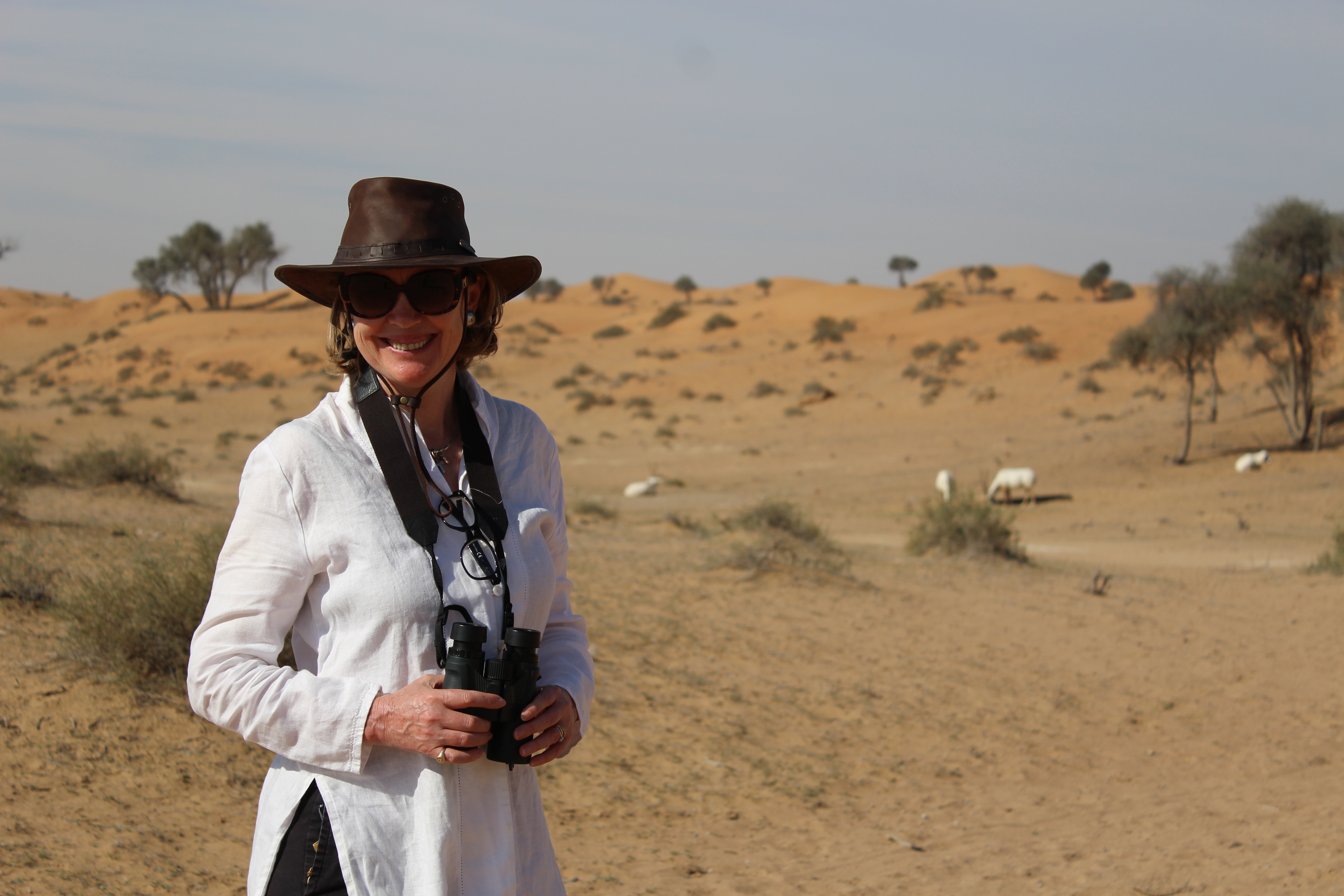
Sophie Neville

I bought a horse, lived on different game reserves and spent time between contracts writing stories illustrated with sketches made while working for friends as a safari guide.

Sophie Neville in the Okavango Delta
In the western Okavango

I’d begun riding at the age of four and had such obstreperous ponies as a child that nothing in the Africa bush daunted me. We had to do most of our own veterinary work in the Okavango Delta. I ended up nursing a stallion who’d been scratched on the rump by a lion and became a great believer in Epsom salts.

Okavango landscape by Sophie Neville

I have drawn all my life but only turned professional as a wildlife artist after I broke my pelvis falling off someone’s horse. My grandfather, HW Neville, was a landscape artist who became the first art master at Stowe School after service as a re-mounts officer in WWI. Like him, I took to painting watercolours outdoors, began exhibiting in London, and made enough money at a solo exhibition to go on a YWAM Discipleship Training Course in New Zealand. On returning home, I felt called to adapt a diary I’d once kept into a humorous book entitled Funnily Enough, which was serialised in iBelieve magazine.

I somehow brought out Ride the Wings of Morning, followed by The Secrets of Filming Swallows & Amazons when we were renovating the family home in Hampshire and began writing articles while contributing to non-fiction publications. I now belong to a consortium of Christian writers called Resolute Books, with Ruth Leigh, Clare Dunn, Paul Trembling, Liz Carter and members of the Association of Christian Writers. My paperback on The Making of Swallows and Amazons is published by The Lutterworth Press. They are based in Cambridge where I spoke on writing for the screen at the British Christian Writers’ Conference last year.

We had a little miracle: Funnily Enough, which is a Christian testimony, reached No. 2 in all categories for free Kindle downloads in the UK. It was down-loaded at 250 copies and hour. After giving away 16,000 e-copies, I was in bed, recovering from a horrid biopsy, when a cut-glass crystal trophy arrived in the post: Funnily Enough had won third prize in the International Rubery Book Award.

I love the writing of CS Lewis, Adrian Plass and Catherine Fox, although Arthur Ransome has had the greatest impact on my life. I’ve given over a hundred talks about filming Swallows and Amazons and will be appearing at the Swallows and Amazons Festival at Windermere Jetty in Cumbria this summer. The Arthur Ransome Society – the second biggest literary society in Britain – is bringing along the boats used in the film along. Members of the cast and crew will be able to see the original Amazon owned by members of the Altounyan family, Arthur Ransome’s dinghy Coch-y-Bonddhu and hopefully travel on the MV Tern, which the Swallows nearly crashed into on film.

Sophie Neville author of The Making of Swallows and Amazons

I’ve been representing Bible Society since going on a short-term mission to China in 2011. We visited the Amity Printing Press, various churches and met pastors around the country. Bible distribution is conducted openly, and is both well-organised and joyous. There are often speeches, music and songs, and sometimes free hair cutting or gynae scans for women whose health was compromised by the one-child policy. I’m now Bible Society’s volunteer speaker for the New Forest and Isle of Wight, so let me know if you need a slide show.

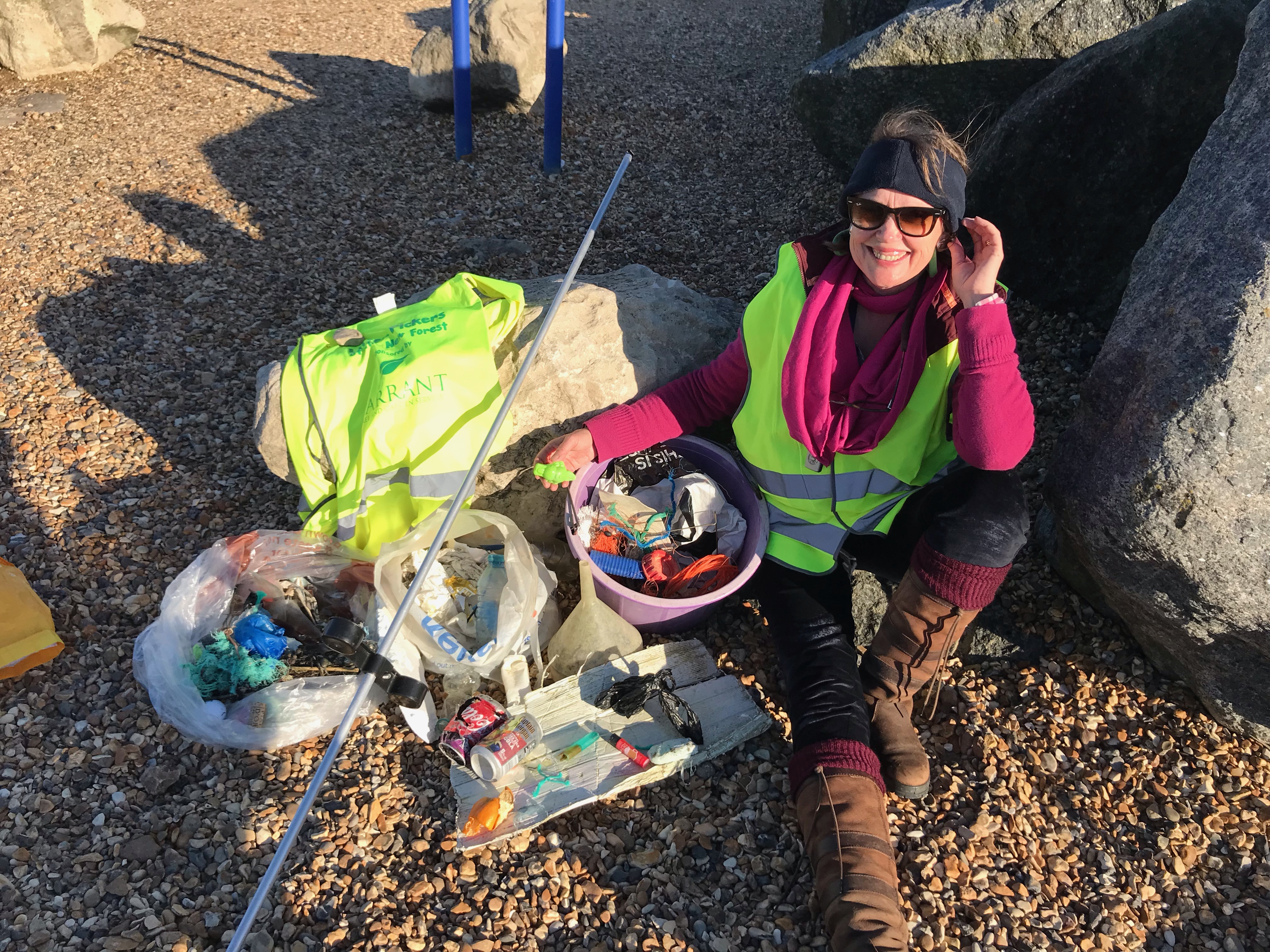
I now spend far too much time behind a laptop but live on the South Coast where I take exercise by collecting flotsam. Becoming New Forest Beach Cleaner of the Year was a surprise butlitter gives me plenty to write about. You find the strangest things. There are now about 2,000 Litter Pickers of the New Forest clearing up the National Park before our wildlife chokes to death. They’re all amazing.

Author Sophie Neville awarded 'Litter Picker of the Year 2021' by Litter Pickers of the New Forest
Awarded ‘Litter Picker of the Year’

I met my husband at an archery meeting in Worcestershire. I was fed up with being single and complained to the Lord, asking “Why can’t I marry that man?”. The archer in my sights proposed to me six weeks later. His grandfather had been an Olympic archer who’d introduced my parents to the longbow in the ’sixties. Mum had given the Amazons lessons on how to shoot for the film Swallows and Amazons when we children had all wanted a go. I picked up the basics in the Lake District and became just good enough to gain the leading role as an archery champion in an adventure movie called The Copter Kids when I was fifteen. We now belong to three archery societies and sometimes win the odd trophy. It’s the only word that rhymes with Sophie.

Other answers to prayer have been pretty dramatic. Try taking medicines into a war-torn African country and you’ll find out. Shattered lives, cruelty, destruction and waste make me angry. Litter falls under this category. Fulfilment of potential makes me happy. I like walking along beaches and riding through the wilderness. I love the sound of waves and horses.

The promises of God are what give me hope for the future. I pray for their fulfilment. If locked in a church it would be nice to be with my husband. He’s never ever failed to stop and pray with me but we risk talking about the mundane. The South African intercessor Bernie Mostert would probably use the time most powerfully, but I’m yet to meet him.

There’s an apparent demand for family films and faith-based scripts in America. My own work in progress is called Banana Man – The True Story. It’s about singleness and marriage with humour akin to Debbie Isitt’s film Nativity! starring Martin Freeman. Spare me a prayer. It would be fun it that got off the ground.”

Sophie Neville filming in the Cotswolds
Sophie Neville ~ filming in the Cotswolds