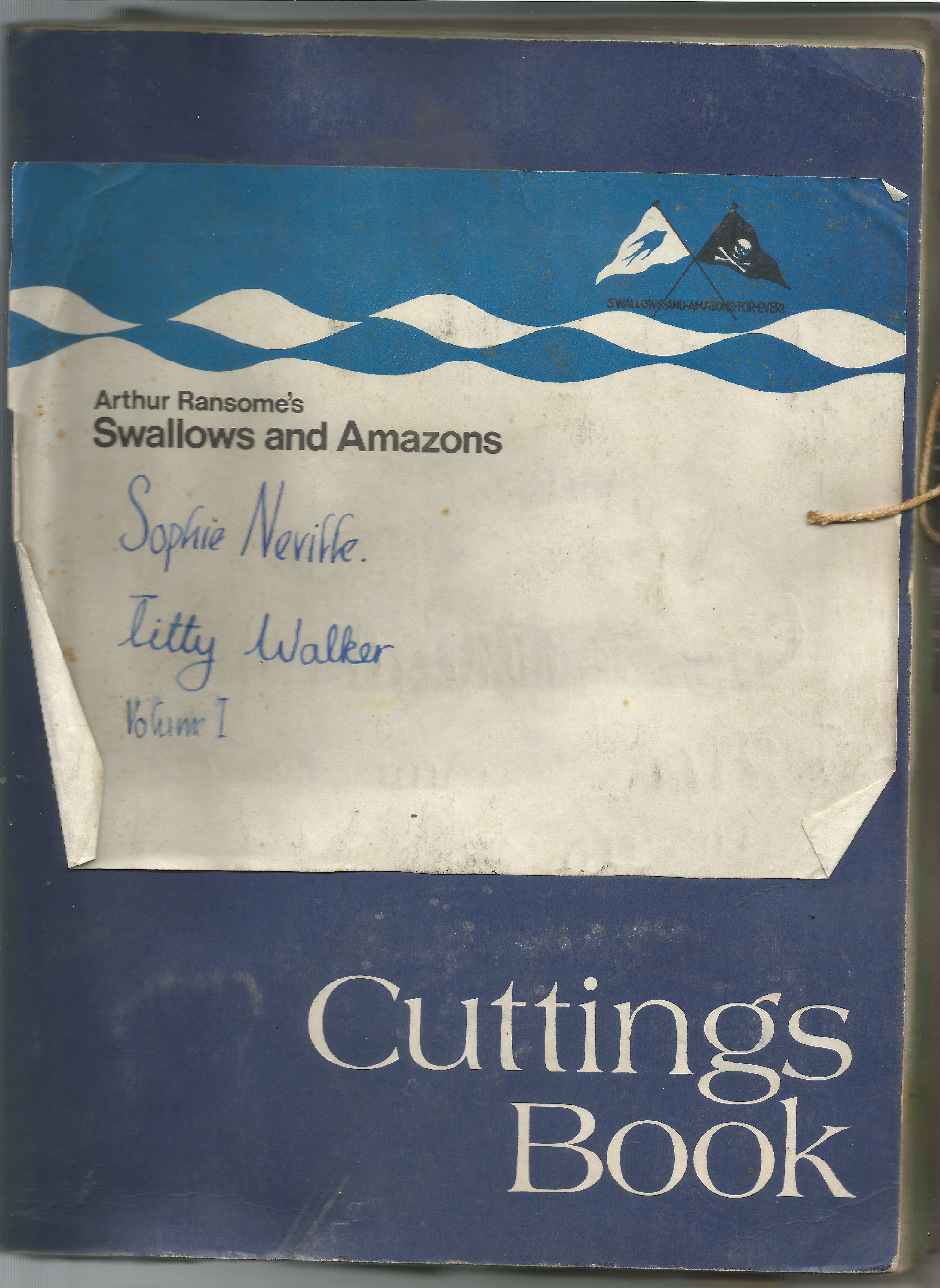
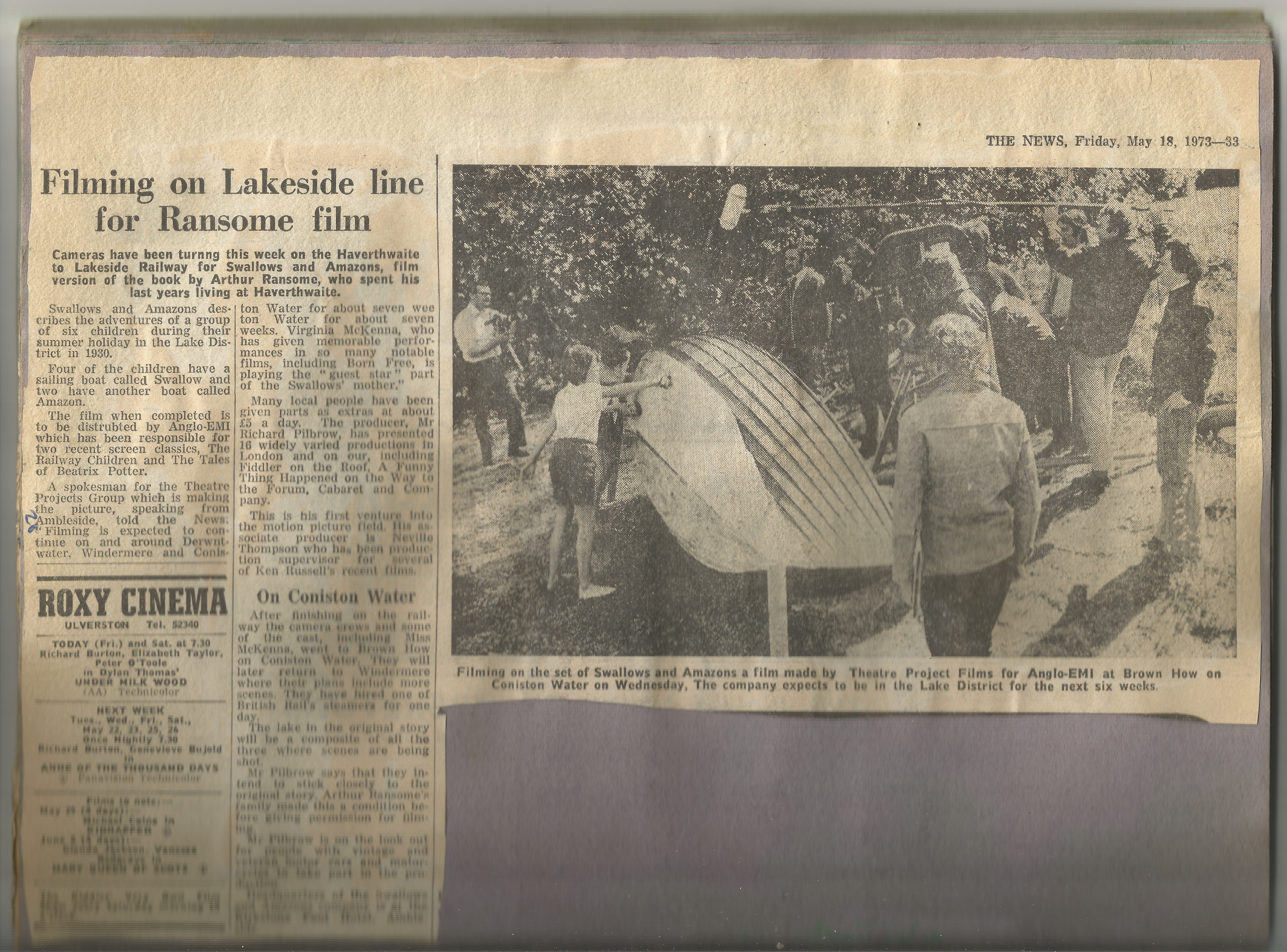
I thought I’d lost it! But, on clearing out our mother’s house, my sister found the cuttings book I kept whilst making the original movie ‘Swallows and Amazons’ in 1973.
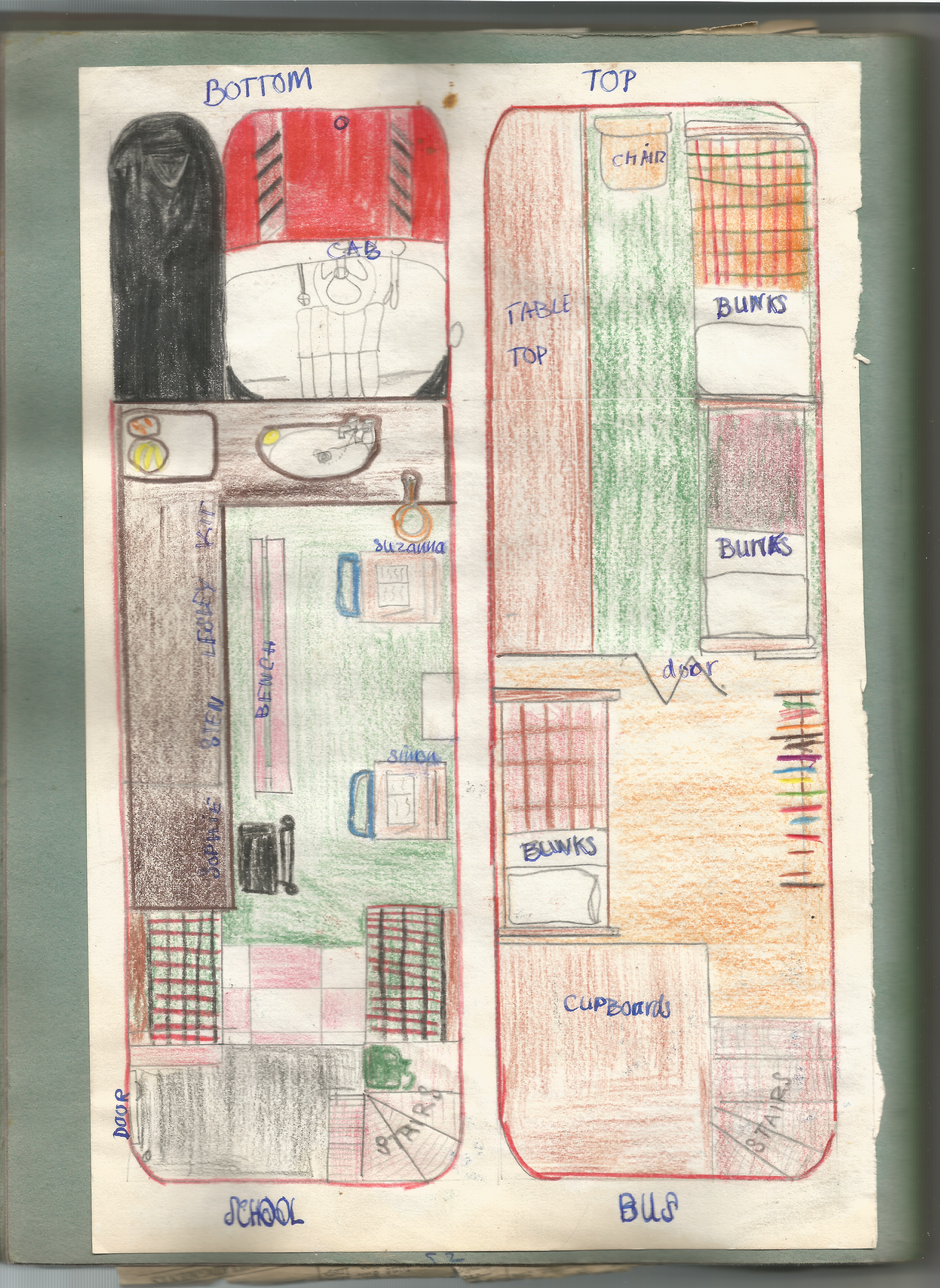
It includes a plan of the London double-decker bus where we received rudimentary lessons on location. Three bunkbeds on the top floor were meant to be used so we could rest after lunch. Mum said she forced me to lie down everyday but I can only remember a couple of occasion, once when I was reluctant, once when I was freezing cold after a swimming scene.
We changed into our costumes at the top of that bus, enjoying warmth from a gas stove that leaked rather alarmingly on one day necessitating an evacuation.
The exterior looked liked a conventional Routemaster with added curtains.
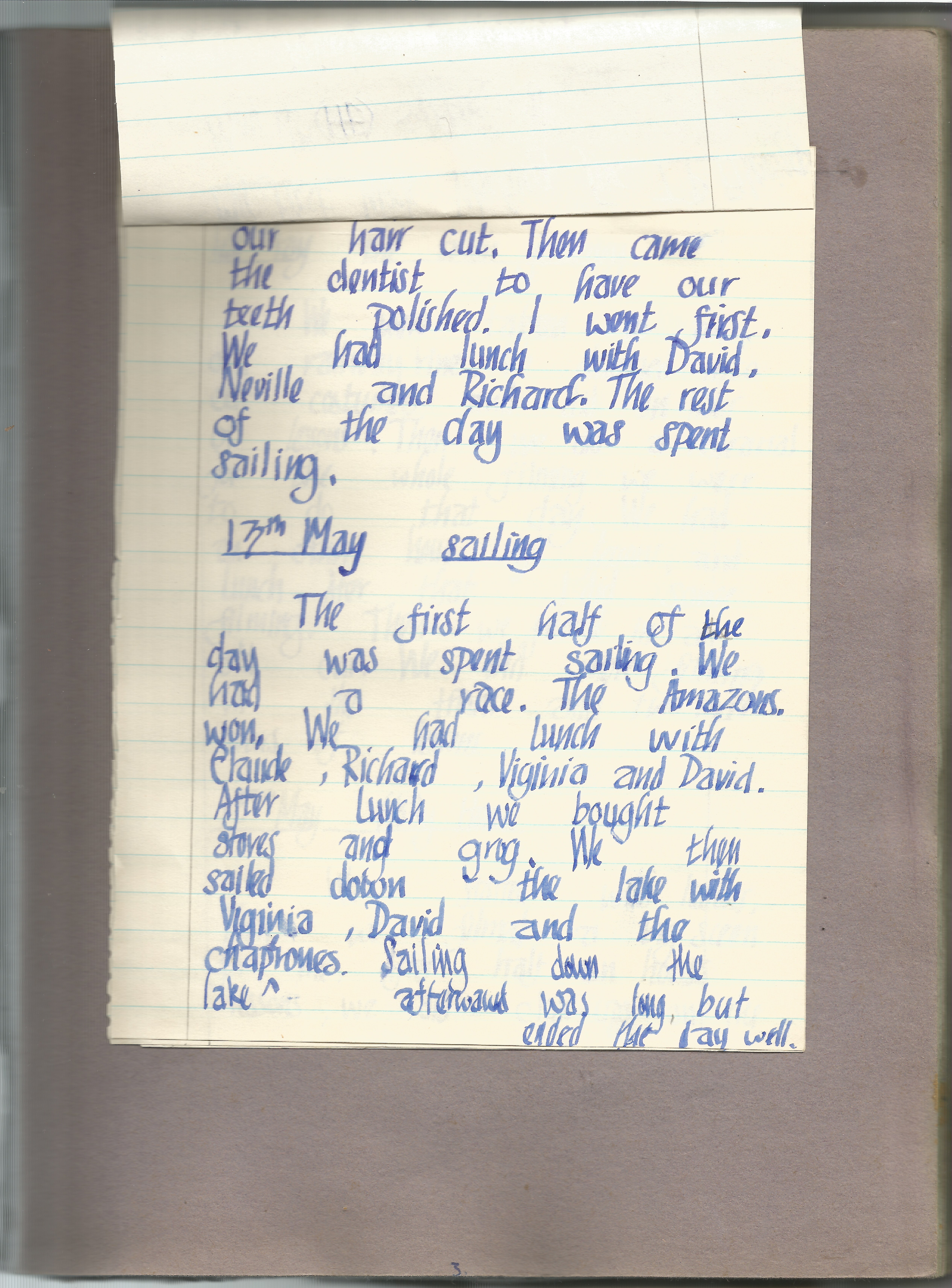
Once sitting at my desk, I found my italic fountain pen and began keeping a diary. One version of the first seven days spent in Cumbria is pasted into the scrap book. I later re-wrote a slightly more detailed and interesting version in a couple of notebooks and wrote about how I got the part of Titty, and the filming from different perspectives.
These pages describe the day spent travelling to Ambleside and a couple of days spent getting to know each other along with Dame Virginia McKenna, who played the Swallows’ mother, the producer Richard Pilbrow, David Blagden who was in charge of the sailing and the film director Cluade Whatham.
Encouraged by my mother, we began pasting in newspaper cuttings.
The Times and the Guardian were at Havethwaite Railway Station to take photographs on the first day of filming. The BBC Radio 4 newsreader, Alan Smith, who grew up in Cumbria, was a film extra that day and can be spotted standing in train doorway with his brother. He wrote to me with his memories of the day.
I began adding photos from contact sheets that Albert Clarke, the film’s stills photographer, took of the cast and crew. I wrote about the opening locations here.
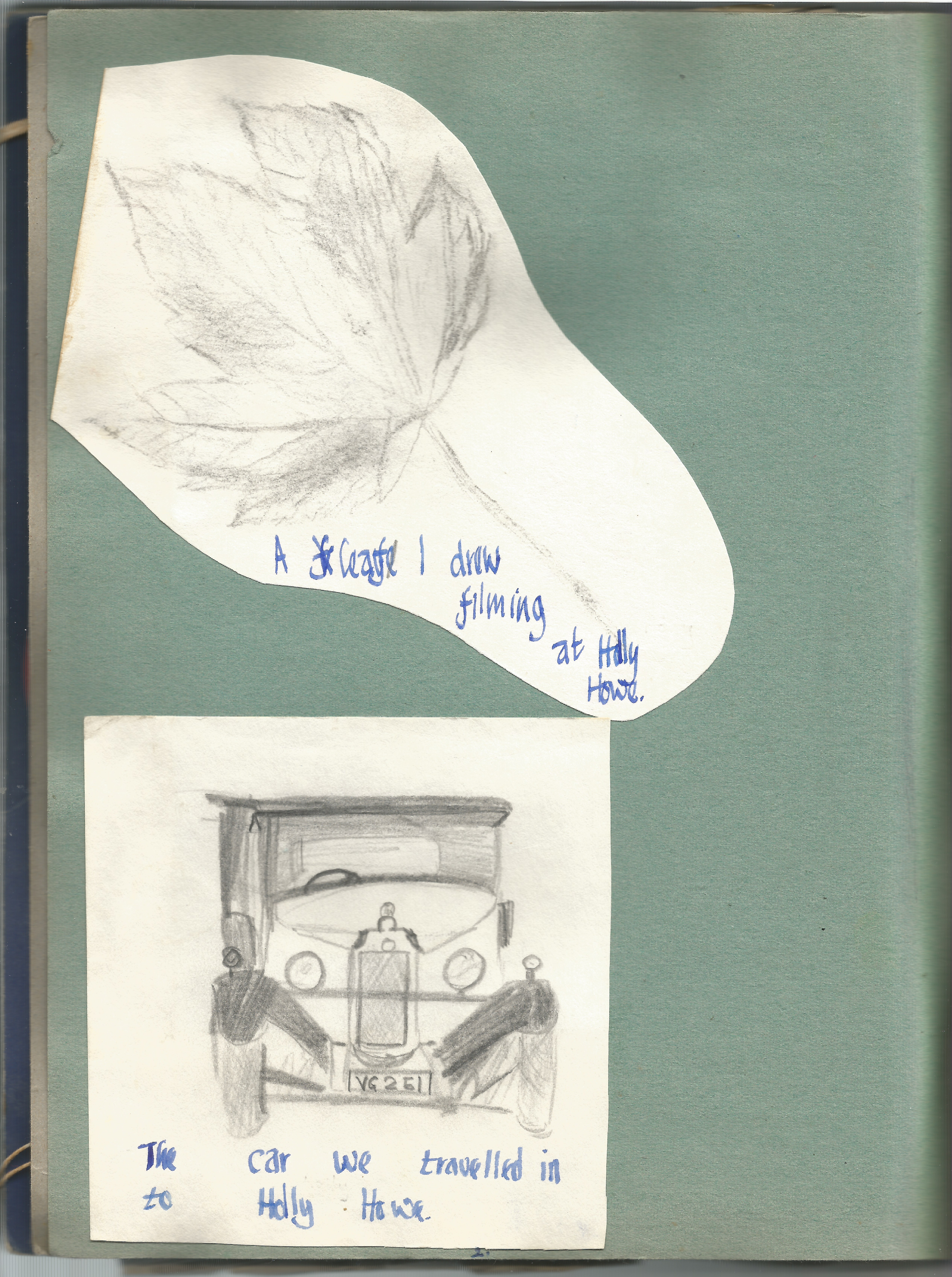
There are pages of dictation and a few sketches of the film props. I drew the yellow Austin ‘taxi’ we drove in at the station.
There were some cuttings that I hadn’t seen for years until until I opened the pages of this mislaid cuttings book. Others can be found on earlier posts.
I took pages of dictation, learning about the plants and geology of the Lake District, about Beatrix Potter and the National Trust, but it’s a wonder any schoolwork was accomplished at all. We spent so much time on set. I fell behind in French and Maths but gained respectable exam grades that summer, gaining 80% in Geography. Perhaps I wrote about glacial lakes.
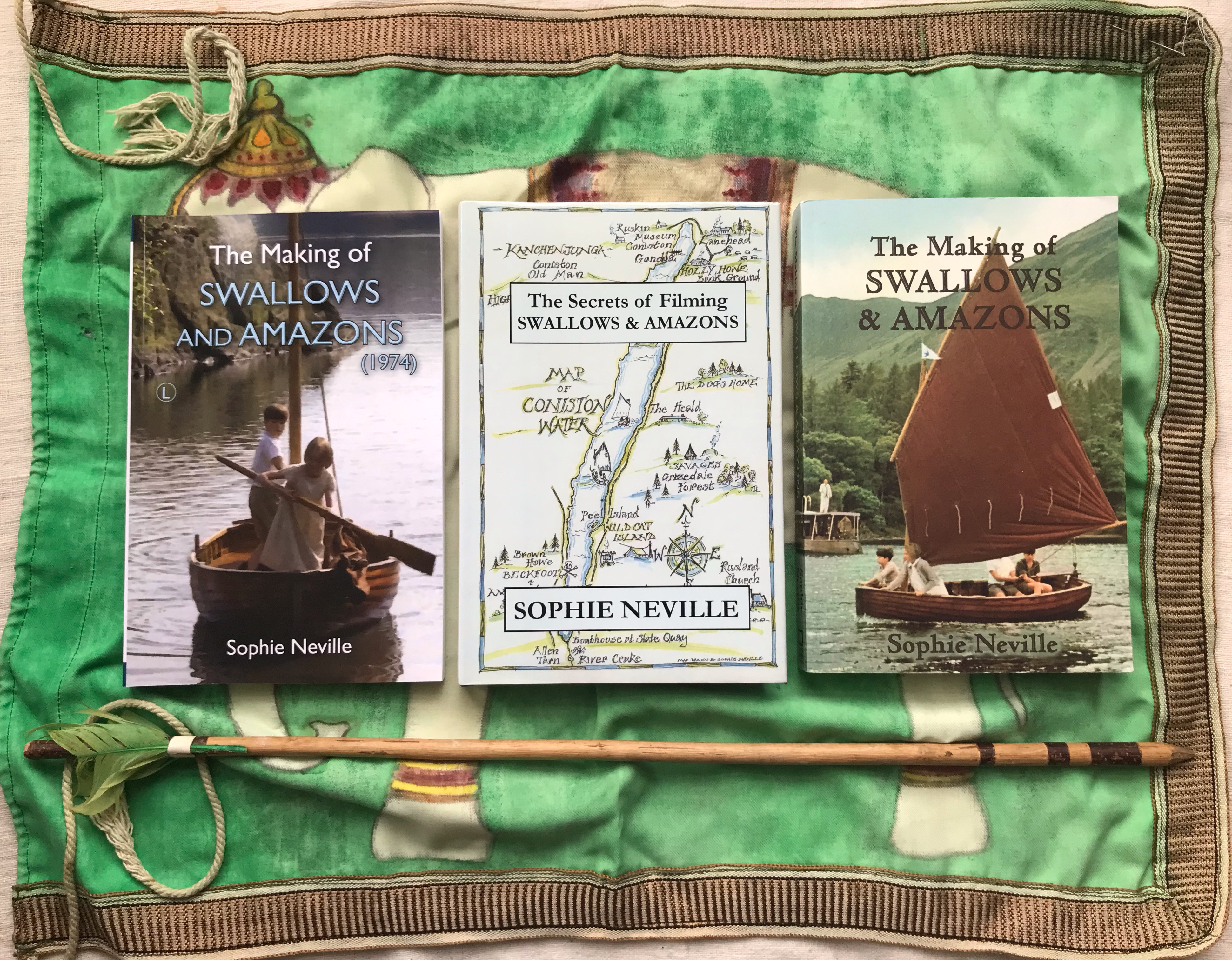
You can read more about the adventures we had whilst filming ‘Swallows and Amazons’ in books detailed on this website.
Different editions of ‘The Making of Swallows and Amazons (1974) by Sophie Neville’
There is now an audiobook on ‘The Making of Swallows and Amazons’ published by The Lutterworth Press and available on all online platforms including Audible.
The Arthur Ransome Society has been able to reunite Swallow and Amazon for the fiftieth Anniversary of the 1974 film and to preserve them for future generations. Come to see them both – and even sail Amazon – at Windermere Jetty museum in Cumbria on 29th and 30th June when John Sergeant will be hosting a Q&A with the cast and crew.
Celebrating 50th Anniversary of the movie ‘Swallows and Amazons’ in 2024
The challenge is on to fully restore Swallow so that families can set her sails and live out the pages of Arthur Ransome’s iconic books today.
Sophie Neville when president of The Arthur Ransome Society
At the age of twelve, I was cast as Able Seaman Titty when the original film Swallows and Amazons was made on location in the Lake District in the summer of 1973. Dame Virginia McKenna played my mother and the six of us children had fun making Ronald Fraser walk the plank. Now hailed as a classic sailing film, I’m assured it has been broadcast on British television more times than any other movie and is currently streaming on Amazon.com and Netflix Europe.
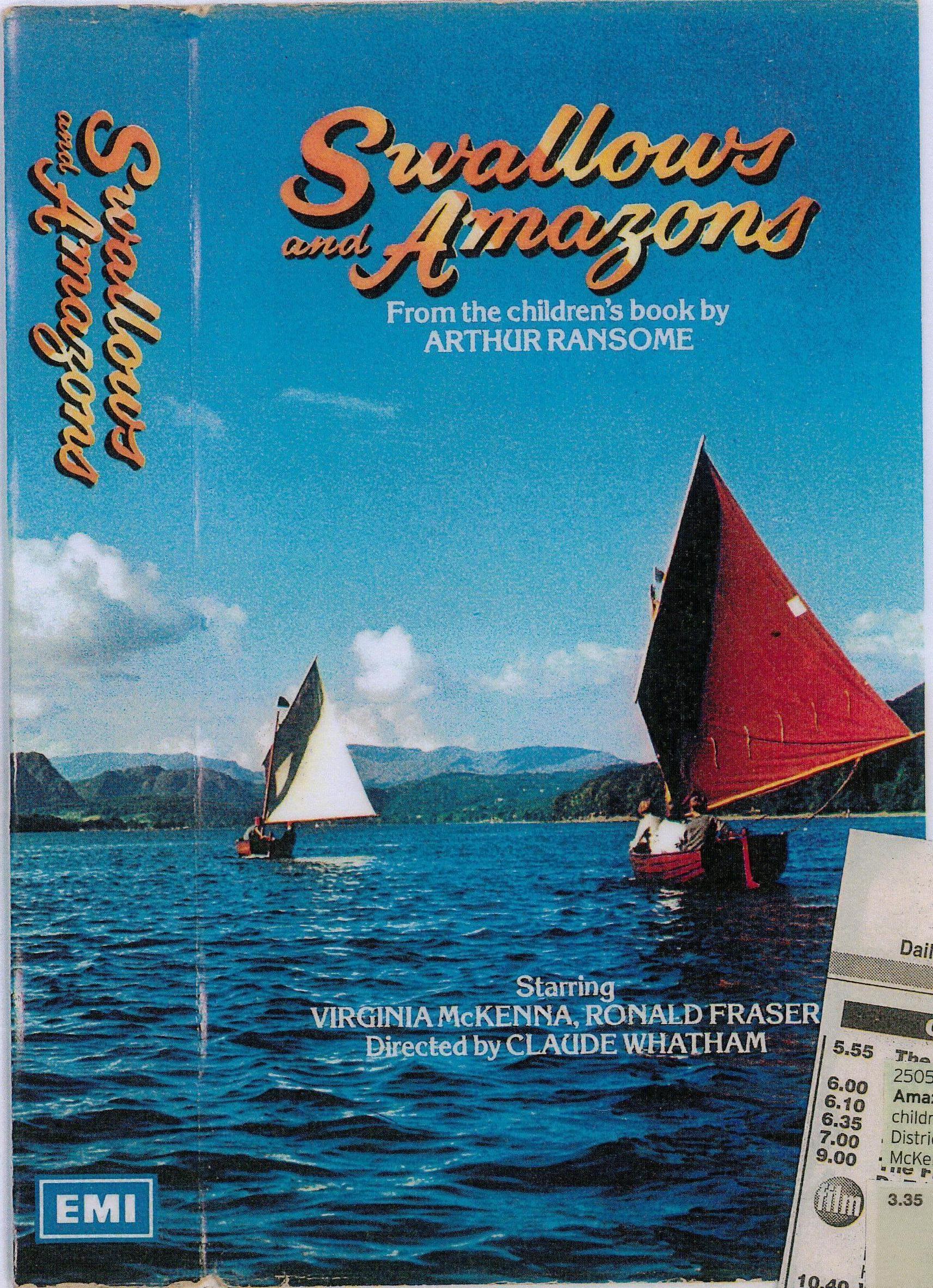
The cover of the original VHS version of ‘Swallows and Amazons’
One secret is that the film was made on four different lakes – Coniston Water, Windermere, Elterwater, Derwentwater – and a smelly lily pond. We were able to use Bank Ground Farm as Holly Howe and Brown Howe as Beckfoot, home to the Amazon pirates who careened their dinghy on the lake shore in the company of a 45-man film crew from Pinewood Studios.
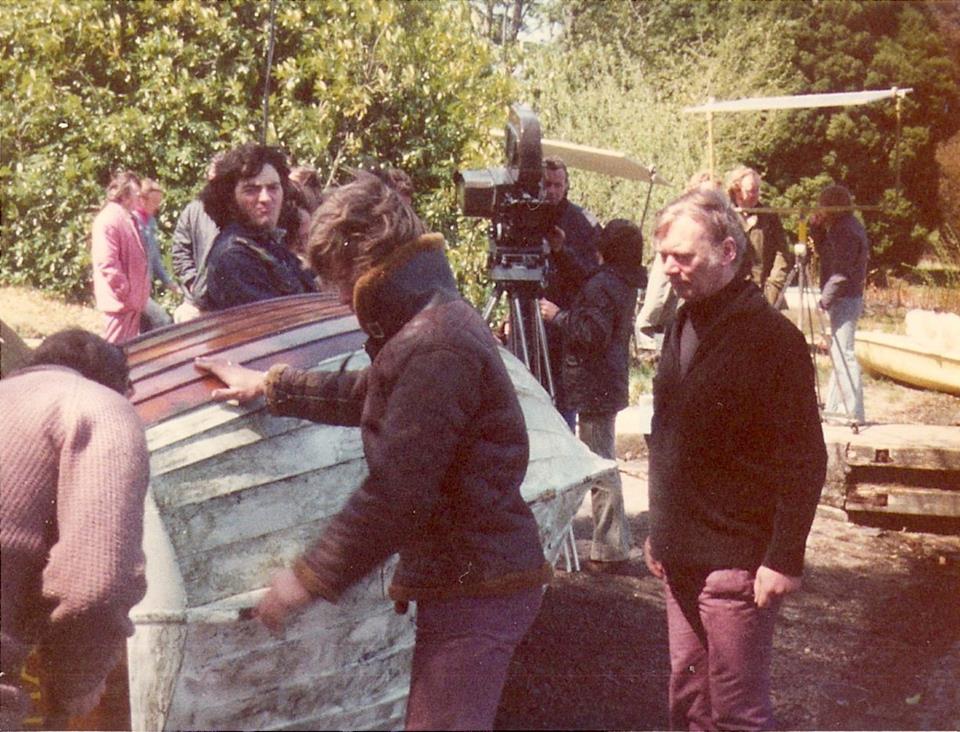
David Blagden, David Cadwallader, and David Bracknell looking at the Amazon’s bottom with DPO Denis Lewiston in the background with the Panasonic
Careening the Amazon at Brown Howe, Coniston Water – photo: Daphne Neville
We were only given a couple of days to get used to handling Swallow and Amazon before filming began. Although happy out on the water, the director, Claude Whatham, knew little about boats. To make up for this, we had instruction from a sailing director in the form of a good-looking actor called David Blagden who presented a television programme called Plain Sailing. He’d recently raced crossed the Atlantic in a nineteen foot yacht called Willing Griffin but was unfamiliar with blustery Lakeland winds and did not know how to break down a script. Simon West, aged eleven, who played Captain John, ended up explaining to Claude how to get a decent shot while I tried not to shiver. My costume was designed by Emma Porteous of James Bond fame but consisted of nothing more than a short yellow dress and an enormous pair of navy-blue gym knickers.
Amazon, flying the Jolly Roger, with her seamed white lugsail and heavy centerboard is a lovely boat to sail. Although vital to the story, no one took into account that I needed to take her, on my own, from Secret Harbour on Wild Cat Island and drop her anchor off Cormorant Island. I was given a grey cardigan to wear but had not been asked if I could row. Having grown up handling a Thames skiff, I managed to use the leading lights we’d set up to negotiate the narrow channel and threatening rocks in one take. I repeated the action with Dennis Lewiston, the lighting-cameraman, and his 35mm Panavision camera in the stern but grew so tired that I needed to be carried ashore by a frogman acting as our safety officer.
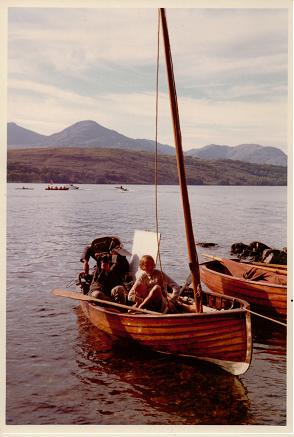
Sophie Neville in The Amazon with DOP Denis Lewiston, his 16mm camera and a reflector board ~ photo: Martin Neville
Sophie Neville having captured the Amazon, with the lighting cameraman and 35mm Panavision Camera in her stern. Swallow is moored alongside – photo: Martin Neville
Titty later anchors Amazon off Cormorant Island on Derwentwater, but the shot of her wrapped in the sail, sleeping aboard, was taken in Mrs Batty’s blacked-out barn at Bank Ground, with the boat rocking on a cradle made by the unit carpenter. This was for a night scene when Titty is disturbed by burglars hiding a heavy trunk that turns out to contain Captain Flint’s treasure. When the action was repeated out on Derwentwater near One Tree Island, I got soaked. Rain had collected in the furled sails.
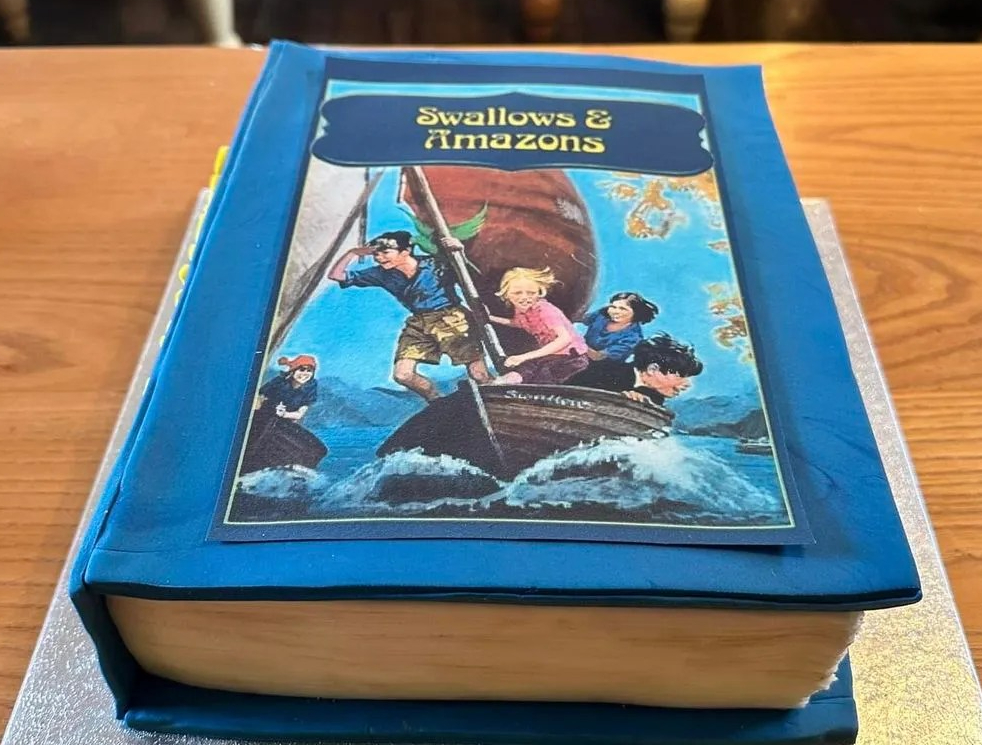
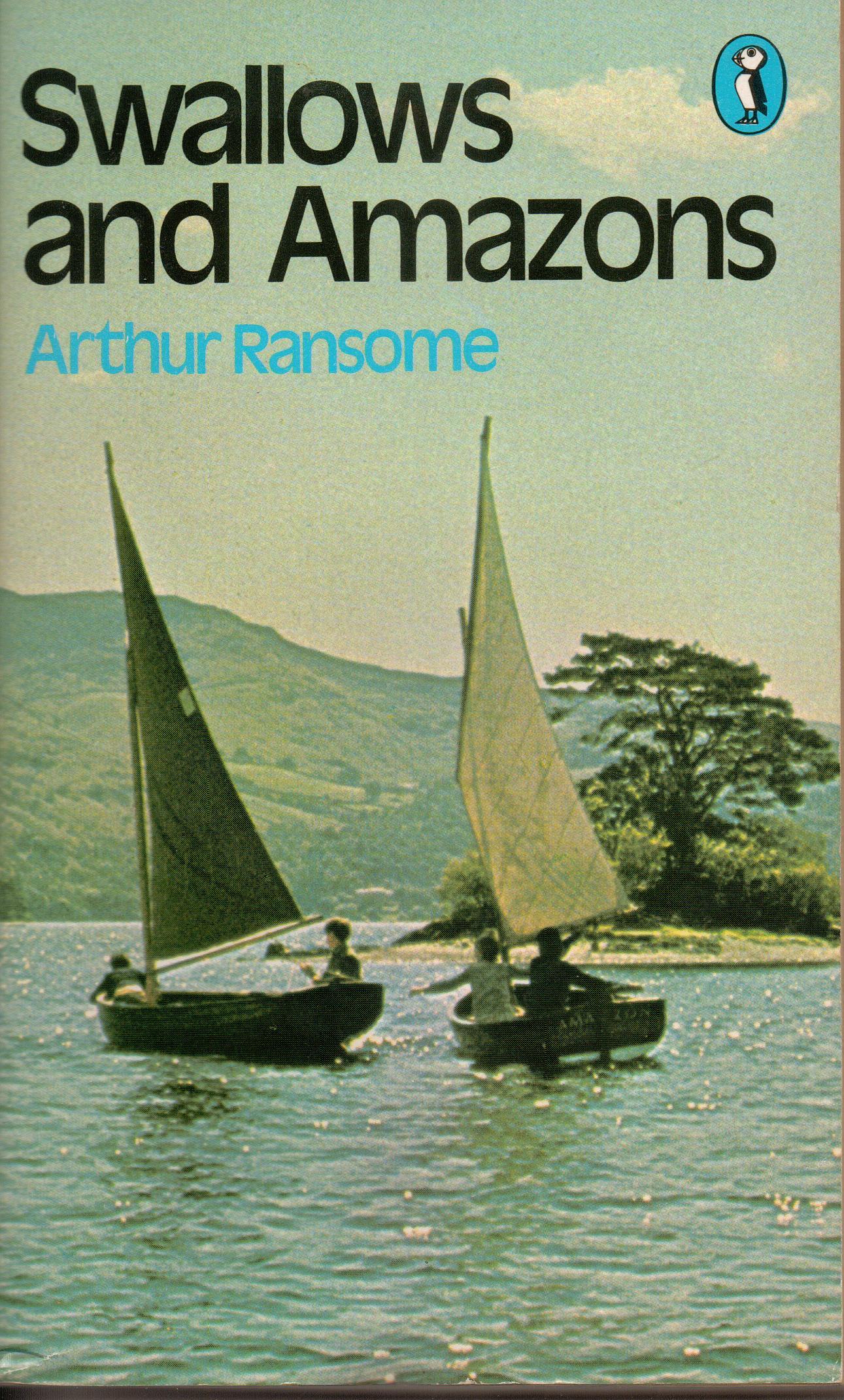
My one regret is that we didn’t follow the book when sailing the Amazon back to Wild Cat Island. The wind was up and Claude Whatham needed Captain John to sail Swallow ahead of the Amazon which is the faster boat. I originally took the tiller, as Titty is urged to in the story, but had trouble with the rudder. Mate Susan, played by Suzanna Hamilton, is at the helm on the cover of the Puffin paperback brought out to accompany the film, whilst I am fending off.
One of the film stills taken from the pontoon was used on the cover of the Puffin edition of ‘Swallows and Amazons’ brought out in 1974 to accompany the film.
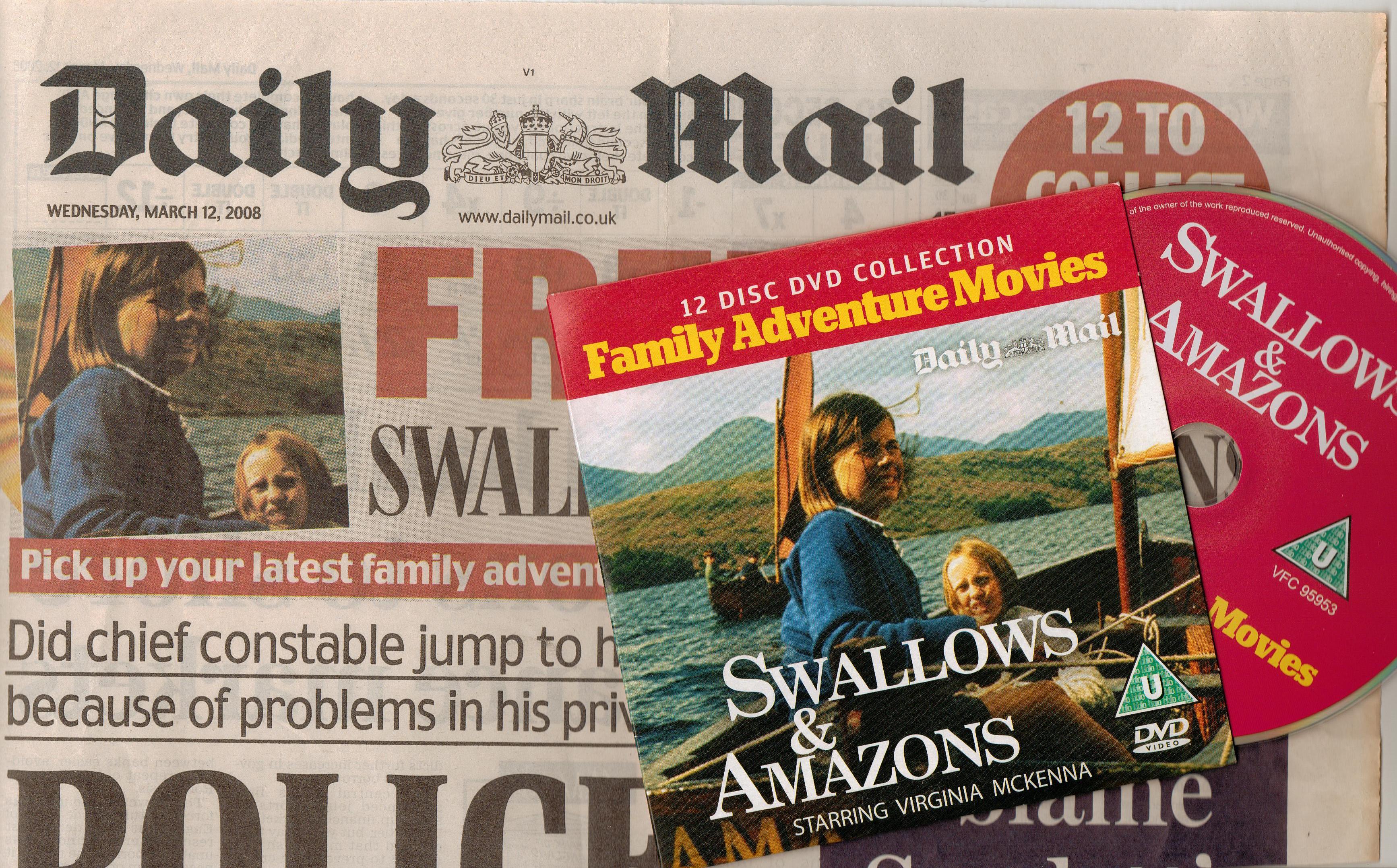
The second part of the scene was shot on Coniston Water, with the Amazon Pirates, Nancy and Peggy ‘dancing with rage’ on Peel Island. A shot of this was used on the cover of a hardback and a DVD distributed by the Daily Mail.
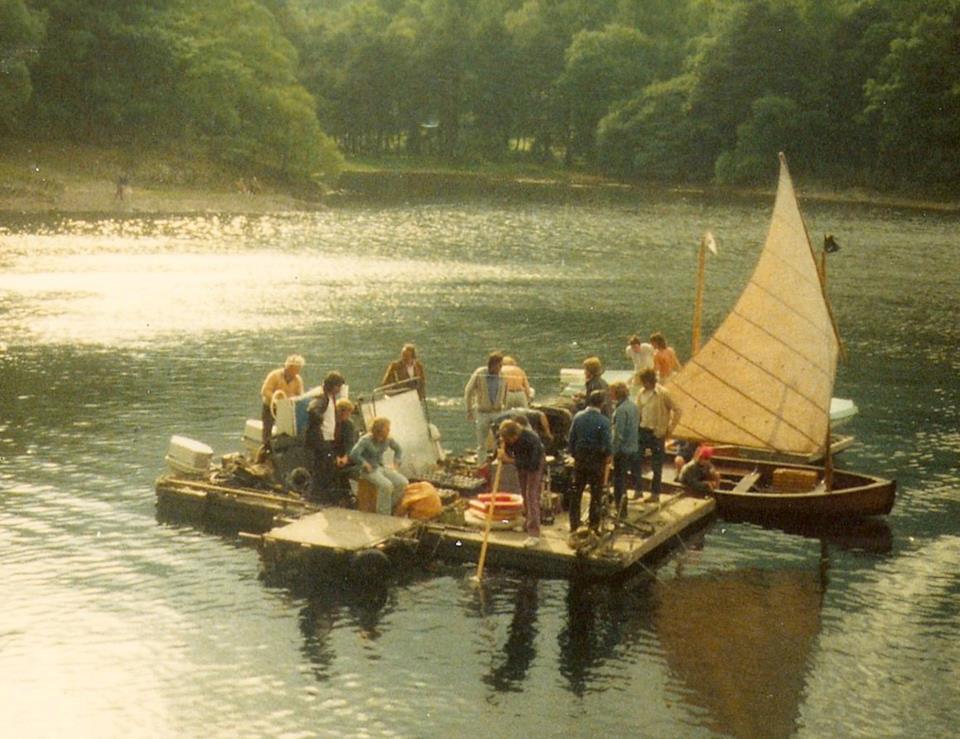
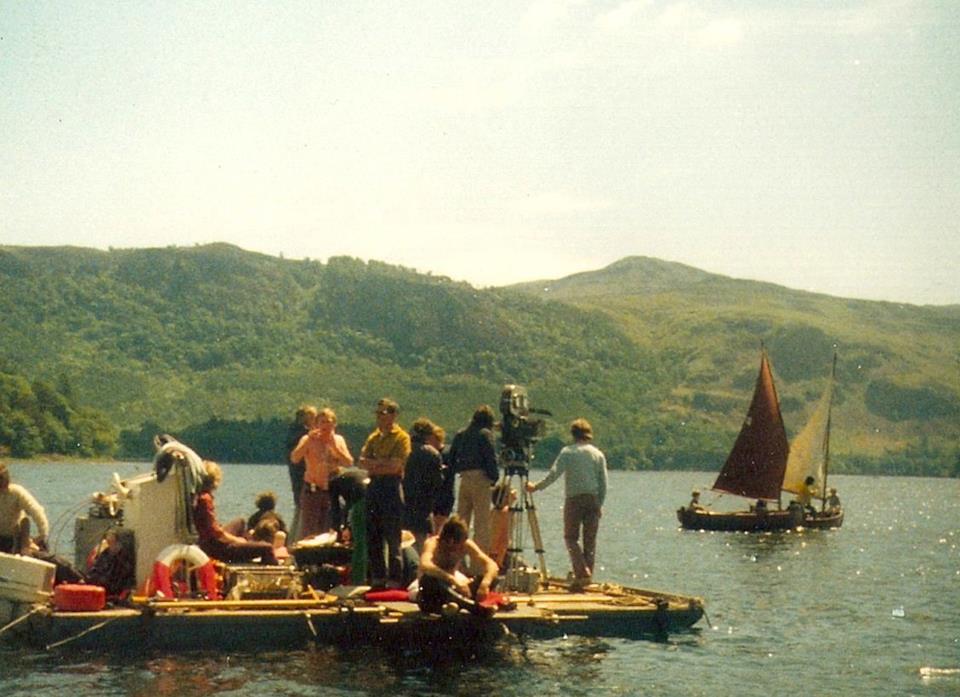
Not many sailing films have been made and it was unusual for a movie to feature so many scenes set in two small dinghies. Mike Turk, whose family had been boat building for centuries, and Nick Newby of Nicol End Marine near Keswick, took up the challenge of adapting a cross-shaped pontoon to act as a mobile camera mount so that our dialogue could be recorded. This extraordinary vessel had two outboards but wasn’t easy to handle. The dinghies were wired to it with underwater cables but tended to pull away. Swallow’s mast broke the first time she was rigged, but the idea eventually worked and only Sten Grendon, playing Roger, fell in.
Amazon rigged up to the camera pontoon – photo: Richard Pilbrow
Somehow David Cadwallader, the grip looking after the camera equipment, managed to keep the horizon horizontal using no more than a spirit level on the tripod. Shadows were lifted from our faces by using reflector boards and, since the whole movie was post-synced at Elstree Studios, the audience can hear what we say.
Richard Pilbrow and his film crew on the camera pontoon with Eddie Collins operating the 16mm camera. Simon West and Stephen Grendon sail Swallow. Suzanna Hamilton is climbing aboard the Amazon with Sophie Neville
Filming Swallow and Amazon from the camera pontoon – photo: Daphne Neville
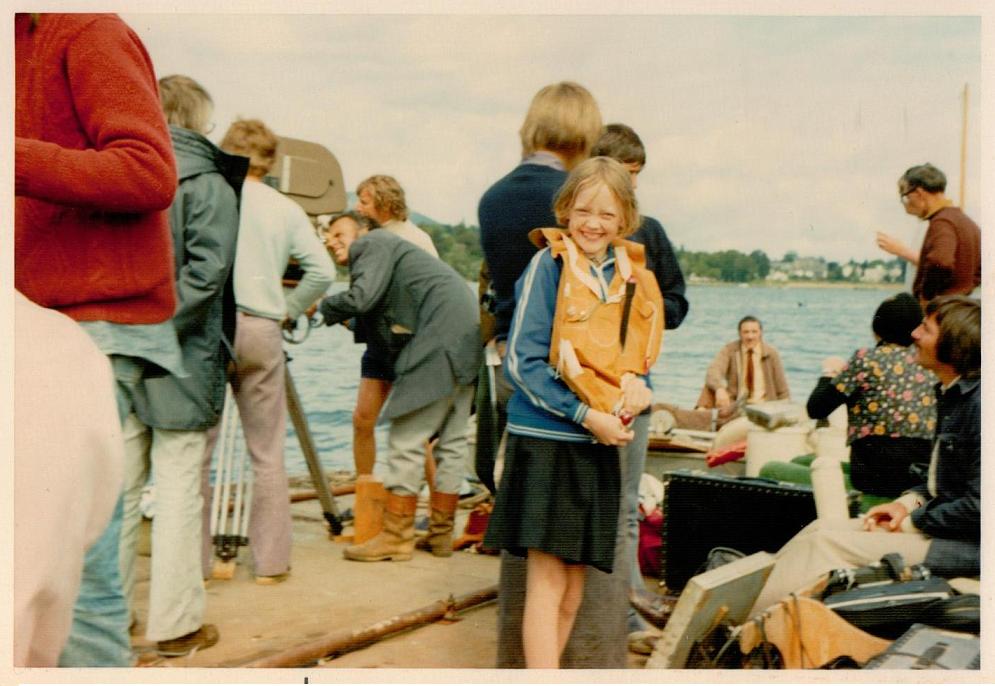
The pontoon on Derwentwater with Richard Pilbrow, Bobby Sitwell, Denis Lewiston, Claude Whatham, David Cadwalader and Sophie Neville aged 12 playing Titty. Eddie Collins looks on ~ photo: Daphne Neville
Sophie Neville on the camera pontoon on Derwentwater – photo: Daphne Neville
The first Amazon, a chunky sea-going fourteen-footer with a standing lugsail purchased in Barrow-in-Furness by the Altounyan family in 1928, was originally called Mavis. After being restored, she was renamed Amazon in line with Ransome’s books but remains too leaky to take out. She now resides in the John Ruskin Museum at Coniston where she can be visited like a great aunt.
None of us children knew that the Amazon we sailed had been used in the 1963 BBC adaptation of Swallows and Amazons made in black and white with Susan George playing ‘Kitty’ as Titty was renamed. Looking at the photographs, it would have been good if Amazon’s hull had been painted black but her varnished planks are a nod to the 1970s when everyone was busy stripping pine.
By 2003, she was owned by the White family who I met when they brought Amazon from Kent to Cumbria to feature in Countryfile and an episode of Big Screen Britain. Ben Fogle met their twin daughters on Peel Island, looking very much like Nancy and Peggy in damp bathing costumes having been swimming in Coniston Water. It has been extremely generous of them to pass such a precious boat on to The Arthur Ransome Society.
Amazon will soon be available to hire at Hunter’s Yard, Ludham
Amazon at Hunters Yard – photo: Marc Grimston
Amazon is currently being kept at Hunter’s Yard near Ludham where you can apply to sail her on the Norfolk Broads, along with the Titmouse and the Teasle, (a cabin cruiser called Lullaby) and a punt called the Dreadnaught featured in the 1984 BBC adaptation of Coot Club. Swallow is also there under restoration, needing a new keel.
Amazon being restored at Hunter’s Yard, Ludham
Amazon at Hunters Yard – photo: Marc Grimston
The plan is for both Swallow and Amazon to be on display at Windermere Jetty in Cumbria for the weekend of 29th & 30th June 2024. We hope some of the steamboats used to dress the Rio scenes set at Bowness-on-Windermere such as Osprey and George Pattinson’s launch Lady Elizabeth can be in attendance. Windermere Jetty is currently restoring the steam launch Esperance used by Ransome as his model for Captain Flint’s houseboat, and you can find the fourteen-foot RNSA dinghies used in the 2016 movie of Swallows and Amazons moored in the wet dock.
In 2021, everyone at Windermere Jetty gasped when Rupert Maas valued Swallow highly on BBC’s Antiques Roadshow, but the true worth of both Swallow and Amazon is akin to Captain Flint’s hidden treasure: instead of gold ingots his trunk contained precious memories of friendship and adventure. They no doubt kept him on course when the storms of life blew in and gave him plenty to write about. Just as Arthur Ransome’s books grant us solace, my prayer is that many will be able to grab the chance of sailing the little boats that take us into the stories immortalised on film so long ago.
You can read more of Sophie Neville’s memories in The Making of Swallows and Amazons’, published by the Lutterworth Press and now available as an audiobook narrated by the author
Different editions of ‘The Making of Swallows and Amazons (1974) by Sophie Neville’
Thanks go to all those who have looked after and lovingly restored the inspirational boats that appear in the adaptations of Arthur Ransome’s books. If you would like to help by making a donation towards the restoration, the link is:
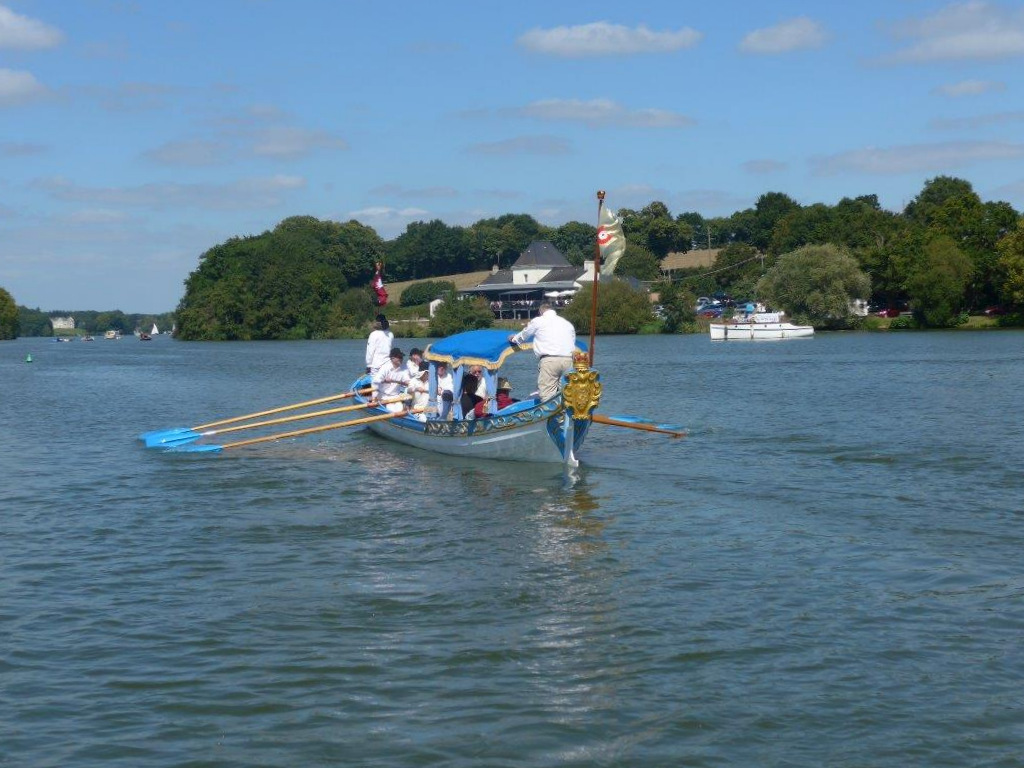
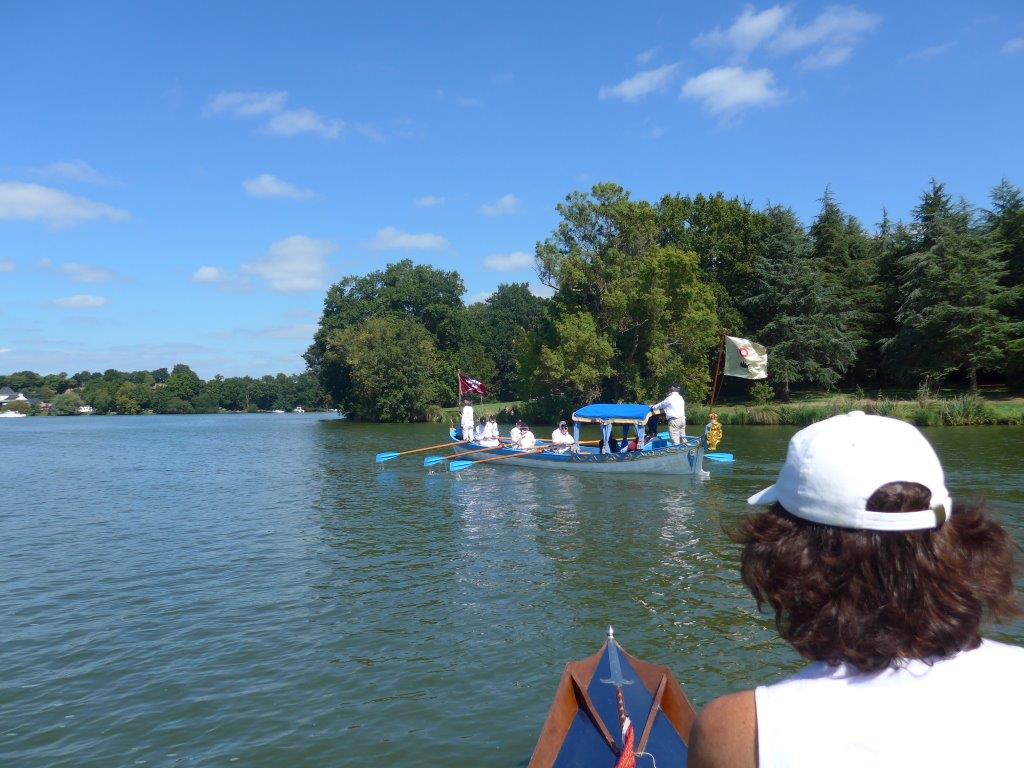
You know what it’s like; you never see photos of yourself on holiday until someone else sends them to you. Here I am, rowing in the bow of the Drapers’ shallop. By some miracle we seem to be together, in that our blades are barely visible.
The most challenging task for me is raising my oar in salute, as we did here for our landlady:
The long oars are heavy. The only way I can raise mine is by putting one end under my foot.
My fellow rowing club member who took these shots from the water explained that his camera unexpectedly went into an ‘Impressive Art’ setting. Although this looks like a painting, it was for real, taken out on the water from a sandolo.
As you can imagine, the whole trip took quite a bit of organising, but it was worth it. This shot was also taken on art mode.
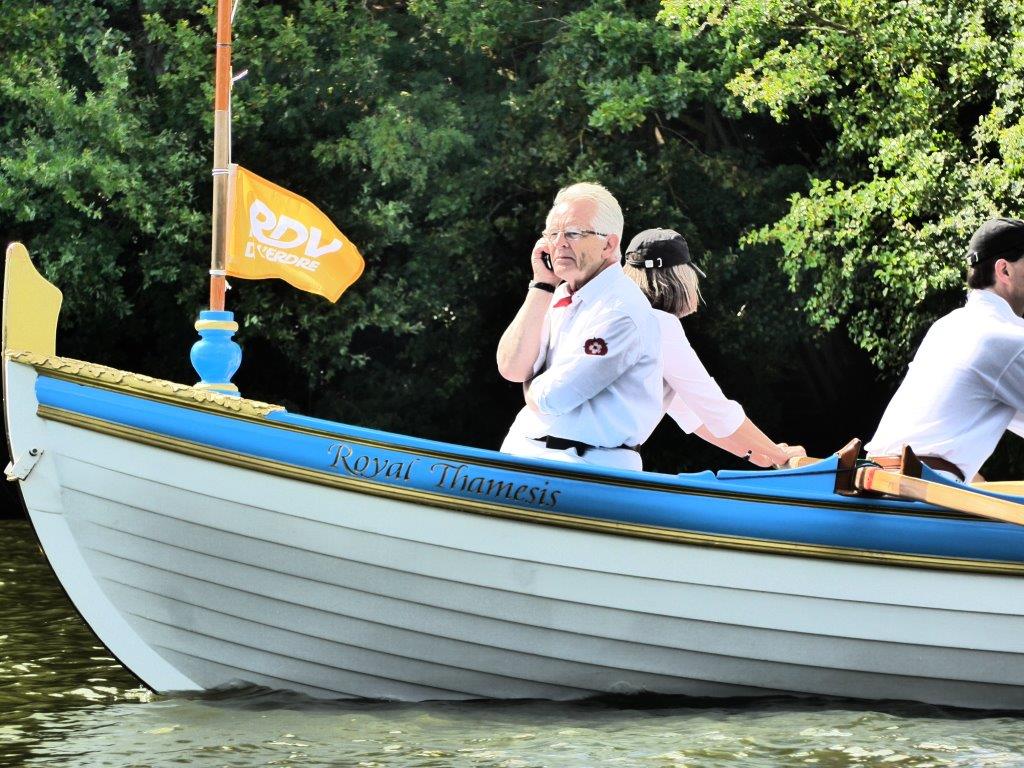
While some of us worked really rather hard on our holiday, others enjoyed the river from a different perspective.
Next week, on Wednesday 24th and Thursday 25th September, The Draper’s Shallop will be taking part in Countryside Live at Lee Valley in the London Borough of Hackney, when children from the inner city of London will get a chance to pull an oar and experience what it feels like to travel on the river as Queen Mary once did. I’m volunteering on the Thursday.
On Saturday 27th September, she will be competing in London’s river marathon along with 300 other crews. The course of the The Great River Race starts at London Docklands, with vessels rowing up the River Thames under all the great bridges of the capital to Ham House in Richmond, passing under Kew Bridge at about 3.00pm. Let me know if you spot her!













 Sophie Neville