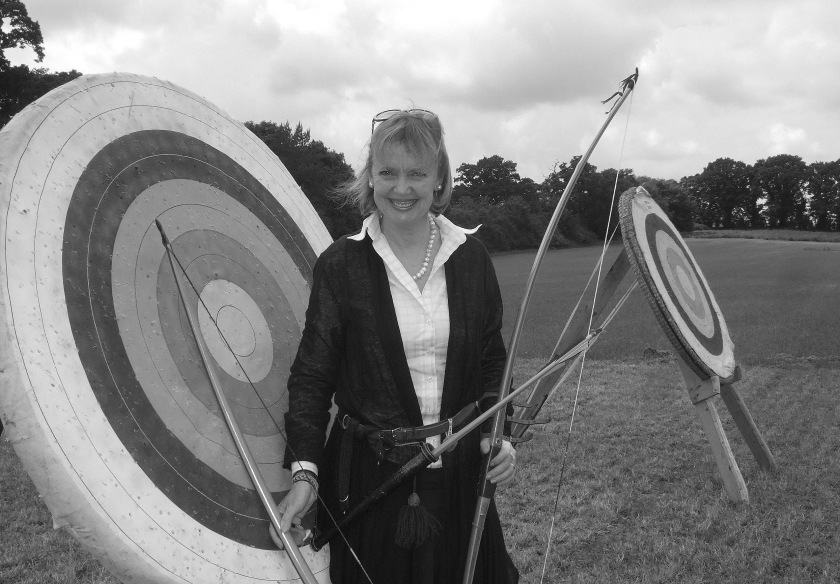
A recent author interview with Sophie Neville

Author Sophie Neville

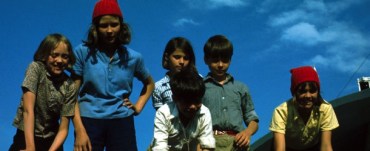
Sophie Neville this summer

Could you tell us a little bit about yourself?

I graduated from the University of Durham with a degree in anthropology and went straight into the mayhem of the BBC. I worked on a number of drama serials, filming on location in London, Paris and Corfu, and produced INSET programmes for Schools Television before setting up documentaries for the Natural History Unit and ‘Blue Peter’ in Southern Africa. I was based on a game reserve where we ran horse safaris. Disaster struck when I broke my pelvis but I used my time on crutches to turn professional as a wildlife artist. My sketches proved useful to illustrate my first books. I now live on the south coast of England where I use my spare time to raise funds for charitable projects in South Africa.


How did you get started writing?

I began by writing for television. It was a matter of putting my own programmes together and working with BBC Books to bring out accompanying literature. I seemed to be forever submitting blurbs for the Radio Times. It wasn’t until the year 2000 that I started writing books. I self-published ‘Funnily Enough’, that won an international book award, and ‘Ride the Wings of Morning’, made up of the letters I sent home from Africa about riding horses through the wilderness.


Can you tell readers about your latest book?

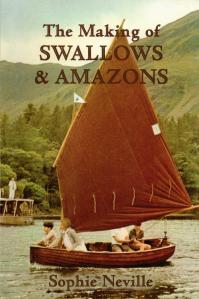
The publishers Classic TV Press asked if they could bring out a paperback version of ‘The Making of SWALLOWS & AMAZONS’, a memoir I’d launched as an ebook under a similar title. As a child I played Titty Walker in the classic movie of Arthur Ransome’s book, shot on location in the Lake District in 1973. I used the daily account I kept as a 12 year-old to guide the narrative, adding anecdotes as to how disaster was averted. It has appeal for anyone who grew up in the ‘seventies or enjoys light-hearted biographies.


What else have you written recently?

I am just finishing a novel based on a true story from WWII entitled ‘Makorongo’s War’. I’ve recently written Forwards to ‘An A-Z: Cumbria and the Lake District on Film’ for Hayloft Publishing and ‘Swallowdale’ by Arthur Ransome for Albatros Media in the Czech Republic. I’m currently working on a Forward to ‘Swallows, Amazons and Coots’ by Julian Lovelock soon to be published by Lutterworth Press.  Revelation Films asked me to write material for the DVD Extras of ‘Swallows and Amazons Forever!’  and since ‘Funnily Enough’ was serialised in a magazine I’ve had feature articles in Cotswold Life, Country Life, Classic Sailor and Word in Action.


Have you got a favourite genre to read? If so why?

I get totally engrossed in the memoirs I use for research but my book club keep me reading popular literary fiction.


Which writer or writers has had the most influence on your own writing?

Since I write true-life stories, I would say Monica Dickens, Helene Hanff and CS Lewis. I was hugely influenced in my youth by Gerald Durrell and James Herriot, both of whom I met when I was working in television and was impacted by how well their memoirs translated to the screen.


Where is your favourite place to write?

A thatched cottage deep in the African bush, where I can escape everyday life. I use two rooms at home on the south coast of England – one for admin and one for books.


Pen or keyboard?

Laptop, I’m afraid. It’s not good for the posture. The original material for my last three books was handwritten but had to be typed up. My prehistoric computer sadly died when I was writing my first book in South Africa and I couldn’t afford to buy a new one. Miraculously, a brand new PC was donated to the local primary school. The teachers had no idea how to use it, so I introduced them to Microsoft Word in exchange for being able to work on my book while they were busy in the classroom. I sat at a low desk on one of those tiny red plastic school chairs until I had 100,000 words and the headmistress gained computer literacy.


How would you describe your writing regime?

The ideal would be to escape to South Africa for a couple of months to get my first draft on paper so I can assimilate research material or type all day long. I would then work on the structure and keeping adding material every afternoon back at home. I find my mornings are occupied with marketing. Since I was appointed President of The Arthur Ransome Society, which is the second biggest literary society in the UK, I spend quite a few weekends giving talks.

For more photos taken this year please click here for Sophie’s blog, Funnily Enough 


Swallows and Amazons 2016 – the film trailer

5wb3k1nde6f2h63eokkv4ztpxegio-large

Swallows and Amazons – the new film trailer: where adventure meets danger

Please click here to view of the film trailer

If you experience problems watching it – first make sure ‘Flash’ is enabled on your computer

To get a behind-the-scenes look of the classic film, take a look at the book ‘The Making Of Swallows and Amazons’


Comments from Cumbria and beyond


swallows_2-copy-610x250

It is always great to receive feedback from readers, especially when they are familiar with the locations described in a book. Comments on ‘The Making of Swallows & Amazons (1974)’ keep coming in:

‘We loved the diary extracts.’ Angel Inn, Bowness

‘Wonderful, wonderful book!!!’ Rachel Tyrell, Lincolnshire

‘Thrilled with the book….We looked at all the photos in your book at bedtime and Eleanor was transfixed – we are loving it already. We talk a great deal about the houseboat feast’ – Miranda Gore Browne, author

Aldebrugh Bookshop

‘Beautifully written book that really seems to capture the time and place. Made me want to re-watch the film and re-read all the books immediately.’ Jago Silver, book illustrator

‘I loved reading your book on the making of the film too – just lent it to a friend who is a big fan.’ Clare Mitchell on Twitter. ‘I have the paperback – ebook sounds gr8. Love the memories of a 70s childhood as well as the S&A background.’

Letter re The Making of Swallows and Amazons

To read more reviews of ‘The Making of Swallows & Amazons’ please see the Amazon UK page here.

Please add one if you have enjoyed the book.

'The Making of Swallows & Amazons' for sale after a cinema viewing

1 error 2 many – notes for a third edition of ‘The Making of SWALLOWS & AMAZONS’

The Making of SWALLOWS & AMAZONS

Guy Willson, a reader from Papua New Guinea, has written to say: ‘I have read your book and I really liked it.  I could see behind the scenes and often read between your lines as well.’

‘When you were making the movie (in 1973) I was on my way to Norfolk Island as a starting point of my adventures in the South Seas; so I never knew of the release of your film until much later when I had children of my own that had reached the age to go ‘avasting’ and ‘timber shivering’, when we were living in Rye in the 1990’s.’

‘Some years ago I restored a 13ft clinker dinghy and after adding a false keel, added a standing lugsail and trailed her up to Coniston for my children to sail… I had in mind an article from Classic Boat on the Swallow, how the Altounyan children preferred Swallow as a boat because they could stow more things in her and she could still sail well.  I had noticed on a drawing in the article that Ransome had given her an extra 2 or 3 inches of false keel and this helped tremendously in reducing her leeway.  I added a piece of oak to do the same thing but gave her an extra 9” aft and planed it down to a feather edge forward so the she would go about a bit easier. Well, it worked and Eaglet would have done the original Swallow proud.’

Swallow on Coniston

Swallow – the 12′ dinghy used in the film

‘If you would permit me a little correction: you described the rig as being gaff rig, but this is not so.  Both the boats, originals and the ones you sailed were in fact luggers.  The nearest thing to a gaffer among the luggers is the Gunter Rig which has jaws at the front of the yard but is hauled up by a single halyard. You can see this in the Mirror dinghy (in truth it is about halfway between the two). However the lug rig of Swallow is known as a ‘standing lug’ and it can be used to go about freely.  After hauling up the sail on its traveller; the peak of the yard is raised by the downhaul line (usually attached to the bottom of the boom).  This tightens the luff of the sail and lifts the outer end of the boom as well giving the best efficiency to the sail.’

image005

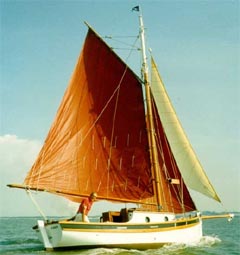
A gaff rigged cutter

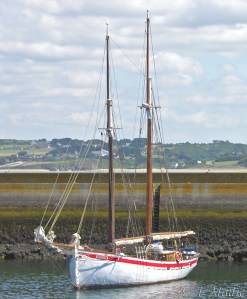
‘Lugsails were the working sails of England for most boats less than 60ft but they were usually rigged with a ‘dipping’ lug as the mail sail and a standing lug aft.  This dipping lug had to be dropped and the yard hauled round behind the mast every time they went about.  It was a powerful sail and they found their best expressions in the three masted Bisquines which used to raid British shipping in Napoleonic days.  You can still see them at the classic boat events at Douarnenez and Brests, where I took the gaff schooner Soteria in 2006.’

image002

Soteria at Douarnenez

‘If you had had a gaff rig you would most probably have needed a jib to balance it (unlike the American catboats which have their masts right up in the bow, not even a space for the Boy Roger on those! Thanks for writing a lovely book which I will pass on to my daughter.’

Blu-ray X marks the spot
“X marks the spot where they ate six missionaries”

‘You did such a grand job as Titty and I am not really surprised to find that you are a bit of a wordsmith. I am a missionary (uneaten) in Papua New Guinea and we are planning to sail back there in our steel schooner see www.livingwatermission.org  On our return we will be calling in at Erromanga in Vanuaatu where ‘x’ was the spot where two missionaries were eaten.  Recently the descendant of one of them, John Williams, went to Erromanga for a service of reconciliation.’

If you have noticed any errors in ‘The Making of SWALLOWS & AMAZONS’ please use the Comments box to let us know so that we can make corrections! We might be able to bring out a third edition. Readers who already have a Kindle edition will be able to update it free of charge.

'The Making of Swallows and Amazons (1974) by Sophie Neville'
Different editions of ‘The Making of Swallows and Amazons (1974) by Sophie Neville’