
 Richard Pilbrow produced the original movie ‘Swallows and Amazons’ (1974) in which I appeared in a as a girl. I’m told that it has been broadcast on television more times than any other British movie and has been an inspiration to many.
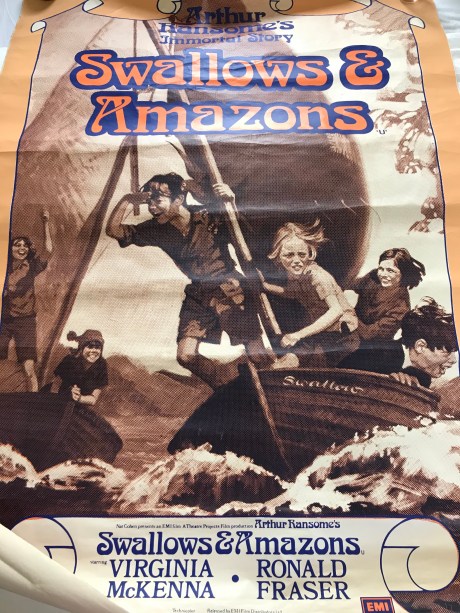
Back in the early 1970s, Richard was busy producing iconic West End musicals such as ‘A Funny Thing Happened On The Way to The Forum’ when he was inspired to make a film adaptation of Arthur Ransome’s novel while taking a break in the Lake District.
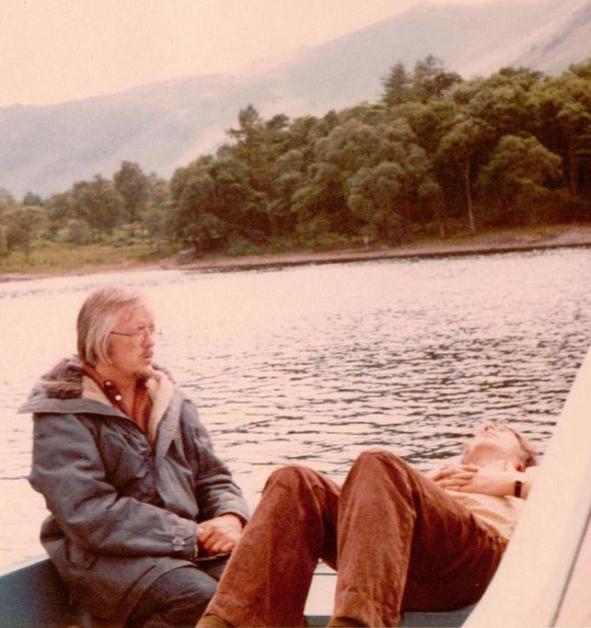
He said the most difficult task he ever took on was persuading Mrs Ransome to grant him the rights. Arthur Ransome had famously disliked a BBC adaptation and passionately did not want a ‘Disneyfication’ of the book based on his own childhood memories.

Richard said that raising the film finance was relatively easy. Nat Cohen of EMI Films happened to be looking for a classic story akin to ‘The Railway Children’, which had been a box office success. He’d never heard of ‘Swallows and Amazons’ but an assistant in his office was wildly enthusiastic and Richard secured a budget of £250,000 to make a ninety minute movie entirely on location in the Lake District.

Richard loved being out on the water and took Mrs Ransome to find authentic locations. Being determined that the six children playing the Swallows and the Amazons should be able to sail well, he advertised in yacht clubs and interviewed about 1200 candidates. I met the director at the Theatre Project offices in Shaftesbury Avenue. Those short-listed were taken on a sailing weekend in Burnham-on-Crouch to see how they coped afloat.
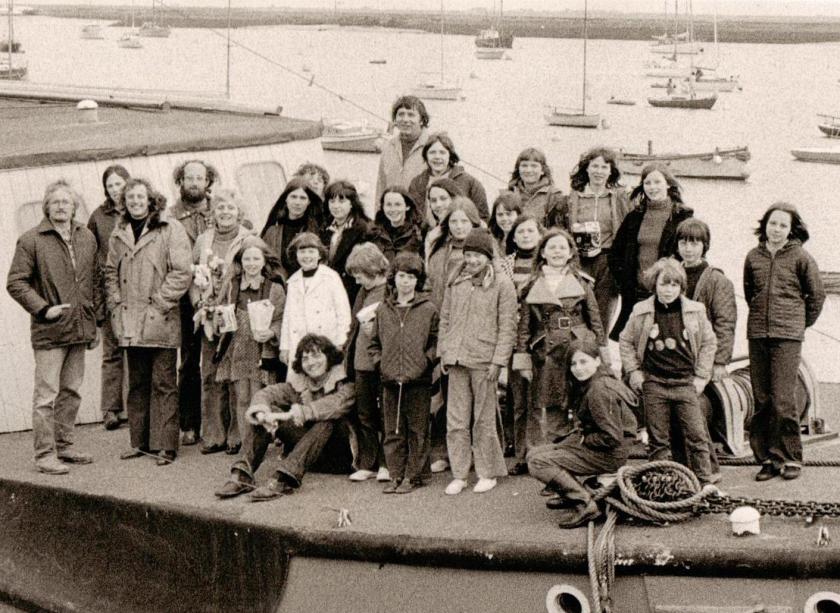
Mrs Ransome kept a close eye on the script, insisting that the part of Titty was played by ‘an English rose’, which must be why I was cast as the heroine.

My mother came up to look after us six children who played the Swallows and Amazons. We landed on Wild Cat Island and began playing out the characters that sprung from the pages of the book.
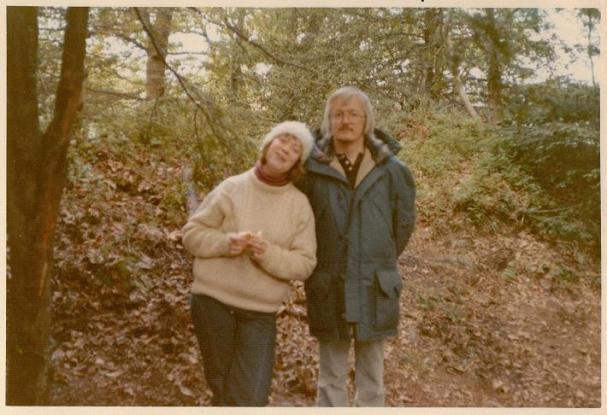
Claude Whatham was actually the second director appointed to work on the film. He had only made one other feature – ‘That’ll Be The Day’, starring David Essex and Ringo Starr, but he was an outdoorsy person and got on well with Richard who gave him a free rein. They embraced the 1929 period and the idea of somehow capturing childhood innocence.

Unpredictable Lakeland weather and working out on the water could make scheduling and logistics a nightmare but Richard had the support of an excellent production team working under Neville Thompson who also organised the post-production work at Elstree Studios where the film was post-synced.

Neville was passionate about film making, becoming known as ‘the last gentleman producer.’ Although gregarious at times, he was a quiet man who had begun working as a location manager for Mike Newell and became a production manager for Ken Russell.

Neville was diagnosed with Lukemia at the age of 47 but lived another twenty years, ending his days in Woodbridge in Suffolk. you can find his impressive list of production credits here

The Pilbrows spent their family holidays on the Isle of Coll, so it was not surprising that Richard wanted to make ‘Great Northern?’ as a sequel even though Mrs Ransome wasn’t keen.

Sadly it was too difficult in the mid-1970s to raise money for filming and Richard never produced another movie. He sold the rights to adapt ‘Coot Club’ and ‘The Big Six’ to the BBC, and I saw him in Norwich in 1983 when I was setting up the drama series with Joe Waters.
When Richard heard that I was giving talks on ‘The Making of Swallows and Amazons (1974)’ he kindly sent me Swallow’s original burgee and Captain Flint’s white elephant flag, along with a Jolly Roger – all handmade props used in the original film.

We last met up in Covent Garden when he came to London to receive an honour from the Central School of Dramatic Art where he had originally studied Stage Management and Technical Theatre Studies.
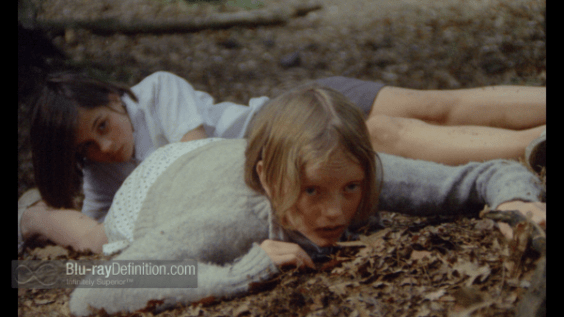
He later wrote to thank me for collecting information on how the film of ‘Swallows and Amazons’ was and writing about the impact it had. He loved hearing about our Q&As at cinemas and admired StudioCanal’s remastered DVD. ‘They really did a beautiful job—a very subtle enhancement.’

I sent Richard and his family on safari to the Waterberg in South Africa, where he ended up riding a horse past grazing rhinos. He is survived by his three children, grandchildren and his wife Molly who worked as his assistant on ‘Swallows and Amazons’.
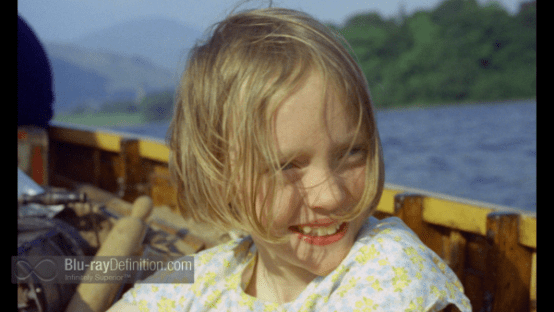
Richard’s obituary in the Telegraph can be found here
The momentous story of his life and work is recorded in his memoir ‘A Theatre Project’ available online here.
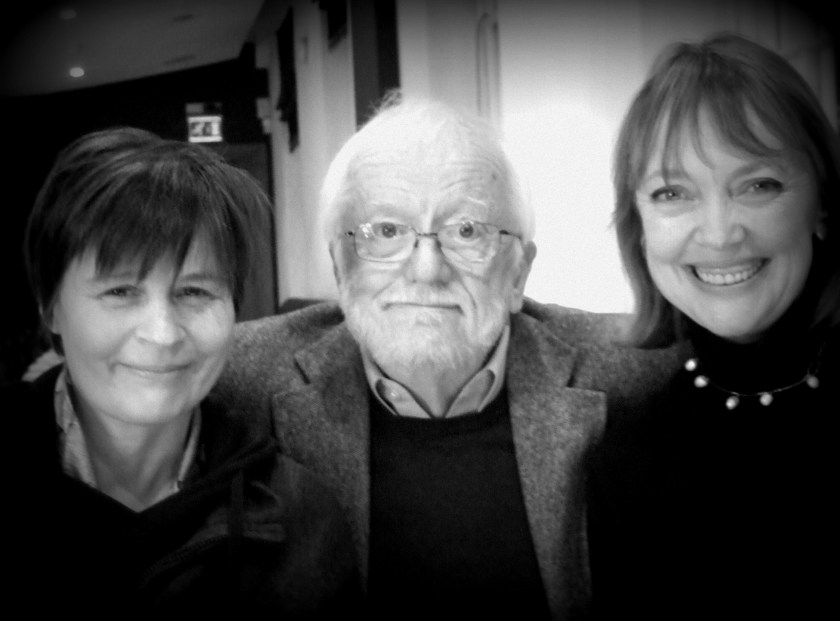
If you would like to read more, there are many stories in ‘The Secrets of Filming Swallows and Amazons’, available as an ebook and this paperback:


 Sophie Neville
So we have The Railway Children partly to thank! I’m thinking about themes in common. A focus on a family of children with father absent and mother in the background; the children fairly realistic (Railway Children may win on points here as the children argue among themselves); beautiful scenery; a key point of interest in the landscape (railway, lake) which influences the plot; male characters who aren’t always amiable but who are basically v attached to the children; an episode involving an accusation (false in the case of the firework, true in the case of the coal theft); etc!
Ransome knew E Nesbit and must have read her books.
Better and better!
But your observations are great! May I quote you one day? I keep collecting bits and pieces for the third edition of ‘The Making of Swallows and Amazons’.
Gosh – well, certainly, though they were just jotted down without much thought. Actually the subject would benefit hugely from a thread on the AR group on Facebook – if you’d like to start a thread you’ll get a mass of insightful comments and discussions. x
Ah- you must start one! The comparisons are your idea. It would be interesting to ask whether AR reviewed E Nesbit’s book ‘The Railway Children’ and when.
Sad news.
I was hoping he’d make it to the UK for the 50th Anniversary of the release of Swallows and Amazons on 4th April, but it was not to be.