News from the Charcoal Burners of Cumbria

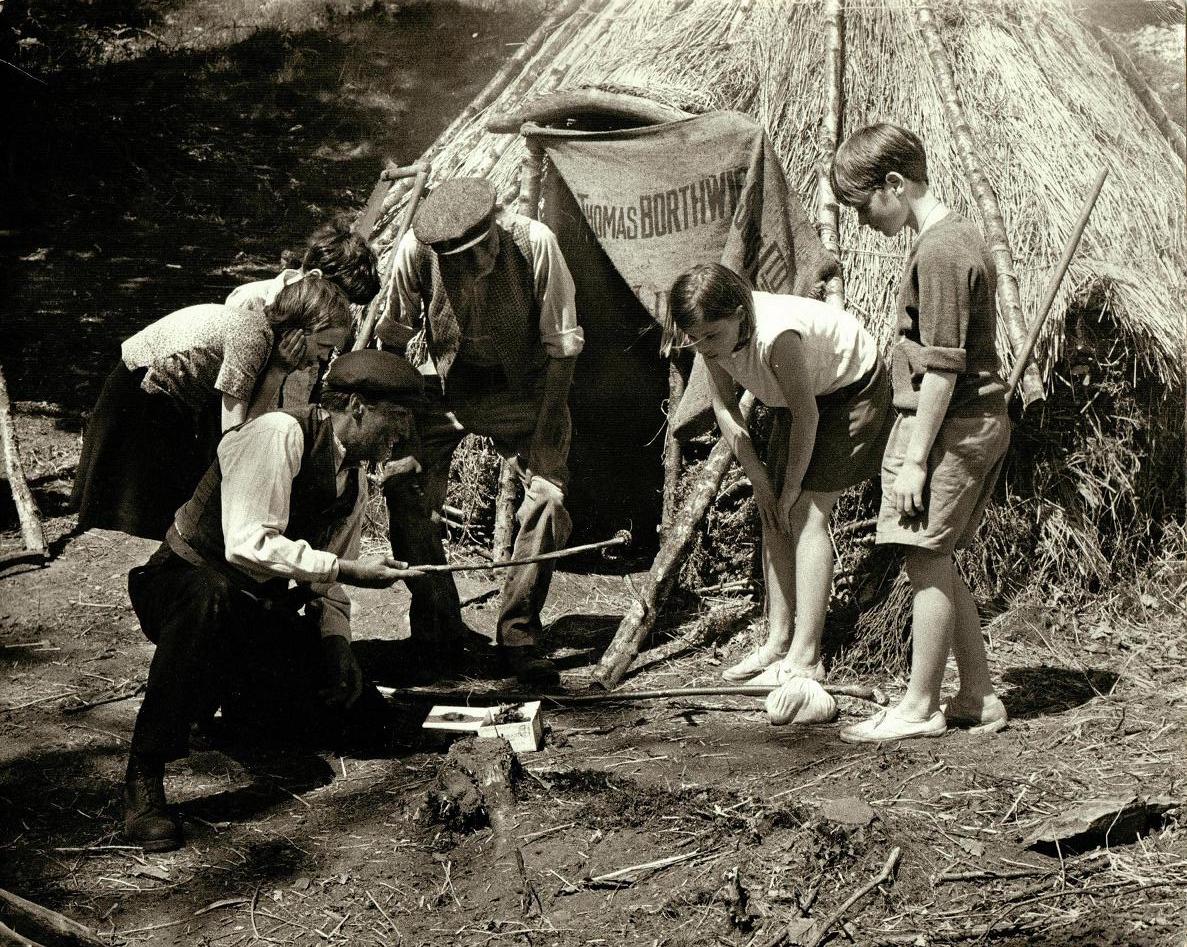
Sophie Neville, Sten Grendon, John Franklin-Robbins, Jack Wolgar, Suzanna Hamilton and Simon West in Swallows and Amazons (1974)
Sophie Neville, Sten Grendon, John Franklin-Robbins, Jack Wolgar, Suzanna Hamilton and Simon West looking at an adder in the original film ‘Swallows and Amazons’

In 2024 a ‘Swallows and Amazons’ festival at Windermere Jetty near Bowness-on-Windermere in Cumbria was organised by The Arthur Ransome Society and Lakeland Arts. Such was the publicity that I was contacted by a Lakeland charcoal burner who kindly sent me a report on his last talk:

‘I, Brian Crawley, am currently President of the Coppice Association North West. In our late 50s, my wife and I embarked on a career change into coppicing, principally making barbecue charcoal. This presentation is not about earthburns in general, it is about but a specific site for them.

‘I had always been aware of the traditional way of making charcoal, ‘charcoal earthburns’ being a stack of wood covered with earth to limit the oxygen intake to the burn.
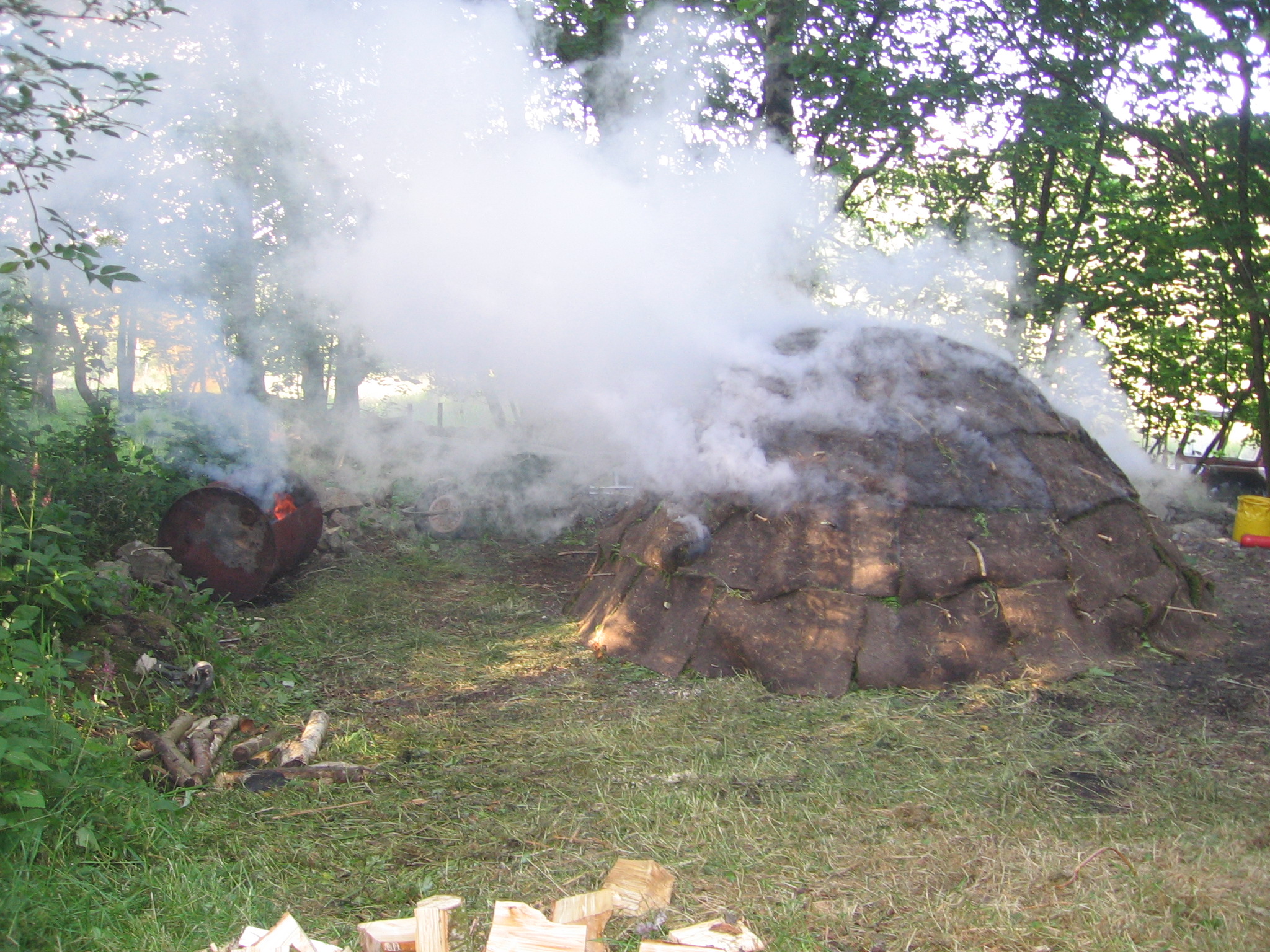
‘The receipt of a set of photographs of a charcoal earthburn from David Jones, who was a patient of my daughter’s, encouraged my interest in the subject. David’s photos were of an earthburn that had taken place in 1972 and were included in an extract from his book ‘A Lakeland Camera’.

‘I later discovered that the charcoal burn had taken place as a result of discussion between Mike Dow, who was Treasurer of Haybridge Nature Reserve in the Rusland Valley, and Mike Davies-Shiel, a prominent local archaeologist. They enticed local woodland worker Jack Allonby, who had a retired uncle Tyson Allonby, a charcoal burner, to do an earthburn. Jack was helped by Bill Norris who regularly helped local archaeologist Mike Davies-Shiel and lived in the same village as Jack.  Mike Dow arranged that a film would be made of the burn and subsequently directed it. Bill Norris narrated it. I was put in touch with Mike Dow through our Coppice Association NW secretary Alan Shepley, who had worked with Mike Dow in earlier years, and I was given the “Charcoal Burners of High Furness” DVD, which I then played to the audience. It was not my way of doing earthburns, but was historically interesting. A photo of the charcoal burners of Furness is available on ebay here.

Charcoal burning in Cumbria
Our helper from Cumbria Woodlands with his 3 sons, John Allonby, Dan Sumner and June Norris with her husband

‘For many years I had been fascinated by the visit of the children in the movie Swallows and Amazons (1974) to the charcoal burners and had always wondered where it was filmed. A gentleman on a charcoal making course, which we ran, explained to us that he was there when it was made and took us to the site not far from where he lived at Ickenthwaite in the Rusland Valley. Myles Dickinson told us how amazed he was that they got a double decker bus up the lane to the site for the children’s classroom. However, our inspection of the site in Glass Knott wood on the very narrow, winding and steep Corker Lane up to Ickenthwaite, plus another look at the Mike Dow film and David Jones’s photos, convinced me that it was the correct location.
‘I can’t remember how I first got in touch with Sophie Neville, who played Titty in the 1974 film Swallows and Amazons, but she gives some interesting details about ‘The real Charcoal Burners – who we met whilst filming ‘Swallows and Amazons’.
Charcoal Burners during the filming of Swallows and Amazons
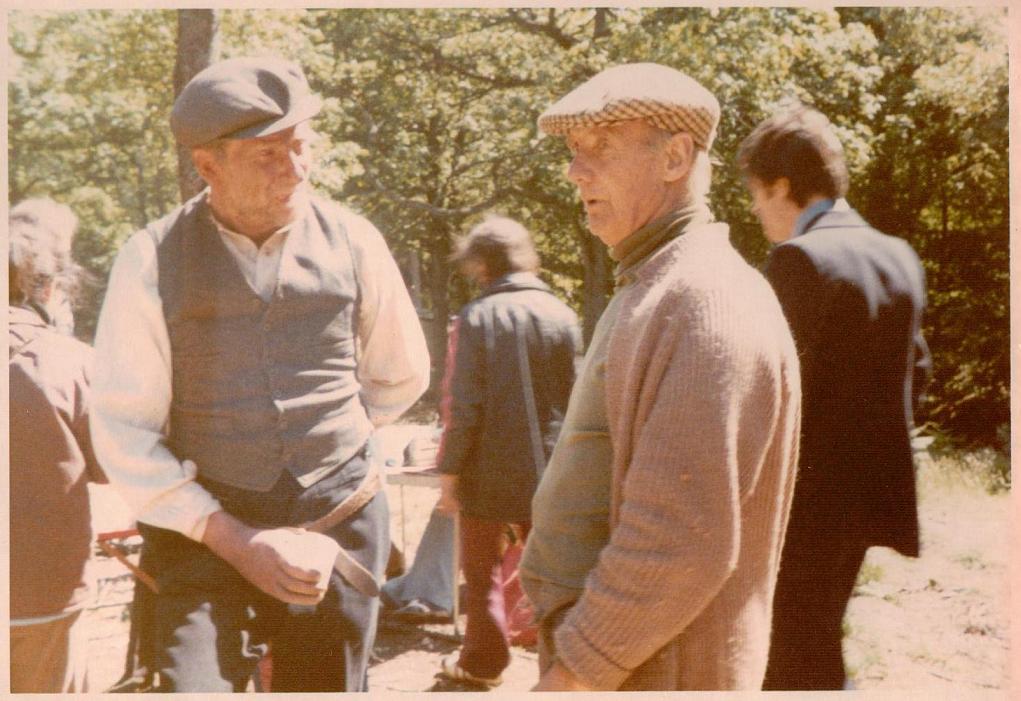
John Franklin-Robbins playing Young Billy chatting to the real charcoal burner during a coffee break on the set of ‘Swallows and Amazons’ ~ photo: Daphne Neville

‘I was able to make some extra comments to the blog as well as a photograph the site many years after the filming. I then played a clip of their visit from the Swallows and Amazons film, being shown by courtesy of Studiocanal who own the rights.

‘It became my obsession to carry out another charcoal burn on the site and became significant in 2023 when I realised that the original filming had been in 1973, 50 years previously.  This year also turned out to be the visit to the North West of the National Coppice Federation annual gathering.
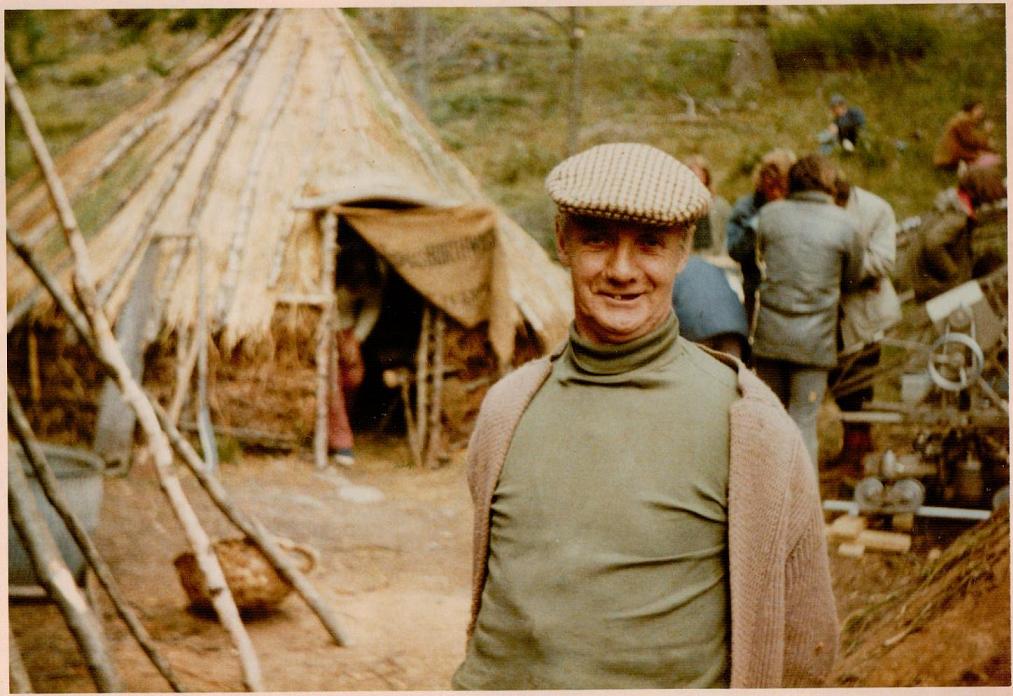
The real charcoal burner
The real charcoal burner outside the hut. Behind him the 35mm Panasonic camera is being mounted on a short section of track ~ photo: Daphne Neville

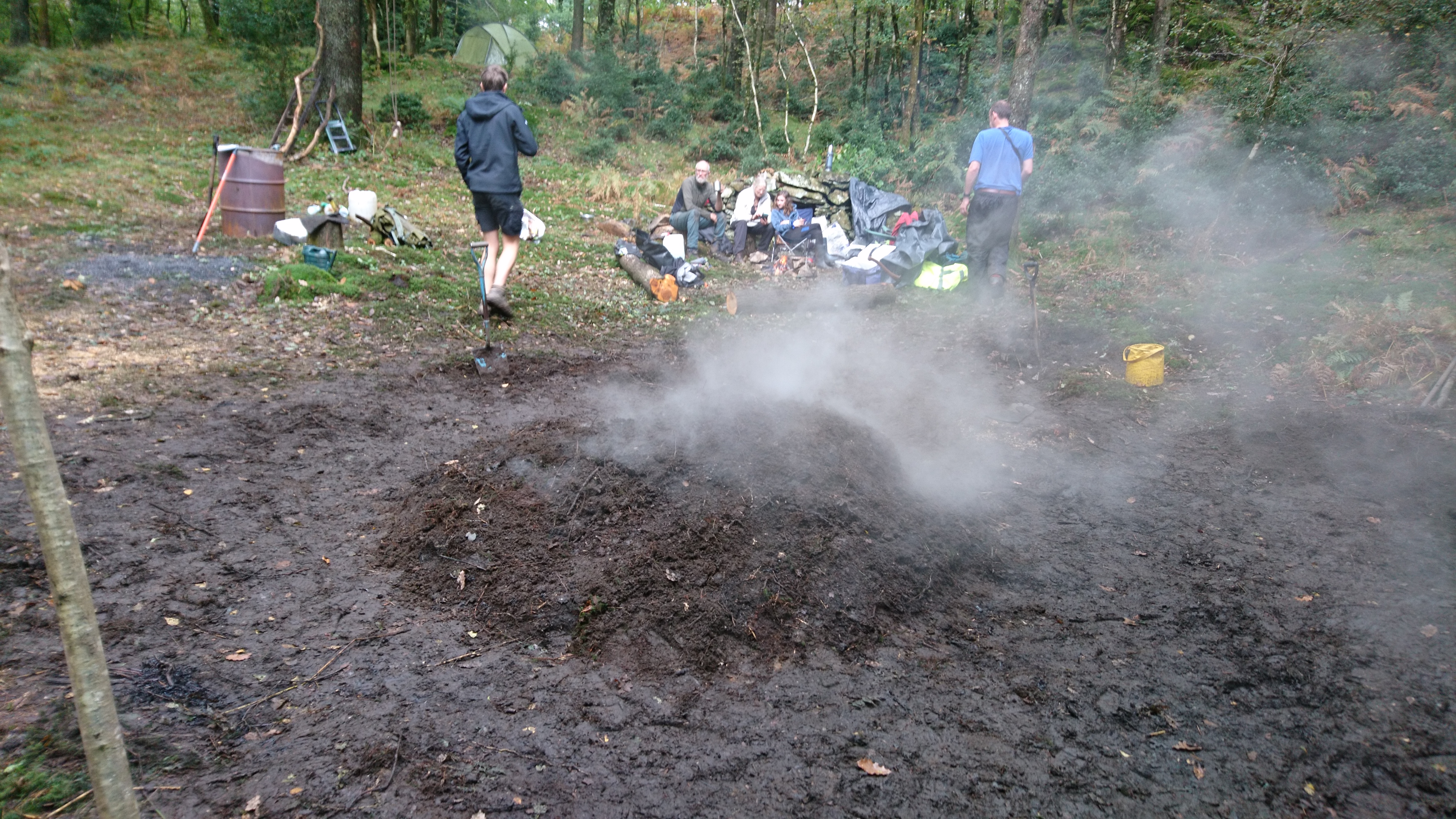
‘Glass Knott wood is now owned by the Lake District National Park Authority. Permission to carry out the burn was requested and eventually approved with enthusiasm. At the same time Dan Sumner was looking for instruction on how to do an earthburn and we agreed that this was a good time for me to show him how, and for him to be responsible for the burn and provide the timber. The burn took place two weeks before the gathering and we had a fascinating visit to the site from Jack Allonby’s son John together with Bill Norris’s daughter June who had lived in the same small village, Spark Bridge, 50 years ago. A young John Allonby had been at the site with his father during both filmings. We also had a visit from Myles Dickinson who still lives nearby. We had a few very good helpers and some other visitors from LDNPA, Cumbria Woodlands, Coppice Association North West, The Arthur Ransome Society and Ruslands Horizons.
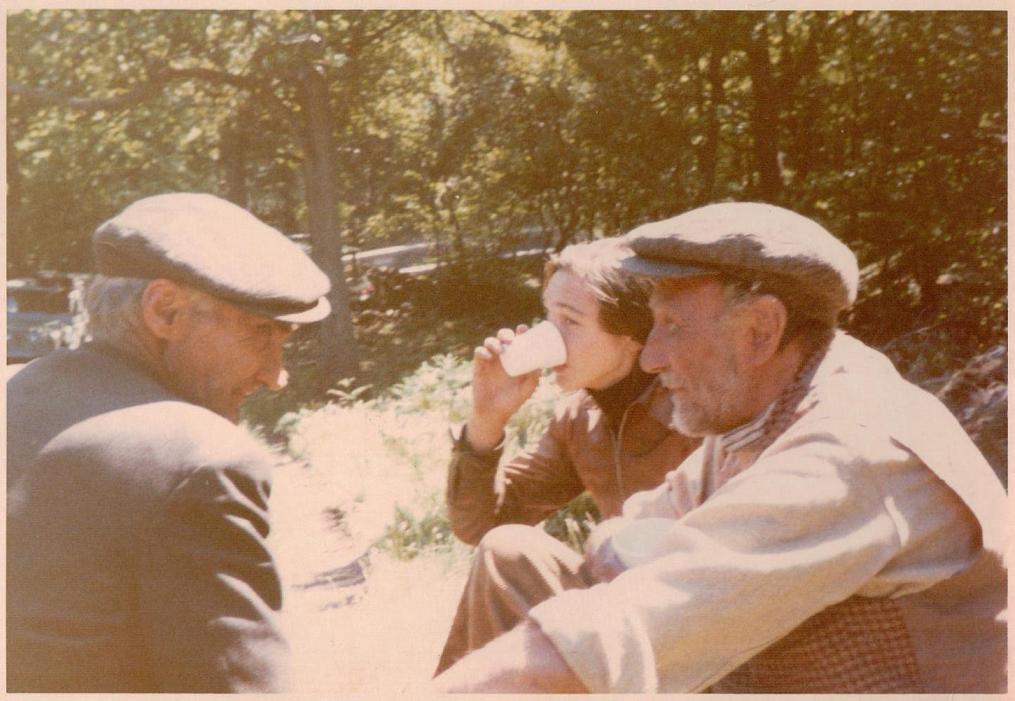
The real Charcoal Burner with the actor
Jack Allonby talking to Jack Woolgar who was playing Old Billy ~ photo: Daphne Neville

‘I then showed some photographs of the weekend’s successful event and a few photos of Sophie Neville’s blog on the web.

The Charcoal Burners - Swallows and Amazons
Arriving at the Charcoal Burners’. Jack Woolgar with Simon West, Suzanna Hamilton, Sophie Neville and Stephen Grendon ~ photo: Daphne Neville

‘To finish, I then showed a DVD of the Millenium Burn, actually held in 2001, at which I learned earthburns from Arthur Barker, who was supported by Alan Waters and his friend Mark, at a site a bit further up the Rusland Valley where Jack Allonby had been filmed doing another earthburn by Sam Hanna, which can now be seen on the internet.’

Earthburns presentation by Brian Crawley,  NCFed Gathering Oct 2023  

The Real Charcoal Burners 2
John Franklin-Robbins playing Young Billy with Sophie Neville, Stephen Grendon and the adder.

The LDNPA are keen to do another burn at the site. News can be found on the Coppice Association – North West website.

Evidence of ancient foundry works on Peel Island looks interesting. You can read more here

Brian found an American copy of Swallows and Amazons that I have never seen before, available online in US dollars.

Charcoal Burners at Hill Top – Arthur Ransome’s last home in the Lake District

A guest post written by Stephen Sykes of Hill Top, Ealinghearth, Haverthwaite:

There are two farmhouses in the Lake District both called Hill Top and both once owned by famous children’s authors – and just a few miles apart. One, of course was Beatrix Potter’s, and the other was the last home of Arthur Ransome, which my wife and I purchased in 2012.

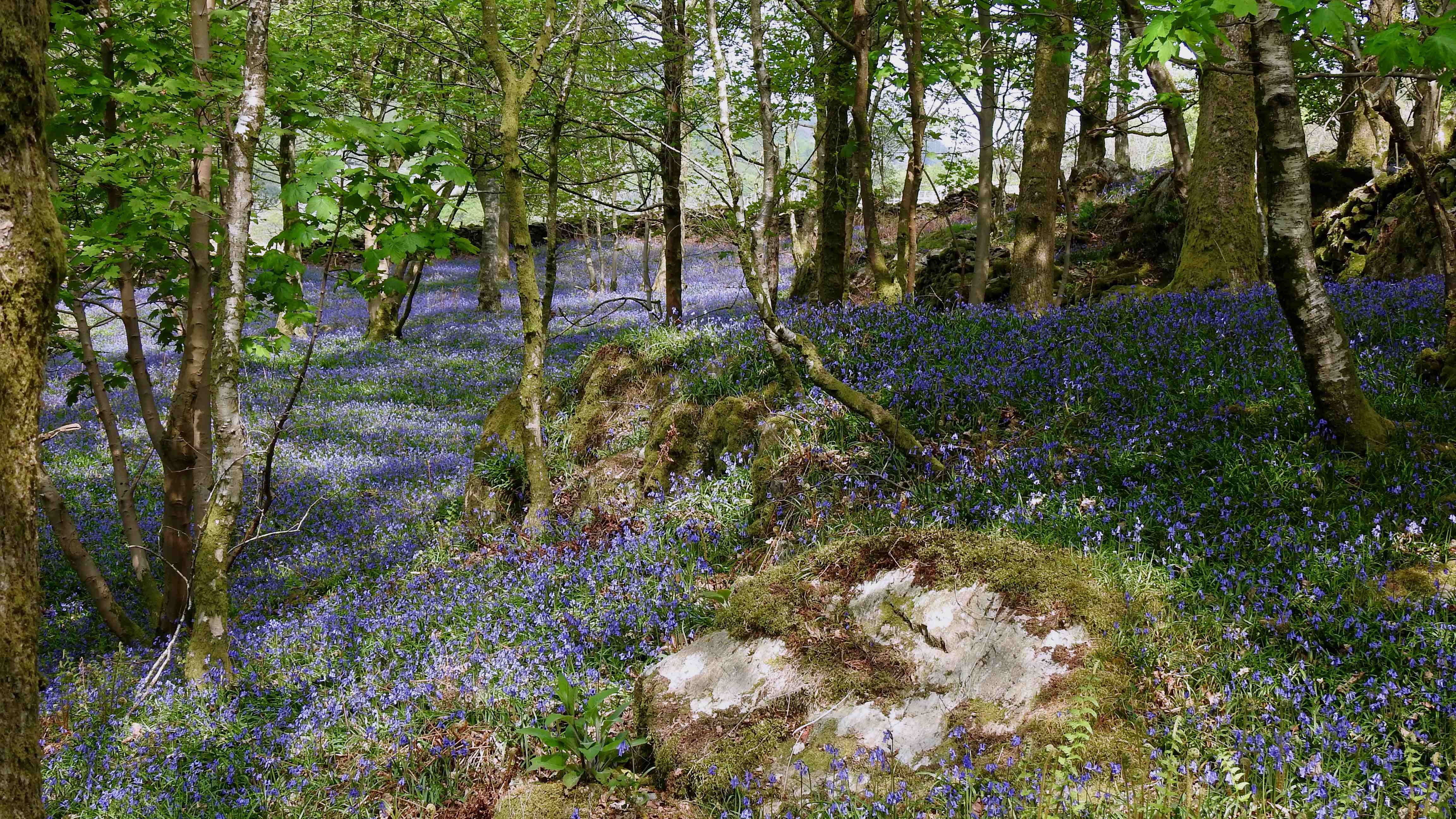
More recently we acquired the adjacent wonderful ancient woodland of some seven and a half acres. With its precipitous rock faces, mighty oaks, gigantic gnarled yews and dazzling carpets of bluebells in the springtime, Backhouse Brow (as it is known) entirely fulfils The Woodland Trust’s epithet: “home to myth and legend, where folk tales began”.

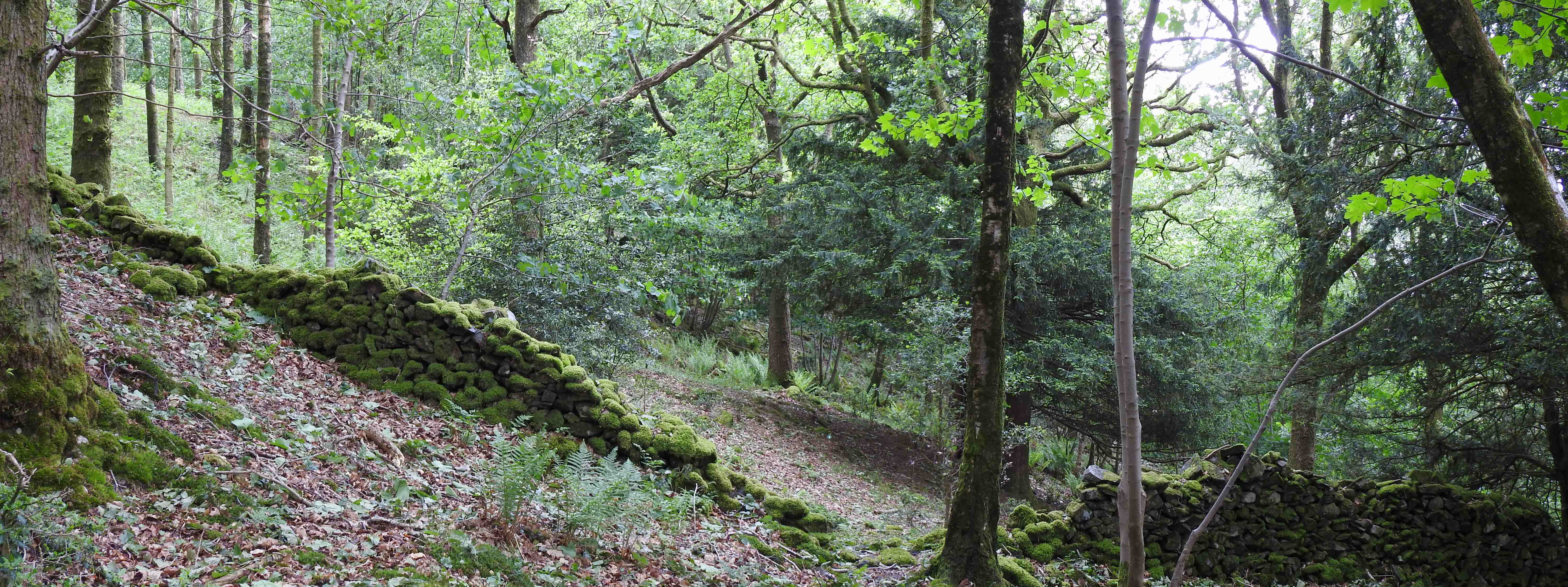
There are the evocative remains of long-gone human activities too. Coppiced sycamores evidence a traditional form of woodland management historically used in the area to satisfy the insatiable demand for charcoal required to service the long-ago thriving iron industry in Backbarrow, just a half-mile away over the hillside. And within Backhouse Brow can be found numerous archaeological remains left by the charcoal burners and their activities, once a common sight in this area of South Lakeland. Long-disused trackways still clearly make their way up and across the woodland. Levelled spaces – knowns as pitsteads or platforms – for creating kilns or piles to burn charcoal are still in evidence.

Circular stone base of a charcolburners’s hut

Ancient walls in various states of decay both encompass the woodland and subdivide it. And most evocatively of all, there are the more personal remnants of the lives of the charcoal burners themselves. In addition to a much-rusted shovel or two, can be found the tumble-down remains of a circular low stone wall upon which charcoal burners would have erected a shelter, much as Ransome describes in Swallows and Amazons:

At the edge of the wood, not far from the smoking mound, there was a hut shaped like a round tent, but made not of canvas but of larch poles set up on end and all sloping together so that the longer poles crossed each other at the top. On the side of it nearest to the mound there was a doorway covered with a hanging flap made of an old sack.

Meeting the charcoal burners’s adder – a scene from the film ‘Swallows and Amazons’ (1974) StudioCanal

And indeed only a modest distance from our circular stone base, but at a somewhat higher level, lies the still identifiably levelled ground of a pitstead where a charcoal pile may well once have been tended by the men whose hut lay below. A strategic placing not only high above, but in a position which ensured that smoke was generally carried well away by the prevailing south-westerlies.

Stone hearth near Ealingshearth

Quite separately, in a glade some distance away, there are also the isolated remains of a rather fine stone hearth, presumably used for charcoal burners’ more domestic chores.

So, with extensive coppicing, trackways, pitsteads, the circular stone remnants of a hut and a hearth of particular note, and all adjacent to Hill Top – indeed, all now within Hill Top’s grounds – begs the question: was Ransome aware of any of this? Whilst he would have certainly seen the coppiced trees, probably not the archaeological remains. Despite the central involvement of charcoal burners in his story, he makes only the most fleeting occasional mention of the woodland in his later diaries and there is no mention of his having entered. Nevertheless, it’s rather fitting that in his final years he should have found himself in immediate proximity to this iconic historic activity about which he wrote some three decades earlier in his most famous fictional work.

The Ransomes owned Hill Top from 1960 until 1968 when Evgenia sold the property the year after Arthur died. In fact, following their arrival for the summer in 1963, they never returned to London – Hill Top finally having been supplied with electricity.

You can read more about charcoal burning in the Lake District in relation to ‘Swallows and Amazons’ here.

To read about filming the charcoal burner’s scene in the original film of ‘Swallows and Amazons’ (1974) please click here.

To rent the converted barn at one end of the farmhouse, which now comprises luxury self-catering holiday accommodation for two couples, please click here

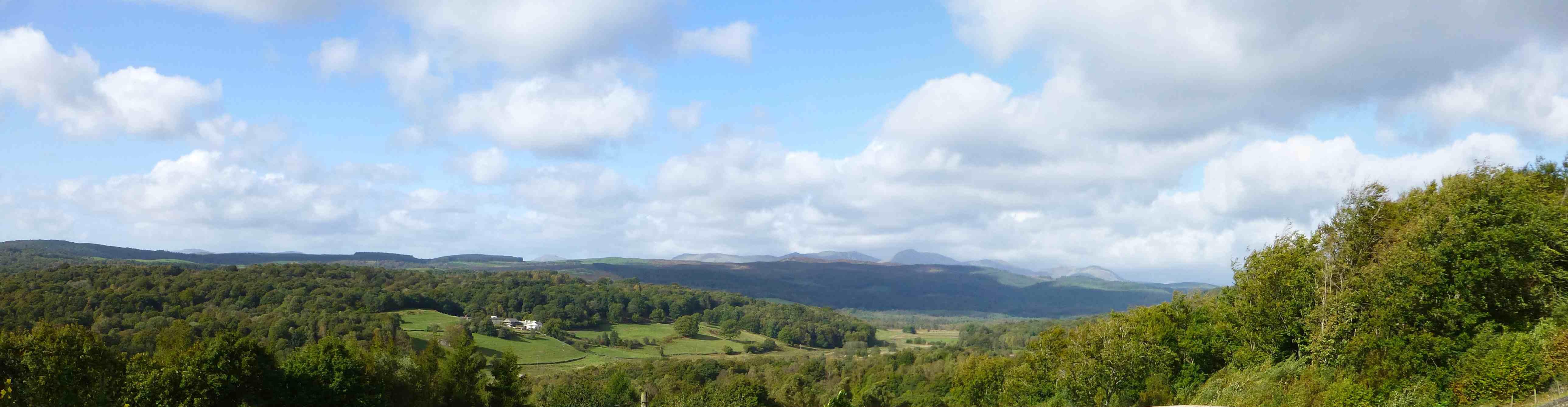
Sophie Neville visited Hill Top with members of The Arthur Ransome Society who admired the astonishing views across Cumbria. “It occurred to me that the fireplace and low stone walls of the charcoal burners’ wigwam, once abandoned, may have made up the basis of the igloo built by the Swallows and Amazons in Winter Holiday, which has a fireplace.”

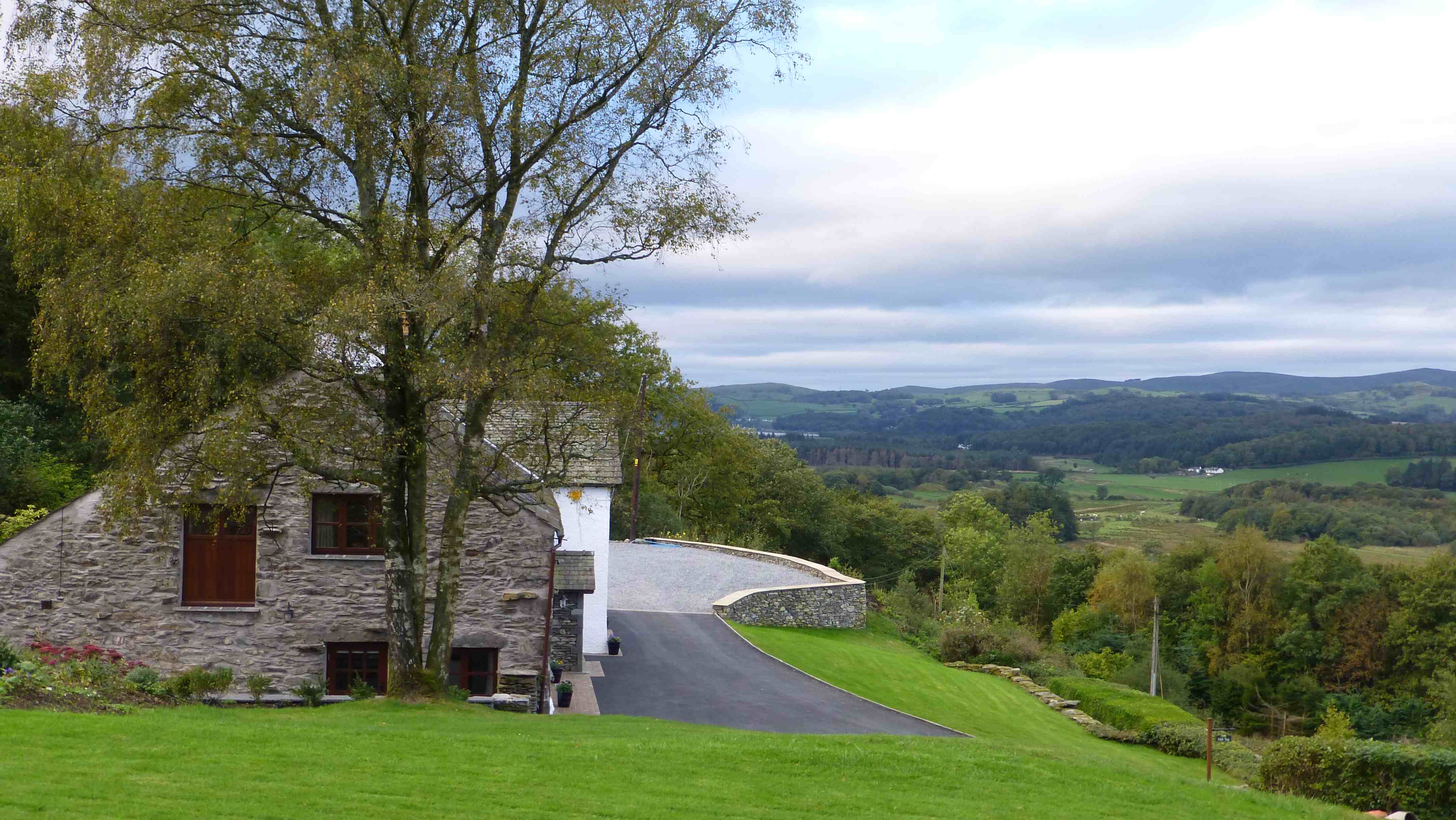
Hill Top farm, near Ealinshearth where Arthur Ransome lived with his wife Evgenia