
I began with working on book adaptations in 1971 with Laurie Lee’s memoir Cider With Rosie and went on to appear as Titty Walker in the 1974 film Swallows and Amazons when the screenwriter David Wood worked with Mrs Ransome to abridge her husband’s well-loved novel into a 90 minute movie.
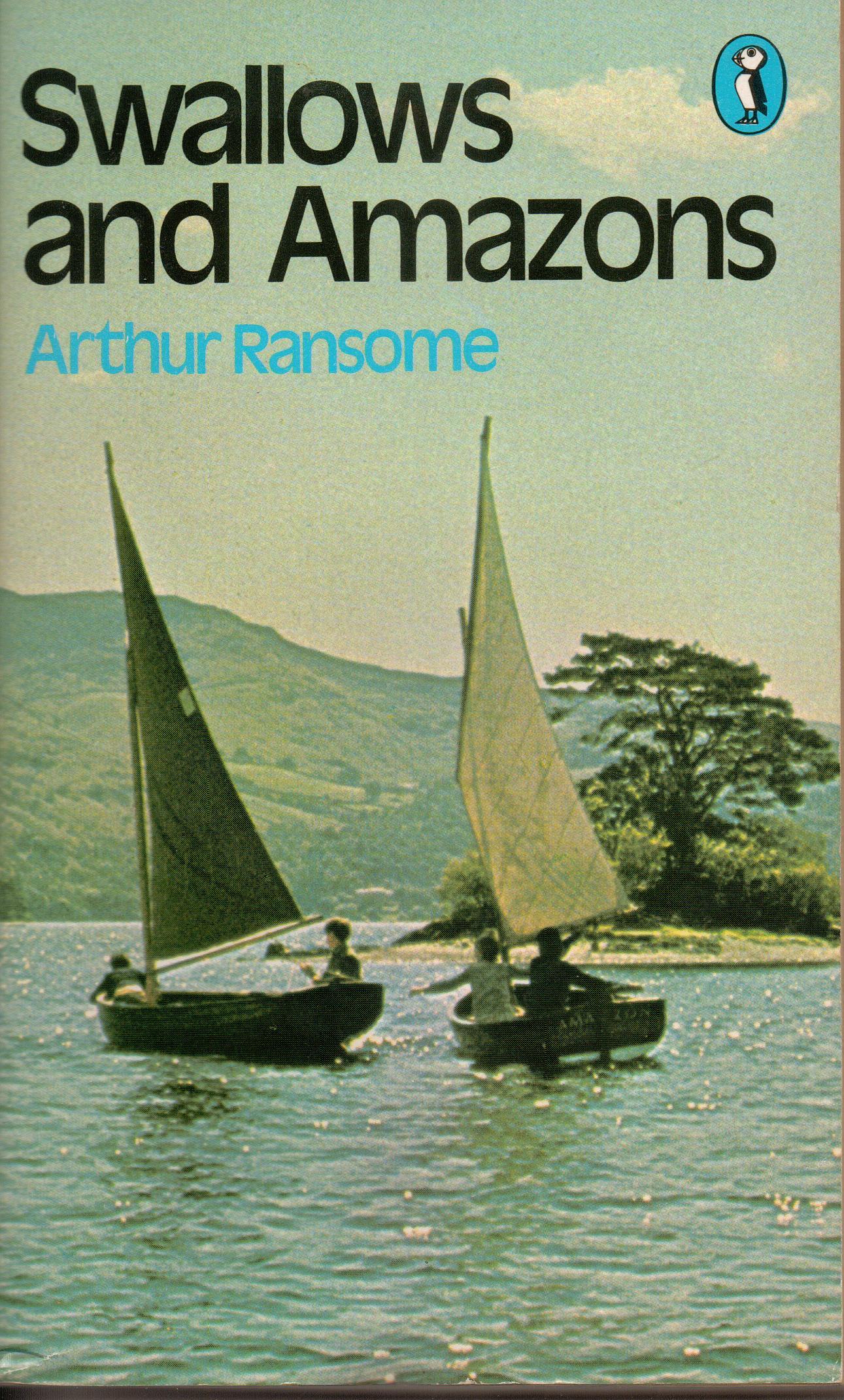
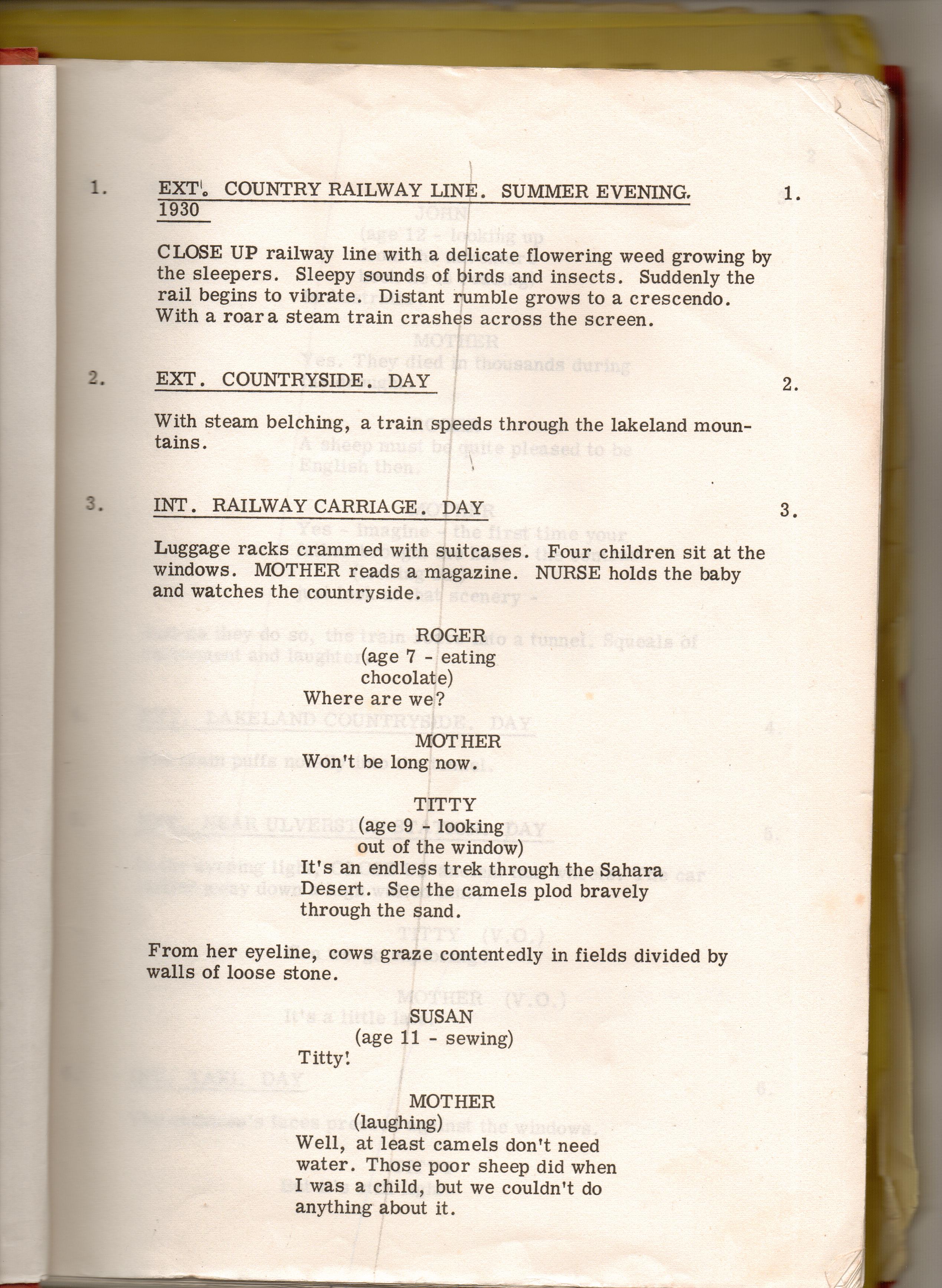
I’ve written about how the film was made and include pages from David Wood’s script of ‘Swallows and Amazons’ below. It is fascinating to see the original 1973 screenplay. Those who know the film well can appreciate how it was changed whilst we were on location.
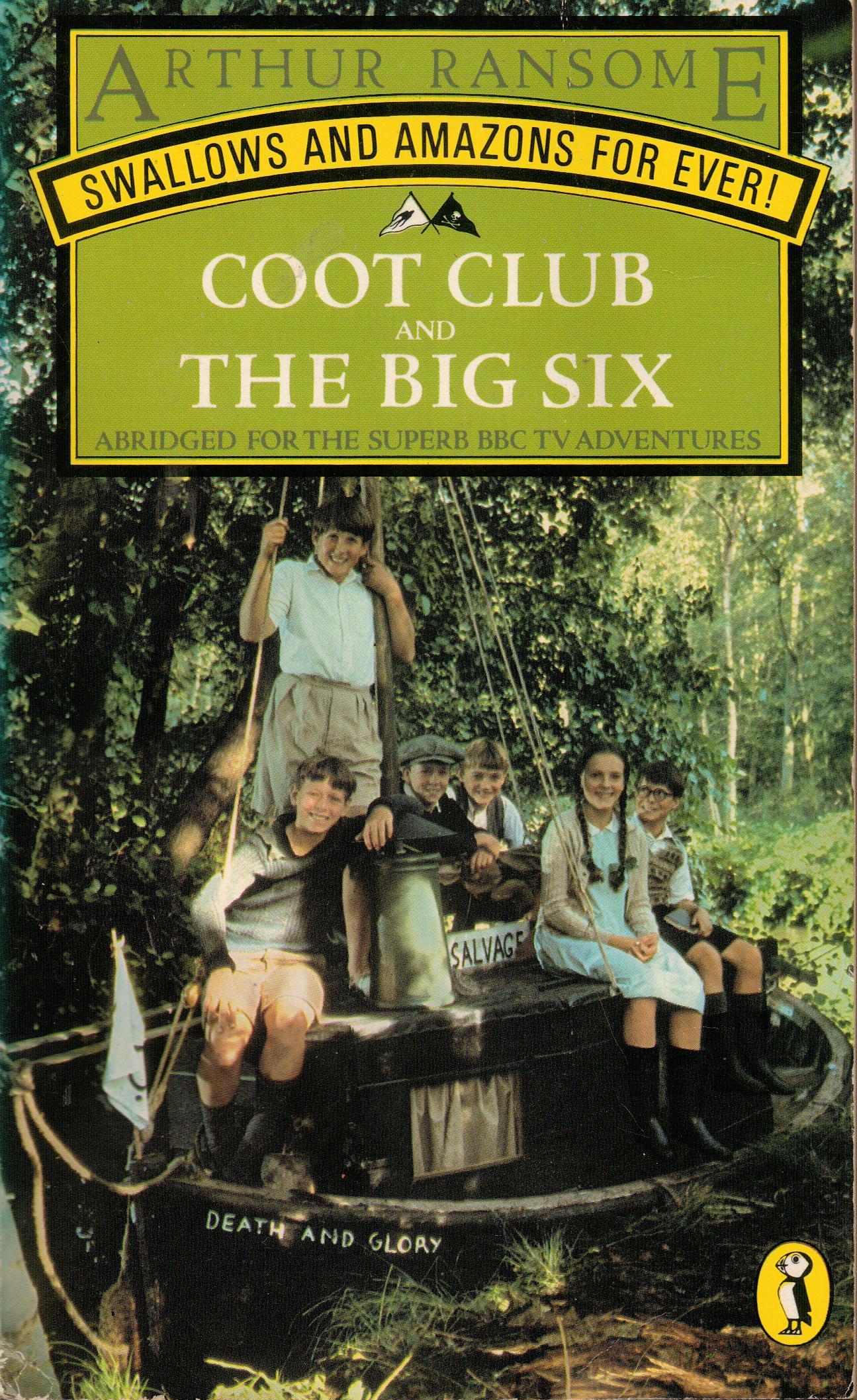
By 1983, I was working in television production on book adaptations such as Coot Club and The Big Six by Arthur Ransome, set in East Anglia.
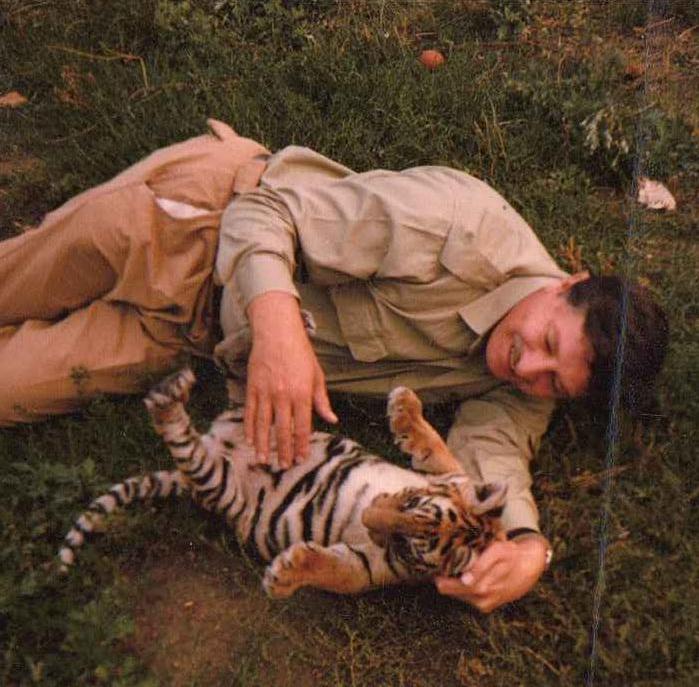
My Family and Other Animals shot entirely on Corfu.

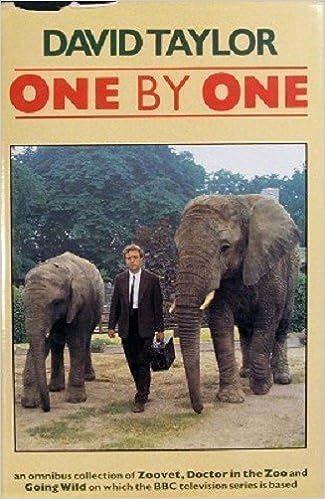
One by One, David Taylor’s memoirs of a zoo vet.
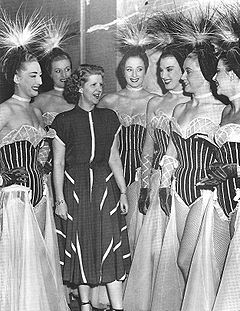
I also worked on The Diary of Anne Frank, Doctor Who, Eastenders, Rockcliffes Babies (a police procedure series), a Shakespeare play – Titus Andronicus and Bluebell – a costume drama based on the true life story of a dancer from Liverpool called Margaret Kelly.
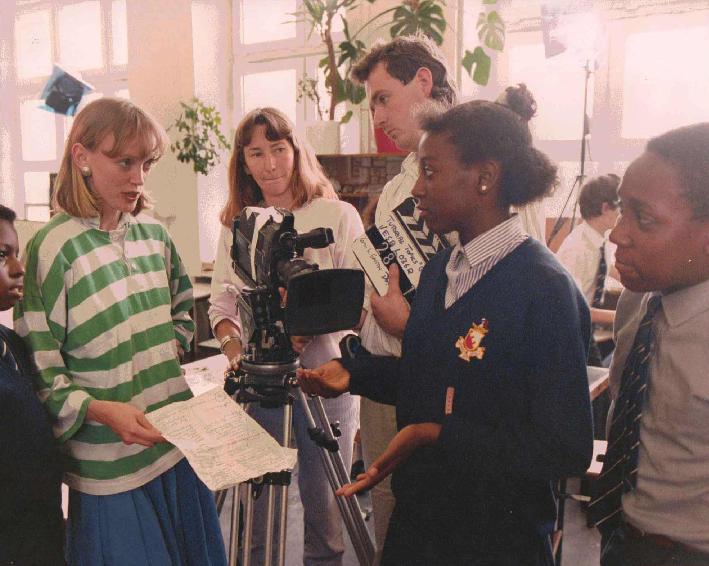
I then wrote/edited – five documentaries and two drama-docs that I produced for BBC Education, and one that I made for Channel 4. In all I’ve worked on about 100 different television programmes in 7 different countries and appeared in 100 others but am still learning how to write scripts.
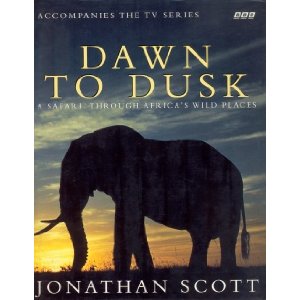
I’ve submitted numerous tv and film proposals. ‘Dawn to Dusk’ became a major Natural History series, broadcast on Thursday nights at 8.00pm.
It is very difficult to get a new series or film accepted. George Marshall said, ‘Hollywood is like a whale, indiscriminately glupping plankton.’ He optioned one film script I’ve written.
‘But I’d love to get my books adapted for the screen’
You can pay someone to adapt your work – and then edit and market it yourself. But watch out for scammers.
‘How do I do it myself?’
- It’s going to be a slog – and expensive – so ask yourself WHY you want to do it. You can always self publish a novel but there is little you can do with a script that won’t sell. The transposition exercise helps you improve on your prose, but it is a lot of work. Take a first step and record your novel as an audiobook. I have narrated two at Monkeynut Studios.

You need to build up a CV to give producers confidence. The easiest thing to get accepted is an item in a long-running magazine programme eg: BBC Antiques Roadshow. This cost me no more than my time and petrol but I had two (historical fiction) stories accepted instantly. They were repeated and got me in the Mail Online and OK magazine. You can see the photos on this website here.
‘That’s not my pigeon!’ But it’s what viewers want. Start small and move on to providing Countryfile with an historical story. ‘But I write Biblical fiction.’ OK – Horrible Histories.
2. Buy Final Draft software – (they give you a free trial) and read up on how to format a script. Free software is out there such as celtx or WriterDuet. MS word has a screenplay template but most professionals send each other manuscripts on Final Draft.
The formatting gives you the length: 1 minute a page – 90 minutes for a screenplay – ie script of 90 pages.
100 pages = a short story. When I transposed a screenplay into a novel, adding description, it was only 30,000 words long. It took me another five years to finish it.
3. Never submit rough work. Perfect it. One of my first jobs – aged 22 – was to put together A Russell Harty Christmas show starring Esther Rantzen, Peter Davison and Matthew Kelly. This was the first time I wrote for television: a pantomime piece. I walked into the rehearsal room with a rough copy and it was a disaster. They gave the commission to Nicholas Parsons – and paid him well.
There is lots of information on the net to help you eg: The Top 10 Mistakes New Screenwriters Make
Here’s a book on The Top 10 Mistakes New Screenwriters Make and How to Avoid Them
4. Write plays for the stage or radio – they are cheaper to make and accept historical and biblical fiction with BBC Writer’s Room offering an open door. Write low budget material. Come up with a story that’s set in a church or an inexpensive venue.
5. Think Netflix. Think episodic: Would your books be suitable for a TV series? What kind? How long would each episode be?
A serial = long-running story with something happening in each episode. eg: we made My Family and Other Animals into 8 x 28.5 min episodes. (Interestingly Ep 2 looked weak on paper but turned out to be quirky and eccentric.)
A series = each episode a story with a continual tread. The James Herriot books made a good series: Each 50 min programme could stand alone as a TV film. Different characters in each. Silent Witness – a dramas with pairs of episodes within a series.
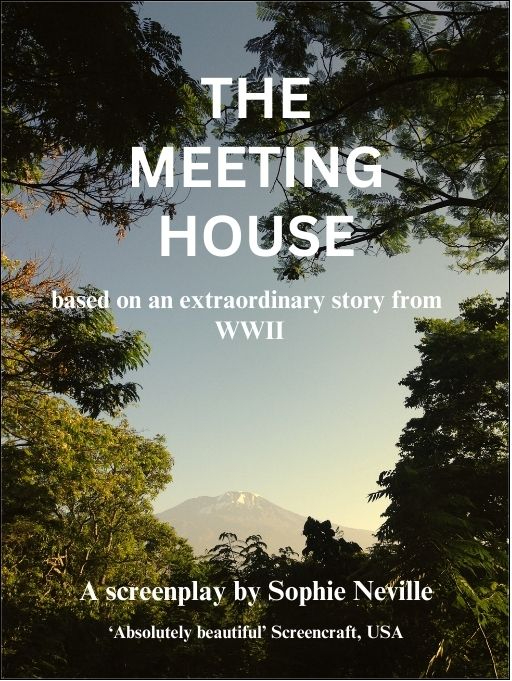
“I want to make one book into a feature film.”
6. Look at the market. What is selling? It’s difficult to get a film accepted, particularly an epic one. If you have an idea for one set in a swimming pool in LA it would be easier. The US market is looking for formulaic Christmas movies – 50 get made a year. High concept Rom Coms. Netflix series. Many filmmakers begin with shorts. Look up the length. See what they want.

It can happen! David Wood was asked to adapt Swallows and Amazons at the age of 28 in 1972. He added jeopardy – which was cut firstly by Mrs Ransome, secondly by time restraints and ultimately the producer and his assistant, who stuck to the simple story that had been a bestseller since 1931.
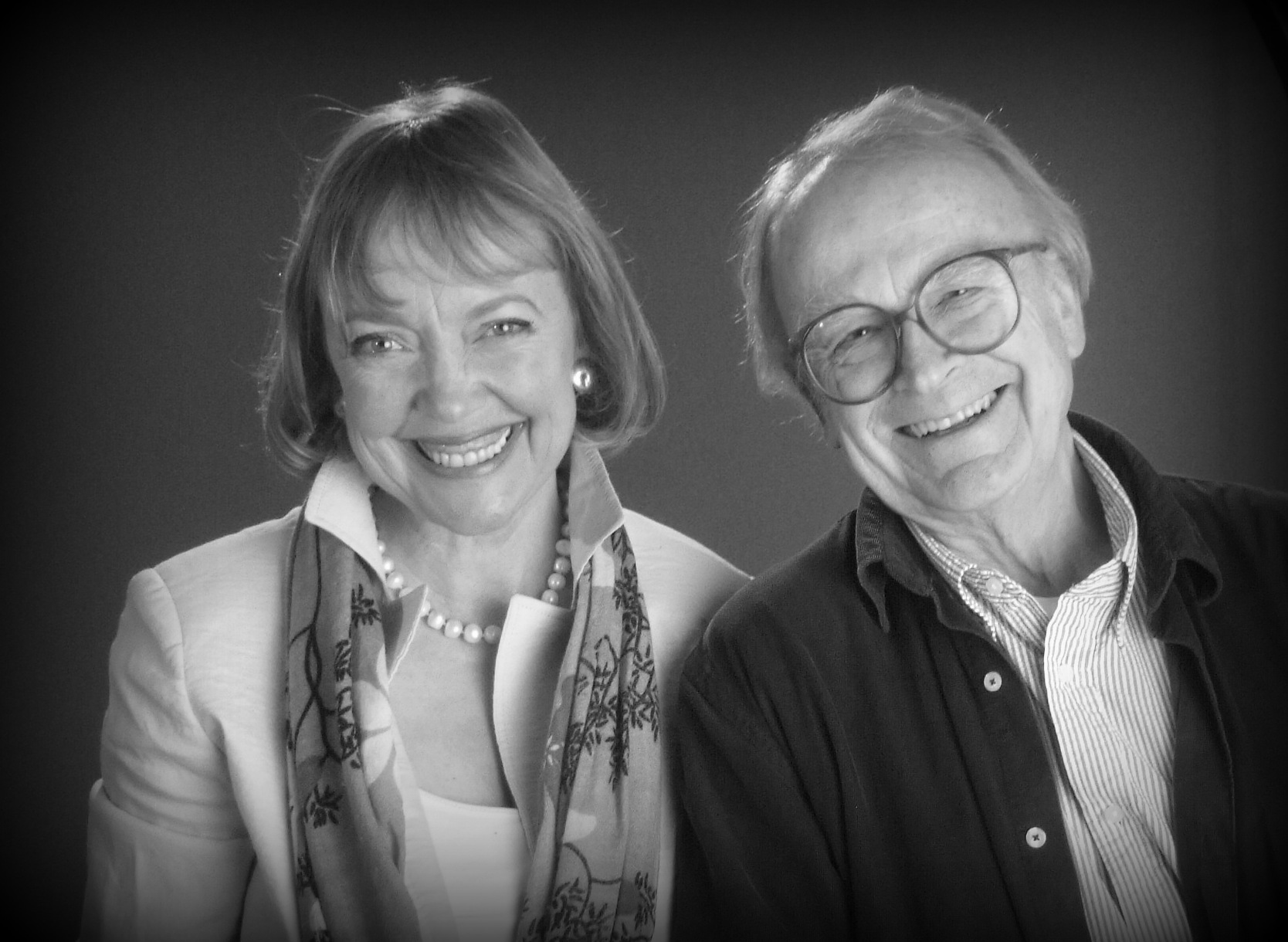
7. Do you write for children? Again, think in terms of sales and marketing. David said, that since parents tend to be very conservative, it is a good idea to adapt well-known stories, like the Tiger Who Came To Tea rather than attempt to devise your own. It’s easier for the producers to raise funding. Movie finances are far more risky than books. Bestsellers can still lose money.
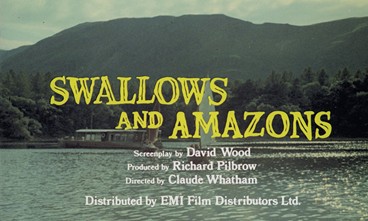
Ransome began studied storytelling in Russia. Perhaps try adapting fairytales, traditional or out of copyright stories to make a name for yourself before you try to sell your own novel as a script.
8. Watch on catch up and take note. Watch good writers. What do you like? What don’t you? Who is producing what? Talk to writers. Gerald Durrell advised us about things like sound, encouraged us to edit the truth. Brian Sibley said that it’s good to begin with a journey. The dubbing editor on Swallows and Amazons amplified Titty’s imagination (cheaply) from the sound of wind in palm trees, parrots, chattering monkeys…
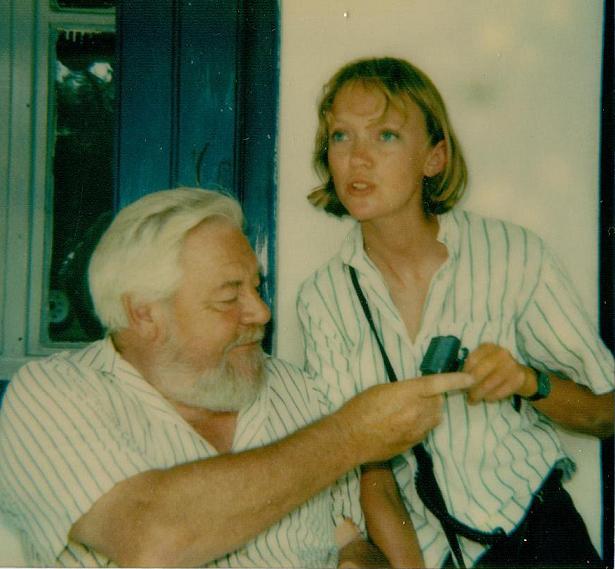
The producer Joe Waters told me to ‘Put your money in front of the camera’ – the visual impact of steam trains, traction engines, period cars, horses and boats.
9. Get a job as a trainee script editor. All BBC producers work with a script editor. There were two on Eastenders when I worked on the series. See if you can work in this capacity. (NB: Script Editors are different from Script Supervisors who oversea continuity on location and script co-ordinators.)
10. Go on a scriptwriting course – eg: Falmouth University.
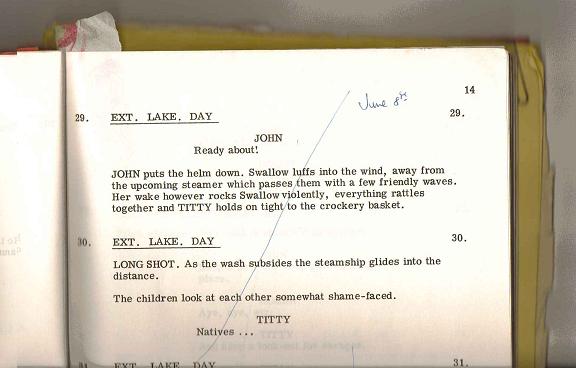
There’s a lot to learn. eg: You need to number the Days. These examples are lacking. It should read: EXT: LAKE – DAY 2 . Remember the script will be ‘broken down’ by the costume, makeup and set designers.
Expect re-writes – hundreds. They will want Spot the dog.
What do you do with your finished script?
- Screen writing competitions and pitch sessions. Page Turner in the UK offer a book adaptation as a prize or will adapt your book for a fee.

Roadmap Writers in Los Angeles run competitions and will try to get you US representation

I have entered numerous screenwriting awards on FilmFreeway – winning 25 to date. Again, beware of the spammy ‘Film Awards’ offering discounts.
All the big American awards can be entered on Coverfly. You can register and set up a profile free of charge. I have accumulated 17 accolades and have a profile here.

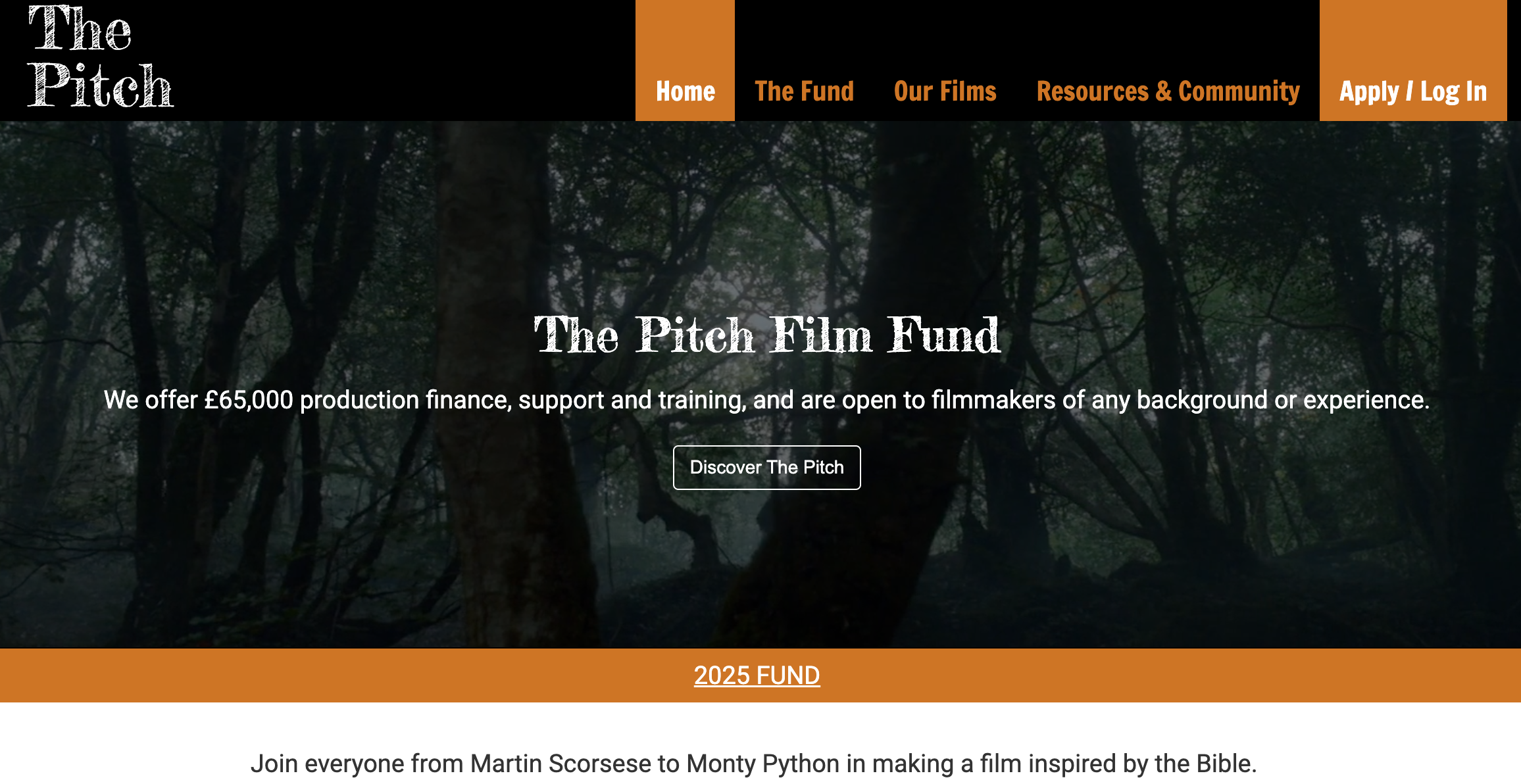
Bible Society – The Pitch – pitch a short film concept that brings the Bible to life.
2. Look for an agent. Pitch to producers.
The costs can mount up. Have a budget. I met someone who spent 3 years writing 4 feature films and sold nothing but remember that it can happen. Swallows and Amazons was made by very young professionals and it’s still being broadcast.
Remember: Script writing is a craft. The huge comfort is that Jesus was a carpenter. He knows how to put things together, so they last, and are finished well.

Just do it.
As a young actor, Julian Fellows formed a partnership with the drama director Andrew Morgan when making Coot Club on location in Norfolk. Just when the Head of BBC Drama Series and Serials said ‘No more children’s book adaptations!’ they collaborated on two period costume drama serials for children: Little Lord Fontelroy and The Prince and the Pauper. He then won an Oscar for Gosford Park.

He’s the only writer I’ve encountered on location. ‘I’m like a make-up artist, ready to tweak.’

 Sophie Neville